

-80x69.png)
Many drivers and pedestrians struggle to see traffic lights clearly on busy or wide roads. The selection of the right size and height for traffic lights is important to prevent accidents. Because, every type of road has its own standard traffic light dimensions.
Therefore, we prepared this article to tell you accurate traffic light dimensions and their height requirements for installation.

Traffic Light Measurements
Traffic light measurements mean the different sizes of lenses and height of a traffic light. A traffic light’s actual size depends on where you install it and how you use it. You will find these lights in two main sizes based on their lens diameter.
These dimensions are 8 inches or 12 inches. The 8-inch traffic signals are generally 30 inches tall, 9.5 inches wide and have 6 inches depth.
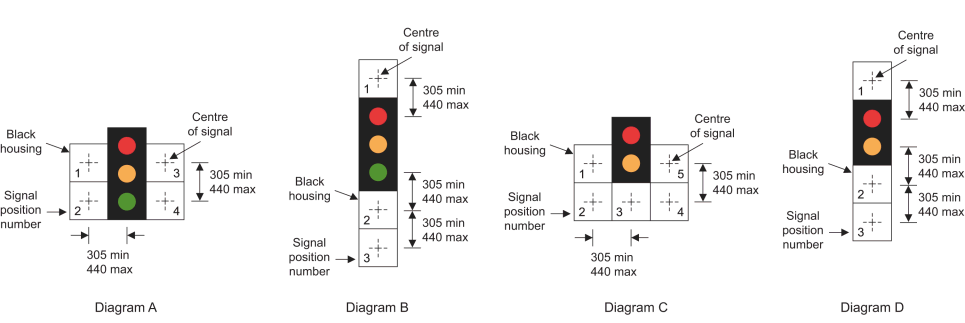
Standard Height of a Traffic Light
Traffic lights are usually placed high, so you can see them from far away. Most traffic lights stand 84 to 144 inches above the ground. This height is ideal for drivers to see the signal easily.
It also makes the lights visible to pedestrians and people who use wheelchairs or other mobility aids. However, the exact height depends on the road size and traffic speed.
Traffic Light Size and Weight
A standard traffic light head mostly weighs 30 to 50 pounds. But, traffic light weight varies according to its size, lens diameter and purpose.
| Size of Light Lenses | Approx. Weight | Applications |
| 6 inches (150mm) | 3 to 10 lbs | Used for small road and low traffic areas |
| 8 inches (200mm) | 8 – 30 lbs | This traffic light is used as standard vehicle light |
| 12 inches (200mm) | 30 to 50 pounds | Installed on main roads and heavy traffic zones |
| Pedestrian 8 inches (200mm) | 12 to 18 lbs | Places at sidewalk or crosswalks |
| Pedestrian 12 inches (300mm) | 20 – 25 pounds | Mostly installed at busy crosswalks |
Traffic Signal Head Dimensions
Traffic signal heads are 12 inches in diameter. Size of pedestrian signal heads: 18 inches wide and 16 inches tall. The width of the traffic signal head is not fixed. It can be anywhere between 6.3 inches to 11.5 inches wide or more. If we talk about its weight, it depends on traffic lights design, material plus number of faces.
For example: a three-light signal head manufacturer with aluminum usually weighs 14 – 23 kg. On the other hand, bigger signals with extra lenses or made from heavier materials such as steel can be 27 to 45 kg heavy.
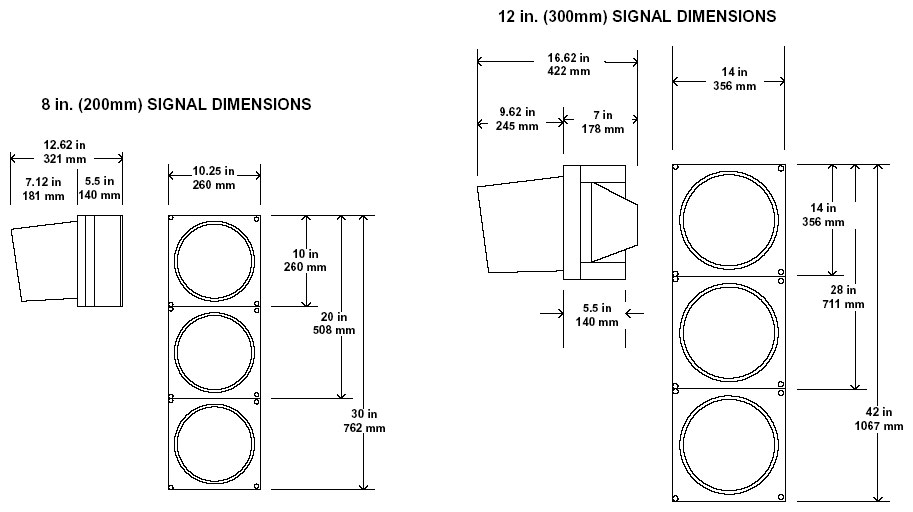
Dimensions of Mounting Hardware
Traffic signals need the right mounting hardware to work safely. You can use a 1 × 100 mm conduit for electricity. When you install the controller box, it should face south and have a 1-meter grounding spike. You need to make sure galvanized draw wires have 1 meter of extra length. This setup keeps the traffic lights stable and long-lasting.
How Tall is a Traffic Light Pole?
Traffic light poles are tall, so drivers and pedestrians can see the signals clearly. Most poles are 118 to 700 meters high. However, the exact height depends on the road width, traffic speed & location. Taller poles are used on wide roads or busy intersections to make sure the signals are visible from far away.
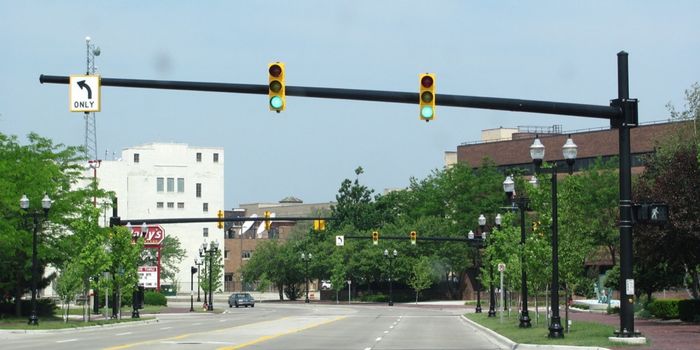
How Tall are Traffic Lights in Feet? The minimum height of a traffic light pole is 9.84 feet, which is usually enough for smaller roads or areas with low traffic. The maximum height is 59 feet. You can use it for wide streets, highways or busy intersections.
How Tall is a Traffic Light in Meters? The height of a traffic light pole is usually between 3 meters and 18 meters. Following is the list of traffic light heights for different roads.
- Small roads: 3 to 6 m
- Medium roads: 6 to 12 m
- Highways or wide intersections: 12 to 18 m
Dimensions According To Types of Traffic Lights
Traffic light sizes and shapes change according to the type of traffic signal. Each type has its own standard dimensions to make sure maximum visibility and safety.
| Traffic Light Types | Standard Lens Diameter (inches) | Average Size |
| Pedestrian Traffic Light | 8 to 9 inches | Smaller, single or dual head |
| Arrow Traffic Signal | 8 to 12 inches | One-head design in multiple shapes |
| Bicycle Traffic Light | 8 inches | Smaller and usually single head |
| Bus Lane Signal | Not fixed | May match vehicle signal size or be smaller |
| Non Motorized Lane Signal Light | 8 inches | Smaller than standard vehicle traffic lights |
| Height of Crossing Signal Light | 12 inches | Larger display for clear pedestrian visibility |
What Decides the Size of a Traffic Light?
The full size of a traffic signal depends not only on the signal head. Different factors impact the overall size and shape of these important traffic control devices.
Width of road has a major role to decide traffic light size. On wider roads, you need to place larger traffic lights or mounted higher so all drivers can see them clearly. But, on narrow roads, you can use smaller signals. Because, drivers are closer to the signal, so a large or tall traffic light is not necessary.
-
Number of Lanes
The number of lanes at an intersection also affects traffic light size and placement. For example: more lanes require larger or multiple signal heads for maximum visibility. If the lanes are fewer, you can install small size traffic lights.
-
Traffic Volume
Below table will show you how the number of vehicles and pedestrians change the overall height of traffic light.
| Types of Road | Height of Traffic Light |
| Rural Roads | 10 to 15 feet (fewer traffic use these routes) |
| Pedestrian Areas | 7 – 10 ft (vehicles traffic is low in this zone) |
| Urban Roads | 15 – 25 feet (due to large number of vehicles) |
-
Driver Visibility Needs
Laws require that a traffic light must be placed where you can see it from far enough to react safely. This also determines the height, position plus size of the light and its lens. You should also consider lighting, obstacles and how fast vehicles are moving. In this way, you can make sure traffic flows safely and you have enough time to respond.
-
Intersection Complexity
The design and size of traffic lights also depend on how complex an intersection is. That means, busy intersections with many lanes and pedestrian crossings need taller or larger signals. So, you can see them clearly from different angles. However, simple intersections may only need smaller or lower traffic lights.
-
Integration of Other Devices
Basically, traffic lights work together with other devices such as sensors, cameras, GPS systems or pedestrian push buttons. The presence of these devices can affect the size, height, weight and placement of the traffic light.
-
Local Regulations
The size and height of traffic lights are also guided by local laws and standards. You have to follow these rules, so every road user can see the signals clearly and vehicles can move safely. For example, MUTCD rules state that you should mount a traffic signal head at least 15 feet (4.6 m) above the road, but not higher than 19 feet (5.8 m).
Variations in Traffic Light Dimensions By Region
Traffic light sizes are not the same everywhere. Different countries and regions have their own standards for lens size, signal height, placement and overall dimensions.
| Region Name | Type of Traffic Light | Traffic Light Height (in inches) | Placement of Light |
| Europe & Asia | Traffic Signal for Vehicles | Approx. 59 to 71 (1500 and 1800 mm) | Installed at a height for visibility in busy traffic |
| North America | Pedestrian Light | Between 48 and 60 | Must be placed at pedestrian eye level for clear view |
| Europe/Asia | Pedestrian Crossing Signal | Approximately 47 to 59 | You should set it lower for pedestrian convenience |
| North America | Common Traffic Light | Around 36-48 inches | Positioned higher to be visible at bust roads |
Effect of Height of a Traffic Light on Vehicle Safety
- Visibility For Drivers: Proper height allows you to see the traffic light clearly from a distance. Further, taller signals on wide roads assist you to notice the light over other vehicles.
- Maximum Reaction Time: Correct signal dimensions give you enough time to slow down or stop your car. If you poorly positioned the lights, it may reduce reaction time, which can increase accident risk.
- Lane Coverage: Multi-lane roads need taller or multiple traffic lights, so drivers in all lanes can see them. When you install low lights, it can be hidden by large vehicles. It can lead to confusion for drivers.
- Crossing Safety: The right traffic light height helps you see pedestrian crossings clearly. In this way, you can stop your car in time when people are crossing the road.
FAQs
Why Are There Different Traffic Light Shapes?
Traffic lights generally have three basic shapes. For example: circles show general commands like stop or go, arrows indicate you to take turns and triangles are used for warnings.
How Big is a Traffic Light Compared To a Human?
A standard traffic light head is roughly as tall as a person. Its lenses are about the size of a human head. From far away, it can look smaller than it really is. This design helps drivers see the signal clearly.
What is Traffic Light Control System?
A traffic light control system is a setup which manages when and how traffic lights change. As a driver or pedestrian, it guides you to know when to stop, go or wait. These systems keep traffic flow smooth and reduce accidents at intersections.
Why Do Some Traffic Lights Have 4 Lights?
Some traffic lights have four lights to give extra instructions. The fourth light usually shows you a special signal such as a turn arrow, pedestrian indicator or flashing warning. It also works as a backup light if another one fails.
How To Measure Traffic Light Dimensions?
To measure a traffic light, you need to check the full size of the signal like top to bottom and side to side. Also, analyze the size of each light lens. Keep in mind to include any backplates and spacing between lights.
Final Words
Hence, you are well familiar with traffic light dimensions and why the right size and height matter. You can also notice that each traffic light is carefully planned to guide you safely on the road.
If you need a professional traffic safety products supplier for your road project, you can contact us. Our R&D engineers can manufacture all types of traffic signals, poles and road safety equipment according to your requirements.


