

-80x69.png)
There are approx. 16248 car accidents every day in the US. In these accidents, around 6235 people are injured and 106 lose their lives. This thing urges us to make our roads safer and more secure.
So, a crash barrier is a step toward our road safety. Today, you can understand all types of crash barriers to choose one for your project.
What Are Crash Barriers?
Crash barriers are safety structures on roads and bridges. Basically, they stop your vehicles from going off the road or into oncoming traffic. You may find them on highways, bridges and sharp curves. Their main job is to reduce accidents and protect lives.

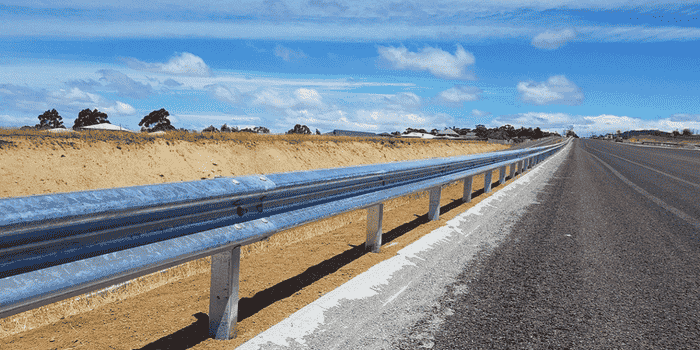
Crash Barrier in Road
There are many roads that are built on mountains and uneven places so they are dangerous. This is why crash barriers are installed to absorb the energy of collision. When you are on highways and high speed roads you may also find these crash barriers.
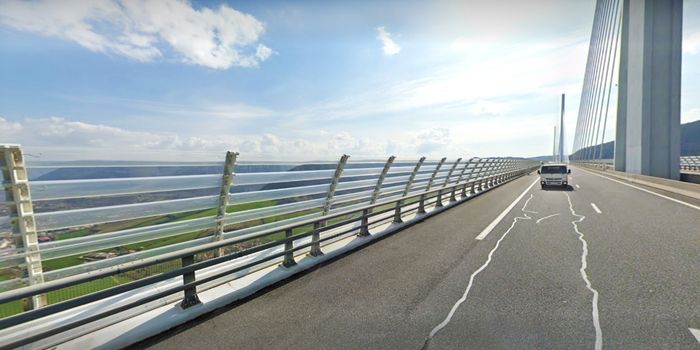
Crash Barrier in Bridge
As you know, bridges are constructed over water bodies. So, there is a chance that a vehicle can go down in the water due to a strike. But these barriers stop the vehicle on the bridge and save you from drowning.
Types of Crash Barrier
We have done detailed classification of all the crash barriers available in the market. Keep reading the types listed below. After you note down everything related to them, you will easily decide the required crash barrier and its subtype for your project. We also wrote their major applications for your better knowledge.
Rigid Barrier
A rigid barrier is a super strong barrier. It does not bend when a car hits it with full force. Rather, it stays in place and stops vehicles on time. You see these barriers mostly on dangerous bridges and highways.
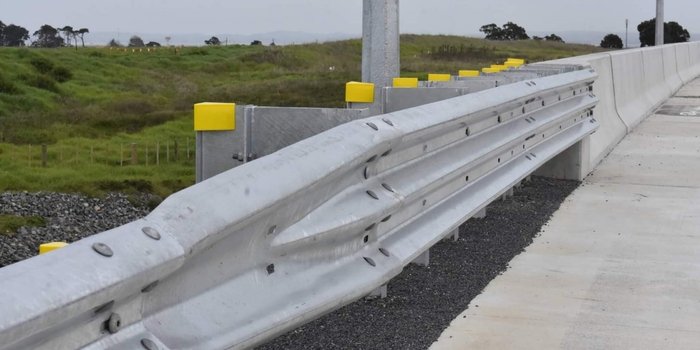
Crash Barrier Concrete/Concrete Step Barrier
You may see different shapes of concrete barriers on roads. Mostly, they are installed on highways to prevent head-on collisions and separate lanes (median barriers).
These barriers absorb impact by redirecting vehicles along the barrier. And they do not stop the vehicle suddenly. This is a low-maintenance option for you. Because it lasts for decades with very minimal repair.
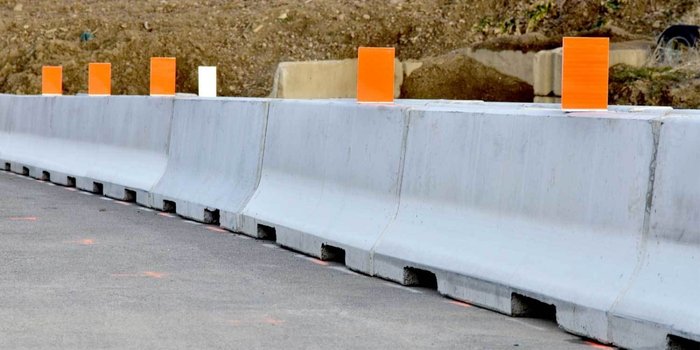
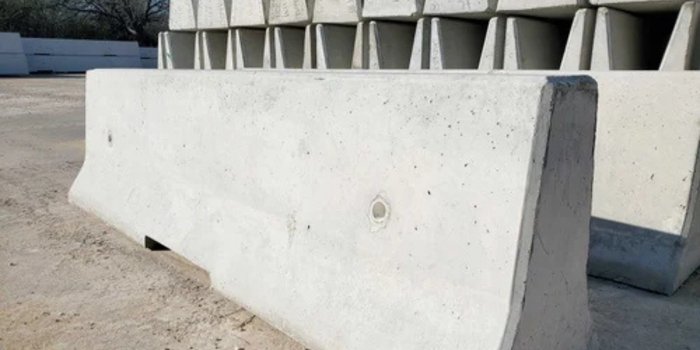
Precast Concrete Barriers
Precast concrete barriers are made in factories and then transported directly to the site. They have modular design, so you can join them to cover long stretches of roads. You see them in places where quick installation is required like construction zones. They provide you strong impact resistance and reduce damage during accidents.
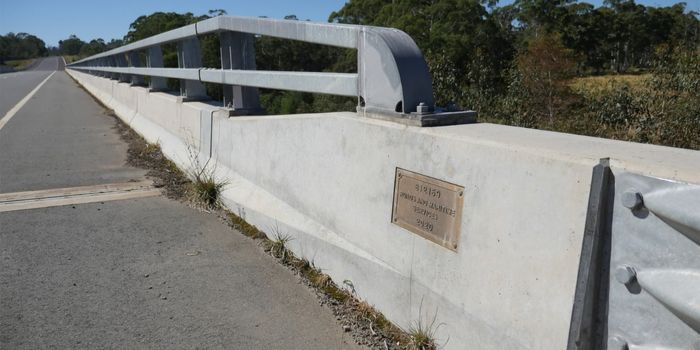
Bridge Parapet Wall
This is a safety barricade that acts as a crash barrier. They are made of reinforced concrete for strong protection. You see them on highways, flyovers plus bridges to prevent vehicles from falling. Some parapet walls include metal railings for extra safety. They are designed to absorb impact and reduce accident damage.
Semi Rigid Barrier
Steel Crash Barrier
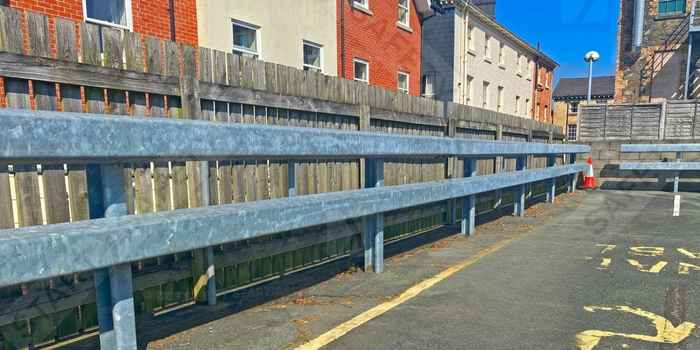
A steel crash barrier is also known as guardrail. These barriers are made up of galvanized steel. You may see them in different shapes. These shapes are created by experts to absorb the impact of force effectively.
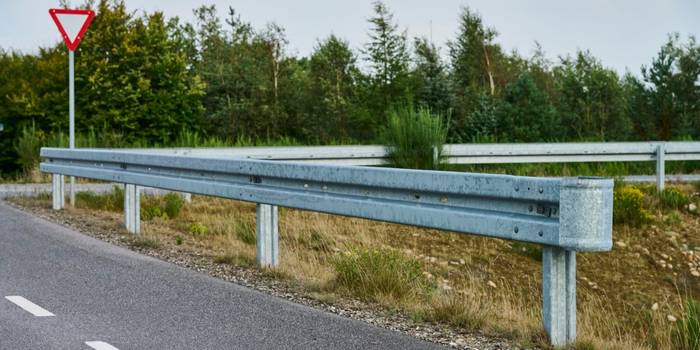
- W-Beam Crash Barrier: This is a semi rigid crash barrier. You often find a “W” shape in its structure. It is designed to handle small to medium-sized vehicles.
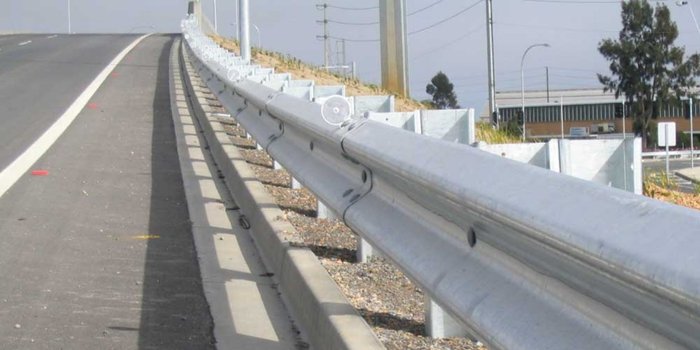
- Thrie-Beam Crash Barrier: The Thrie-Beam crash barrier uses a steel post and a 3mm thick rail. Each steel post measures 75mm x 150mm with 5mm thickness. These posts are placed 2 meters apart. The rail sits at 85 cm above the ground for effective vehicle guidance.
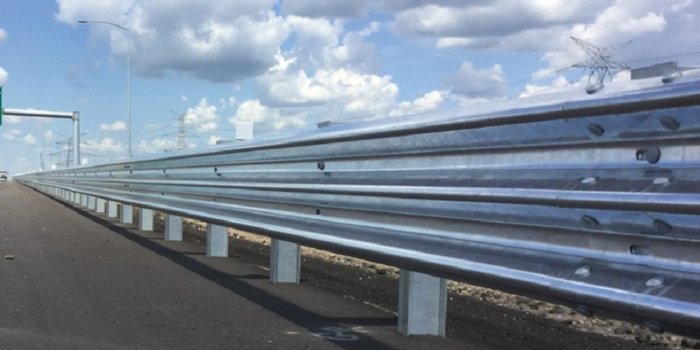
- Curved Crash Beam Barrier: Curved crash barriers use pre-bent or custom-rolled steel beams to fit road curves. You find them in areas where straight barriers don’t work. They come in convex (arc facing traffic) or concave (arc away from traffic) shapes.
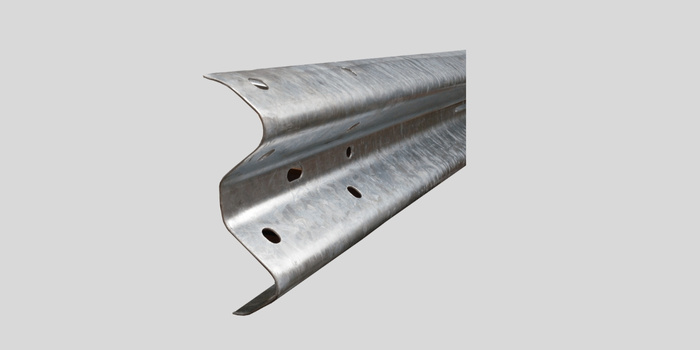
- Open Box Beam Barrier: This barrier has a hollow and rectangular “box” shape. Its open box design allows it to absorb impact and guide vehicles safely.
Flexible Crash Barrier
High Tension Cable Barrier
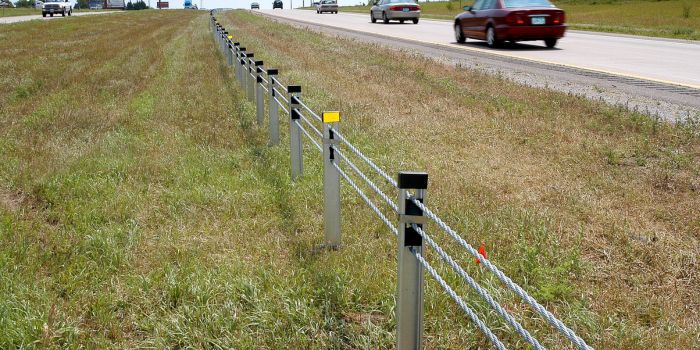
High tension cable barriers use steel cables or ropes. These cables are stretched between strong posts. They absorb and redirect vehicles safely during collisions. The cables are under high tension to reduce vehicle penetration and damage. These barriers require less space than concrete walls but still meet safety standards.
Plastic Water Filled Barrier
This barrier is hollow and made of durable plastic. It is shaped like a rectangular block. You fill it with water to add weight and stability. It is light when empty. Therefore, it is easy to transport. After transportation, you again fill it with water to stop vehicles safely.

Roller Crash Barrier
As its name shows, this barrier has cylindrical rollers mounted on a frame. The rollers rotate when a vehicle collides with force. You see them on highways and bridges where energy absorption is needed. The design guides vehicles safely and minimizes damage during collisions.
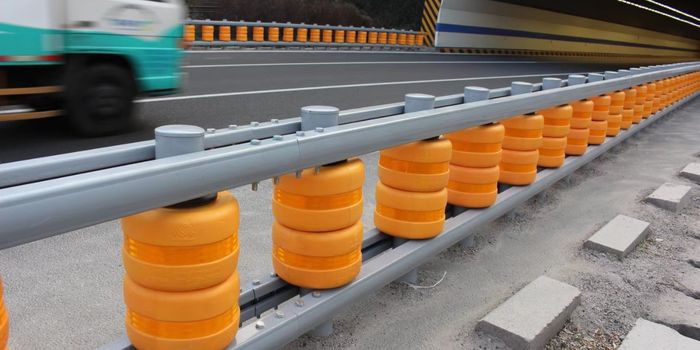
Crash Cushions
Crash cushions sit in front of fixed hazards like bridge piers or toll booths. There are different types of crash cushions.
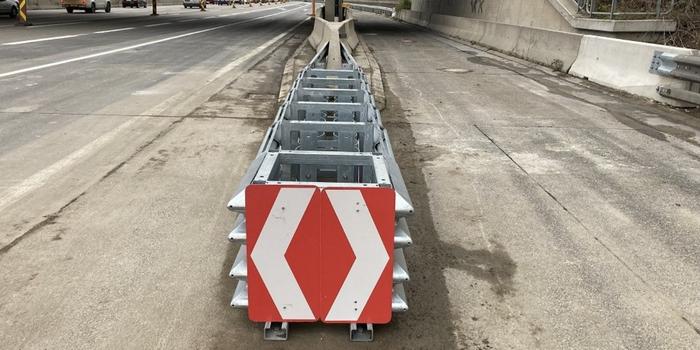
Temporary Crash Cushion
Temporary crash cushions are used in short-term work zones. You see them near road repairs and lane closures. They are portable and easy to install. These cushions absorb impact and protect workers and drivers. They are easy to move once the job ends.
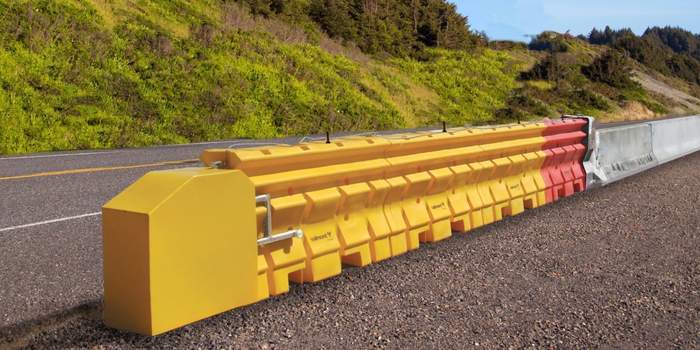
Sand Filled Barriers
These barriers contain sand inside a strong casing. The sand absorbs force and slows the vehicle step by step. They are placed in a line with increasing weight. They are used in rural areas or on roads with minimal traffic.

Rubber Crash Barriers
Rubber crash barriers are made from high-impact rubber. They compress on pressure and absorb shock. You see them in parking areas, curves and industrial zones. They reduce damage to vehicles and barrier systems.
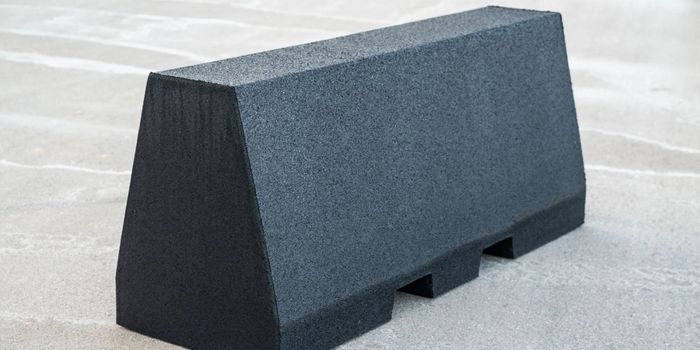
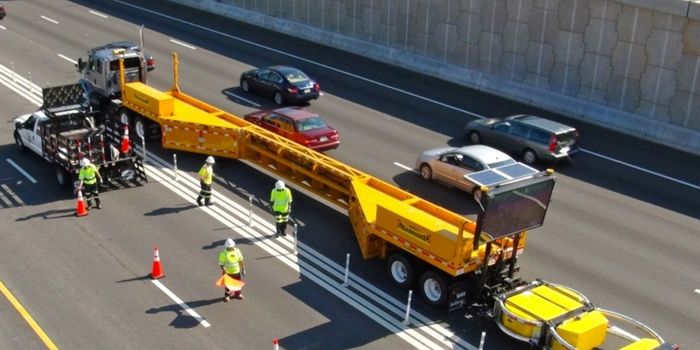
Mobile Barrier Truck
A mobile barrier truck has a mounted crash barrier at the rear. It moves with road work or lane closure operations. The rear barrier absorbs energy from fast vehicles. It protects road workers from rear-end crashes.
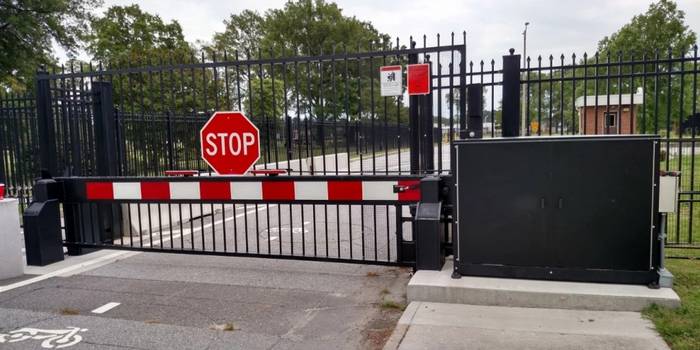
Crash Barrier Gate
A crash barrier gate controls vehicle entry and exit. It uses a swing or sliding barrier arm made of strong metal. You see it at toll plazas, industrial sites plus restricted roads. The gate blocks access and improves traffic control and safety.
Crash Rated Bollard
A crash-rated bollard is a heavy-duty steel post. It stops vehicles from entering restricted or protected areas. These bollards go through strict crash tests like ASTM and PAS 68. You see them near buildings, public spaces and high-risk zones.

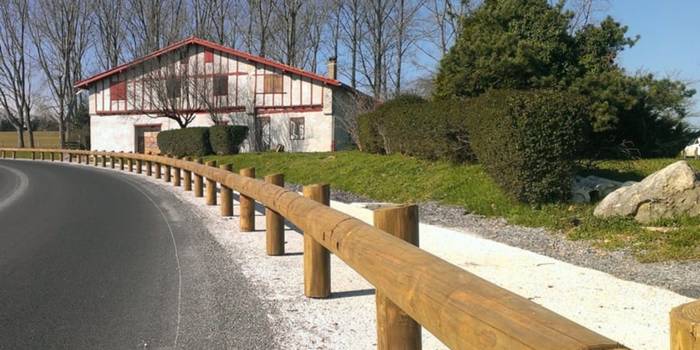
Timber Crash Barrier
Timber crash barriers use treated wooden beams and strong posts. They blend well with rural roads and scenic areas. The wood surface reduces vehicle damage on impact. You often find them on low-speed roads and parks.
Crash Barrier Price
| Crash Barrier Types | Price |
| Roller Crash Barrier | $200-$250 per meter |
| W-Beam Crash Barrier | $10-$40 per meter |
| Water Filled Crash Barrier | $192-195 per piece |
| Mobile Crash Barrier | $10-$40 per meter |
| Plastic Mobile Barrier | $7.59-$8.58 per piece |
| Crash Cushions | $130-$180 per set |
| High Tension Cable Barrier | $14-$30 per meter |
Crash Barrier Ratings
Before the installation of a barrier, you must check their rating. Basically, barriers are tested by following MASH standards or ASTM rules. MASH means Manual for Assessing Safety Hardware.
MASH ratings start from TL-1 and go up to TL-6. Higher rating means the barrier stops heavier vehicles at higher speed. For example, water filled barriers come in two ratings. TL-1 works at 50 km/h. TL-2 works at 70 km/h.
Crash Barrier Design
Each crash barrier is designed in a different way to protect you. Concrete barriers are mostly designed in jersey, new jersey, F shape, single slope, inverted slope and vertical slope.
If we talk about metal barriers, their structure is single and double “W” shape. When we observe water filled barriers they are hollow structures. Roller plastic barriers are circular shapes that are attached to one another.
Crash Barrier Dimensions
The dimension of the barrier changes according to the design of the barrier.
- Metal barriers are around 300 mm to 500 mm wide. The length of the barrier is 3 to 4 meters. The posts are placed according to the type of road.
- In case of a concrete barrier, the height is mostly taken 4 to 12 feet. And 450 to 700mm is the common width.
- The diameter of the roller crash barrier is 345mm to 370mm. Furthermore, they are placed 890 mm above the ground. These rollers are fixed between 2 to 4 horizontal steel beams.
- If you want to place cable barriers, they include 4 steel wires. These wires are 6 to 7 feet long and 2 feet wide. 3 to 5 feet tall posts are used to secure these wires.
Crash Barrier Manufacturers
Do you want to purchase crash barriers? JACKWIN is a leading company that manufactures a wide range of crash barriers. Our barriers are designed to absorb high pressure of force. Furthermore, all barriers compliant ANSI and MASH standards. You can also customize your barrier according to your specific need.
Some other crash barrier manufacturers in China are:
- Shandong Guanxian Huaan Traffic Facilities Co., Ltd.
- Wuhan Dachu Traffic Facilities Co., Ltd.
- Cangzhou Develop Traffic Products Co., Ltd.
Wrapping It Up
We can say, now you are ready to make your roads safer. So, when you want to install crash barriers, always check its type and dimensions according to your project. This thing will help you choose the right barrier type and design for your location.
Let’s have a discussion with us so we can offer you high quality & most suitable crash barrier for your exact requirements.
Frequently Asked Questions
What Are Crash Barrier Requirements?
Crash barrier requirements focus mainly on your safety. Some common requirement of crash barrier are;
- The barrier must redirect vehicles, not stop them suddenly.
- A barrier should handle different vehicle sizes and speeds.
- The design must prevent penetration and rollovers.
- Your barrier should have the ability to control speed and protect passengers and people nearby.
- The barrier type must match road risk plus traffic speed and site condition.
What Are MORTH Specifications For a Crash Barrier?
- A bridge railing or crash barrier sits on and above the Kerb of the road.
- You install it only after the bridge span supports itself.
- If the barrier uses reinforced concrete, you must follow approved concrete and steel rules.
- You place the barrier straight and level, as per design.
- Posts must stand fully vertical, with very small tolerance.
- Any gaps around posts need non-shrink mortar.
- You must follow the approved drawings.
- The design must meet IRC:5 and IRC:6 standards.
- Expansion joints need careful fitting so they work correctly.
- The railing or crash barrier design must allow quick and easy repair. This thing reduces traffic delay after damage.
How Do Crash Barriers Work?
Crash barriers control the force of a crash. They absorb and spread impact energy. This slows the vehicle in a safer way. Some barriers bend, like metal guardrails. Others lift and guide the vehicle back, for example concrete barriers. The barrier extends the crash time. That reduces force on people inside the vehicle.
See Also:
What Are Expandable Barriers? Types, Uses, Cost & Installation


