

-80x69.png)
If you are a road constructor or traffic safety officer, then you will need to understand k rail. Because K-rail barriers are the modern choice of everyone to make roads safer & secure.
This is why we have made this guide for you. Today, you will know what is k rail, why it is called k-rail, specifications and pros & cons.
K Rail Barrier or K Rail Meaning
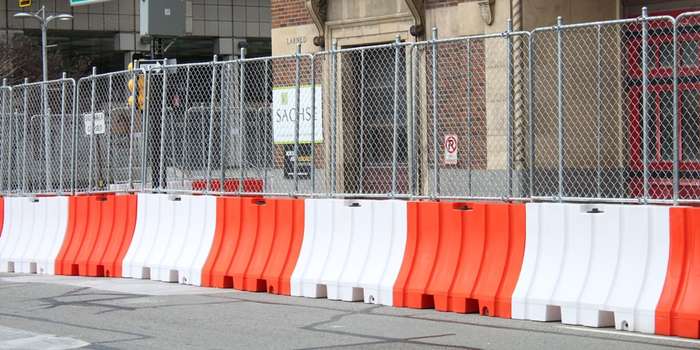
K Rail means a strong concrete-made road barrier. That is used to guide traffic and stops vehicles from going into cross lanes or away from the road. You may see it on highways, bridges plus work zones. With these safety barriers, you get better control on busy roads. Their shape redirects vehicles after impact or collision.
Why is it Called K Rail (K Rail Name Origin)
It is called K Rail mainly in California. Specifically, Caltrans, the California Department of Transportation, uses this term. In other places, you will hear the name “Jersey Barrier” for k rail.
K Rail Specification
K Rail Weight
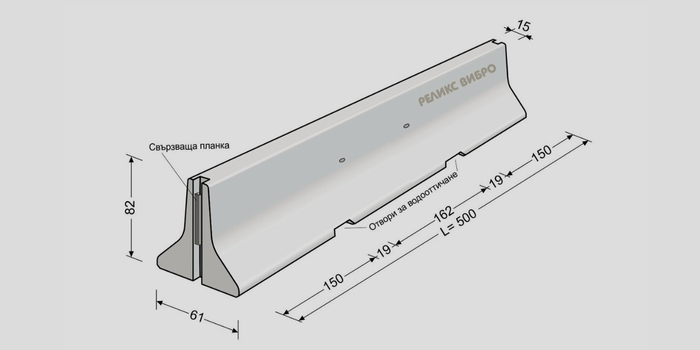
If we talk about the weight of the k rail barrier it depends on the type of barrier you want to purchase. For a 20 ft section of the barrier the weight will be about 8000 lbs (3,630 kg). So, if you design a 10 ft section of a k rail it will be 4,000 lbs (1,814 kg) in weight. When it comes to a 5 ft part its weight is 2000 lbs (907 kg).
K Rail Dimensions
Dimension of the k rial changes according to its length. For example, for a 20 feet (240 inches) k rail the height will be 32 inches. And for this barrier the width from the upside of the barrier is 6 inches but from the base the width is 24 inches.
K Rail Length
When it comes to the length of the k rail barriers, three sizes are common. A 10 feet (3 meter) barrier which is the median length. You can buy a bigger length that is 20 feet (6.1 meter) k rail. If you are interested in smaller k rail then a 5 feet length is also available. Moreover, you may also see some variations of 12.5 feet length at some places.
K Rail Height
Usually, the k rail has a height of 2 feet 8 inches. Actually, this height works best for the safety of the road. This height is ideal to stop vehicles and reduce crash impact. You can place these barriers on highways, expressways, main roads and freeways. There are some barriers that come in 2 feet height actually, they are suitable for parking lots & low speed zones.
K Rail Installation Process
It is very easy to install k rail barriers you have to follow these steps only:
- Remove the end caps from the extrusion (a metal piece) to open the internal way.
- After that, slide four 5/16 inches by 3/4 inches carriage bolts into the top slot of the extrusion. Basically, you have to insert them from the end or access holes.
- Enter two 5/16 inches weld nuts into the extrusion from either end and position them correctly.
- When the nuts are fixed, you should place the k rail at the installation point and align it in the correct way.
- After the selection of a point, secure the top of the k rail. You can fix it with carriage bolts using four 5/16 inches flat washers and four 5/16 inches nuts.
- If the top part is aligned then fix the side of the k rail by joining it into the weld nuts with two 5/16 inches flat head screws.
- Adjust the k rail to the final desired location and check proper alignment.
- You should check all nuts and bolts again to lock the k rail in place. Remember, the bolts should not be over-tightened.
- The process of installation is completed now your barrier is ready to work.
What is Water Filled K Rail?
A water filled K Rail is a lightweight safety barrier with the same shape as k-rail. Basically, it uses plastic instead of concrete. So, you fill it with water after placement. This water adds weight and stability to your barrier. You often see it near work zones and events. In simple words, it suits temporary traffic control where fast setup matters.
K Rail Pros and Cons
K Rail Advantages
- Its first benefit is that it protects the vehicle when you get in an accident. Basically, it saves your vehicle from going into the next lane which can cause more collisions.
- In case of collision, it also stops rollovers of vehicles which was a common problem in traditional barriers.
- As you know, it is made up of reinforced concrete so it can absorb high impact pressure of the victim vehicle.
- It is a durable option for you which means you do not need to maintain or update it again and again.
- K rail can bear all weather conditions like rain, storm, ice and extreme heat.
- When you place them in construction zones, they protect workers & machines as well.
- You can use it as a lane separator or median barrier as well.
- Its unique design makes it a good option for each sector. Like you may see it on events, race tracks and parking areas. Especially, the water filled k rail is best for temporary installations.
- Furthermore, it is a relatively cost effective choice for you.
K Rail Disadvantages
- You are aware that these barriers are very heavy and bulky. So, you require specialized machines to lift them. And expert workers to install them.
- When they are installed, it is not an easy task to move them or rearrange them. Which means they are not suitable for temporary needs.
- Well, it is designed to redirect the vehicle toward the roads. But still it can roll over small cars when they collide with them.
- These barriers can get cracks due to the penetration of moisture and thermal pressure. Hence, they need maintenance as well.
- Their standard gray color doesn’t provide you an aesthetic view. In addition, it is not more visible for drivers as compared to reflective barriers.
K Rail Cost or K Rail Barrier Cost
The price of the barrier depends on its type, material, size and weight. But if you talk about a smallest k rail it may charge you about $418. But for larger barriers this amount can be increased. Generally, their cost may range from $500 to $600. If you want to buy plastic barriers it will come in $300 to $400.
Final Thoughts
We have tried to cover almost all the needed information about k rail barriers. Always remember, you must choose a barrier according to the nature of your project. Like if you want to install barriers on a permanent road then k rail barriers are best. But for temporary requirements plastic barriers are perfect for you.
Talk to us now for your inquiries related to K rail and road barriers.
FAQs
How Long Does a K Rail Last?
These barriers have a long life span. Therefore, they can last for decades even up to a century. This is due to their strong material. They are durable due to their heat, weather and water resistance too.
Do K Rails Damage Vehicles?
Yes, they can damage your vehicle but they decrease the chances of head on collisions and rollovers. Because these conditions can be more severe for you and others.


