

-80x69.png)
Chemical burns are more common than you might think. According to research, between 2005 and 2014, approximately 3% of adults admitted to U.S. burn centers due to chemical burns. Moreover, around 2300 kids per year went to the emergency department due to household cleaning products.
These numbers show why corrosive signs are important. Today, we will explain the meaning of corrosive symbols, where you see them & list of corrosive substances.
Corrosive Sign Meaning
What does the corrosive symbol mean? Well, a corrosive sign is a safety symbol that warns you about harmful chemicals. It shows that a substance can burn skin, damage eyes, affect senses or destroy metal.
You often see this sign in labs & storage areas. The sign alerts you to stay careful and use safety gear. It tells you that contact with the material can cause serious harm. When you notice this sign, you should protect your hands, eyes, nose and skin before any work.

Corrosive Symbol Examples
You may know that fluoroantimonic acid is one of the strongest acids known today. This chemical carries a clear corrosive label because it carries extreme danger. It reacts with glass and destroys common materials when it comes in contact.
This acid stays only in special teflon containers. If this acid touches your skin, it can lead to severe burns. In case of eye exposure, your eyes can permanently get damaged.
Corrosive 8 Sign Meaning
A corrosive 8 sign shows that a substance belongs to class 8 hazardous materials. The sign warns you about chemicals that can burn skin & damage metal. You often see it on drums, tanks plus transport vehicles.
If we talk about its appearance, the sign has a black symbol on a white background. You see liquid drops falling on a hand and a metal surface. Specifically, the number 8 appears at the bottom in bold black color.

Class 8 Corrosive Examples
You can often see them in industrial and transport settings. Their common examples include sulfuric acid, hydrochloric acid & nitric acid. Moreover, strong alkalis like sodium hydroxide also counted in this class. Therefore, when you handle these materials, the class 8 label alerts you to follow strict safety steps.
Corrosive GHS Symbol or Corrosive Pictogram
The corrosive GHS symbol has a red diamond shape with a black pictogram inside. Same as in the corrosive 8 sign, you can see liquid drops falling on a hand and a metal bar. This gives a quick visual warning.
The symbol alerts you about the chemical that causes skin burns, eye damage, metal corrosion and other chronic side effects. This symbol is different from the class 8 sign because GHS focuses on handling and storage safety. While, class 8 shows transport hazards. These chemicals are sub categorized as 1A, 1B or 1C. This categorization is based on how fast it causes irreversible skin damage. For example, category 1A acts within 3 minutes.
Where Would You Find a Corrosive Sign?
Corrosive Symbol in Laboratory (Corrosive Sign in Lab)
In labs you may see a yellow triangle with black corrosive signs (liquid drops falling on a hand from test tubes) on it. This sign appears on chemical bottles, storage cabinets, chemical flasks and workbenches. Actually, their aim is to warn you about harmful acids & bases. So, when you see these signs, wear gloves, chemical splash goggles, masks and protective clothing.
Corrosive Symbol in Chemical Factories
When it comes to chemical factories, you often see corrosive signs near mixing vats, reaction chambers, pipelines and large storage drums. Because these areas have highly concentrated acids and bases that can cause damage to your body. So when you see a corrosive sign, follow strict workplace safety protocols & wear PPE.
Corrosive Symbol in Warehouses
If you work in a warehouse, you may find this sign on shelves, pallets plus storage racks that hold dangerous chemicals. Basically, they warn you about containers that can spill or leak if you show even a minor negligence. These signs guide you to handle items carefully, use forklifts with attention, hold containers in upside direction and keep chemicals in proper trays.
Corrosive Shipping Label
As you know, when you transport corrosive substances you use a class 8 sign. This label appears on boxes, bottles, drums or on the backside of tank containers. Basically it is installed to inform handlers and transport staff about corrosive substances. Hence, You should follow safety rules when you load, unload, move and pack these packages to avoid spills and accidents.
What is the Health Hazard Most Associated With Corrosive Chemicals
Chemical Burn on Skin or Face: When you handle corrosive chemicals, your skin is at high risk. Because the splashes of this chemical can cause skin discoloration, dryness, blisters, redness, swelling, scars or pain immediately.
Eye Damage: If your eyes get affected by this type of danger it is more risky. The reason is, it can lead to permanent blindness, blurry vision, swelling of eyelids, pain, redness or watery eyes.
Result When Indulge: When you swallow the chemical mistakenly its results are severe. For example you may encounter, cough, dysphonia (difficulty in speaking), drooling (saliva flows out of your mouth unintentionally), low blood pressure, vomiting or holes in your stomach.
Respiratory Issues: In case when you inhaled these chemicals they create irritation in your lungs and throat. You may also face problems in breathing. If you inhale them for a long time then they cause chronic scared lungs and bronchitis.
Effect on Body Organs: Your inner body organs can also be affected by these chemicals. But this happens when you have ingested or absorbed it by damaged skin. This thing can affect your kidney, liver, nervous failure and multiple organ damage in some cases.
Increase Sensitivity: If you handle or inhale corrosive chemicals in your daily life then it can make you sensitive to other chemicals with time.
Corrosive Chemicals List
Well, this list shows you common acids & bases that can burn skin, damage eyes, affect internal organs, cause respiratory issues or corrode metals.
Corrosive Acids List (Corrosive Liquids)
Hydrochloric Acid (HCl): You may find industrial cleaners and stomach acid. It is very corrosive.
Sulfuric Acid (H₂SO₄): This is common in the manufactring of batteries(inside batteries).
Nitric Acid (HNO₃): It is used in plastics, dyes plus explosives substances.
Acetic Acid (CH₃COOH): Acetic acid is a chemical you may known as the main component of vinegar. In its normal diluted form, it is safe for cooking. But in its glacial form, the acid is highly concentrated and very corrosive.
Hydrofluoric Acid (HF): This is an extremely dangerous item. Commonly it can attack glass and metals.
Phosphoric Acid (H₃PO₄): You can use it in rust removers and some cleaning products.
Corrosive Bases
Sodium Hydroxide (NaOH): You may know it as caustic soda. It is found in drain cleaners.
Potassium Hydroxide (KOH): Another common name is caustic potash which is used in soaps and chemical production.
Ammonium Hydroxide (NH₄OH): You may see in household cleaners. This is a strong irritant.
Calcium Hydroxide (Ca(OH)₂): Calcium hydroxide is also named as slaked lime. You can use it in construction and water treatment.
Other Corrosive Substances List
Bromine (Br): A halogen element, highly corrosive to skin and metals.
Chlorine (Cl): It is a corrosive gas. Usually, used in water treatment and bleaching.
Hydrogen Peroxide (H₂O₂): Its strong concentrations can burn skin and corrode materials.
Formaldehyde: You can buy it as a preservative. But handle carefully, because it can cause burns on contact.
Hydrogen Sulfide (H₂S): This is a toxic and corrosive gas. It may become dangerous in high concentrations.
What is the Corrosive Symbol WHMIS?
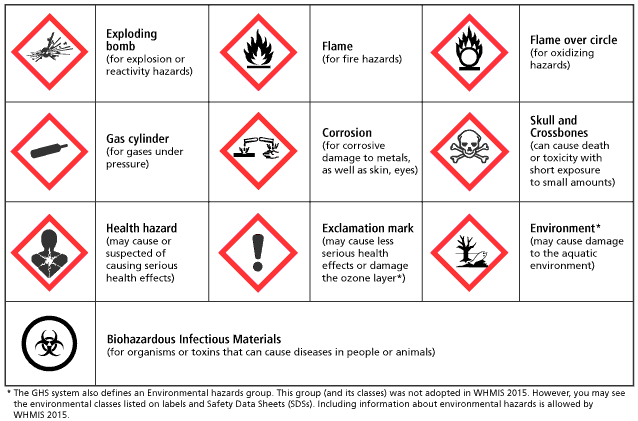
The corrosive symbol WHMIS is part of Canada’s Workplace Hazardous Materials Information System. You see it on chemical containers, safety data sheets & workplace labels. The symbol has a black pictogram of liquid drops on a hand and metal inside a white background with a red border. This sign is used in Canada to warn workers in the same way as in other countries.
Hazard Labels For Corrosive Sign
If you want to buy corrosive signs for the protection of your workplace from accidents. JACKWIN is a reliable company that manufactures worksite hazard signs which include clear labels for corrosive chemicals. Hence, you can purchase standard corrosive signs to provide a safe environment to your team members.
To Summarize
Hence, corrosive signs provide you warnings for chemicals at home, labs, in transport vehicles and workplaces. But the best safety approach depends on your environment. You can use clear labels, GHS symbols, strong warnings and WHMIS signs to protect your team and handle chemicals safely.


