

-80x69.png)
Do you notice that some roads let you drive fast without stopping your car, but others make you slow down at lights & intersections? Both freeways and highways take you to your destination. However, they are very different.
In today’s guide, we will tell you freeway vs highway comparison and how they handle traffic. You will also learn the safety rules you need to follow on freeways or highways.
What is a Freeway Road?
A freeway is a road designed for high speed traffic or driving. That means you don’t stop for traffic lights or crossings. It is a multi-lane road. They are built to connect cities, towns or other important places. You can use it to reach your destination in a fast way and in less time. The freeway is also called the expressway.

What is a Highway?
A highway is a wide road that is built to connect cities and different regions. It generally has multiple lanes for traffic. On highways, you can cover longer distances more easily. It has lower speed limits and carries a lot of traffic. Highways have an important role in trade, goods delivery, travel and daily life.

Difference Between Freeway and Highway
Freeways and highways both are major roads and serve different purposes. Below table will show the highways and freeways difference in a simple way.
| Freeway | Highway |
| Traffic only enter or exit at special ramps designed on freeway | Highways let you enter & exit t many points such as side roads or driveways |
| The speed limit on freeway is in the range of 65 to 85 mph | It has low speed limits, generally 50 or 55 to 70 mph |
| It has multiple lanes, overpasses, underpasses, merge lanes and smart traffic systems | Highway may have two lanes or more along with intersections, stop signs, roundabouts or mixed access |
| You may face fewer accidents, but crashes can be serious because of high speed | There is more chances of accidents due to lights/stops and mixed traffic (pedestrians) |
| Traffic can move smoothly and in continuous way plus you can easily merge with ramps/lanes | Mostly stops and slow downs happen and mixed traffic can block flow |
| You will find no traffic lights or intersections. Freeways only have ramps for entry and exit | It has intersections, lights, pedestrian crossings and driveways |
| Only fast vehicles allowed, so pedestrians, bicycles or scooters can not use freeway | Pedestrians and cyclists may use parts of the road and sidewalks or crosswalks may be present |
Access Control
Freeways have controlled access. That means, you can only enter and exit at designated ramps. You will find two types of ramps. These include on ramps which have merge lanes. Another is off ramps which are used to slow down vehicle speed before exit.
On the other hand, highways provide direct access or entrances. It also connects major roads, state routes, low speed roads or main streets. You will also see traffic lights & roundabouts which control vehicle flow.
Freeway vs Highway Speed Limit
Speed limit is one of the main differences between freeways and highways. Because freeways have no traffic lights and they are designed with controlled access (uninterrupted travel). This is why you can drive your vehicle at high speed on the freeway. The speed limit on freeways is between 65 and 85 miles per hour.
In contrast, highways mostly have lower speed limits as compared to freeways. You are not allowed to drive fast due to signal rules and mixed traffic. You have to maintain your car speed in the range of 50 to 70 mph.
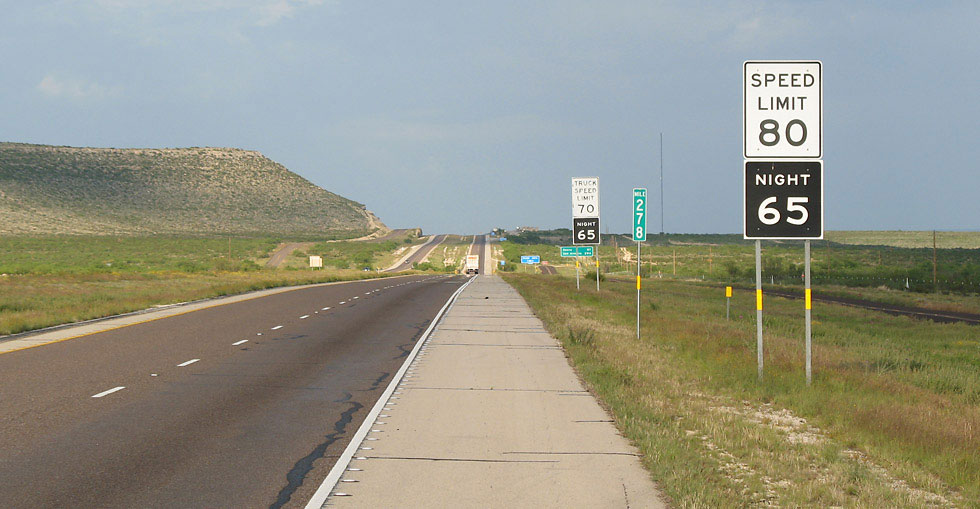
Design & Infrastructure
When you travel on freeways, you can see multiple lanes, underpasses, overpasses and merge lanes. This infrastructure keeps traffic flow smooth on this high speed road. Traffic authorities also installed technologies such as automated toll set up, adjustable speed limits & real time vehicle monitoring systems.
If we talk about infrastructure of highways, they vary in design. You will find partial access highways with multi lanes. And, some highways are designed with only two lanes. They also allow other roads to join them at certain points.
Safety Risks
As we mentioned, freeways are faster and more controlled, so there are less chances of crashes. However, accidents can be extremely dangerous due to high speed. Moreover, fatigue or long drives can reduce your attention too.
Highways have more intersections, traffic lights, stops and mixed traffic, which can increase the risk of accidents. Also, sudden stops or turns of highways can cause rear end collisions. This is because you must drive slowly and stay alert.
Flow of Vehicles
Freeways are designed for smooth and continuous traffic. Due to ramps and multiple lanes, you can merge your car safely without stopping. This keeps traffic movement smooth during busy times.
As you know, highways have intersections and driveways. Hence, vehicles may need to stop or slow down frequently. Mixed traffic can also affect flow. Because of these factors, you need to travel at low speed and situations are less predictable on highways than on freeways.
Number of Lanes
If we talk about the number of lanes on freeways, you will see multiple lanes in each direction. This allows you to move smoothly and let faster vehicles pass slower ones safely.
However, highways mostly have fewer lanes, sometimes only one or two in each direction. Fewer lanes can slow your car speed and cause congestion during peak hours.
Intersections and Crossings
Freeways and highways handle intersections and crossings in their own way. For example: freeways have no direct intersections, so you can enter and exit your vehicle only through ramps. This keeps traffic flow smooth and reduces stops.
Highways generally contain intersections, traffic lights, pedestrian crossings as well as driveways. This can slow down traffic and increase the risk of accidents.
Pedestrian & Non Motorized Access
Freeways are only suitable for fast moving vehicles. That’s why pedestrians, bicycles, push scooters and other non motorized traffic are never allowed. This rule is implemented to prevent serious accidents and keeps road users safe.
But, highways may allow pedestrians & cyclists to cross or use parts of the road. This way, highways are more accessible for nearby communities but increases the chance of accidents. They also have sidewalks or crosswalks to improve safety.
Safety of Freeways and Highways
Road users safety is very important on both freeways and highways. Hence, you also need to follow rules to avoid accidents and safe travel.
Freeway Safety
Well, freeway safety means you have to drive carefully and stay alert. For example: you should keep a safe distance from other cars and avoid distractions such as phones.
Plus, you must wear seatbelts and use your mirrors to watch blind spots. However, you will also find the following traffic safety devices placed on freeways for maximum safety.
- Traffic signs
- Guardrails
- Reflective markings
- Rumble strips
- Safety barriers
- Crash cushions
- Safety lighting
Highway Safety
Mostly, you will find highways busy, so you need to follow proper road safety rules and traffic signs instructions. According to WHO (World Health Organization), road accidents are the top cause of death for people aged 5 to 29. That’s why you will see many road safety tools and physical devices placed on highways and enforced strictly.
- Lane markings
- Safety signs and barriers
- Traffic safety cone
- Traffic signal light
- Emergency Call Boxes
- Work zone barrier
- Pedestrian Crossings
- Reflective posts
- Road Studs/Cat’s Eyes
- Variable message sign
Freeway Rules
- You should keep vehicle speed slow in the right lane of the freeway.
- It’s important to build up speed before you merge your car onto the freeway.
- You can use the left lane only for passing and move your car in the right to let others pass.
- Always remember to check mirrors, use signals, seatbelts and look over your shoulder when you want to change lanes or merge.
- You must avoid sudden braking and lift off the gas gently if needed.
- Plus, you should only change your driving lane when it is safe and does not block fast moving vehicles.
- In case you miss your exit, you have to continue to the next one and never back up on the freeway.
Highway Rules/Highway Safety Rules
- When you are on highways, it’s compulsory to follow posted speed limits and road regulations signs at all times.
- Never forget to carry your driving license and important documents such as your vehicle registration.
- You should maintain a safe distance from the vehicles in front of you.
- Drivers must watch for pedestrians and cyclists on or near the road.
- You should never drive under the influence of alcohol/drugs. As it is against safety law and may lead to an accident and fine.
- You have to follow lane or pavement markings and stay in your lane.
- On top of that, it’s also important to yield the right of way when required.
Freeway vs Parkway
| Freeway | Parkway |
| A freeway is built to cover long distances quickly | A parkway is designed for relaxed driving mostly through scenic areas |
| It allow you to drive at higher speed limits | Parkway generally has lower speed limits |
| This route uses ramps to control entry and exit | You may have direct access or find intersections |
| Freeways does have traffic lights or stops | Parkway might have stops & crossings |
| It let move almost all types of vehicles | It may limit heavy trucks in some areas |
Longest Freeway in the World
Australia’s Highway 1 is a network of high speed roads. It circles the country and connects all mainland capital cities except Canberra. It is approx. 14500 km (9,000 miles) long, which makes it the longest national freeway in the world. Every day, more than a million people use parts of this road.
Largest Highway in the World
The Pan-American Highway is the longest highway in the world. It stretches around 19000 miles (30000 km) from Prudhoe Bay in Alaska to Ushuaia in Argentina. You will also find a gap called the Darién Gap between Panama and Colombia. Hence, vehicles must cross it by boat or plane.
People Also Ask
Can Highways Go Through Towns?
Yes, highways can pass through towns and cities. Some highways are built as limited access roads. However, others run as surface roads with traffic lights and crossings. Newer highway designs use bypasses or tunnels to reduce traffic and improve daily life.
Which is Safer: A Freeway or a Highway?
In general, freeways are considered safer as compared to highways. As they have controlled access and fewer intersections. So, this reduces conflict points and sudden stops. However, accidents on freeways can be more dangerous because vehicles move faster.
Does a Freeway Have Tolls?
Yes, you will see tolls at many freeways near large cities or busy areas. These tolls are used to pay for road building and maintenance. Some freeways charge tolls for the whole road, but others charge you only for special lanes.
Can Emergency Vehicles Use Freeways?
Yes, absolutely. Emergency vehicles can use freeways. For example: ambulances, fire trucks & police cars use freeways to reach places faster. In such cases, other drivers should move aside and give them space. So, emergency workers respond quickly and save lives.
To Summarize
In the end, you are now well aware why freeways and highways have different rules and work in unique ways. As a responsible driver, you should drive carefully and must follow signs and speed limits set for both.
Our company JACKWIN has been manufacturing traffic safety products for more than 18 years. You can contact us to get high quality safety items & machinery for freeway or highway projects.


