

-80x69.png)
At truck stops, logistics hubs, warehouses & factories, you have to manage and park trucks safely. Trucks are large and heavy, so they require standard parking spaces with right dimensions.
Without a proper layout, truck parking can be risky for you. That is why we prepared this article to tell you about truck parking dimensions. You will also learn how to make your lot safe for all types of trucks.
Truck Parking Lot
A truck parking lot is a special space where you can park your large trucks safely. Basically, it has a bigger area and strong surfaces to handle heavy vehicles.
To design a parking truck lot, you need careful planning and familiarity with basic rules. Because there are a lot of factors that affect truck parking space safety and working.
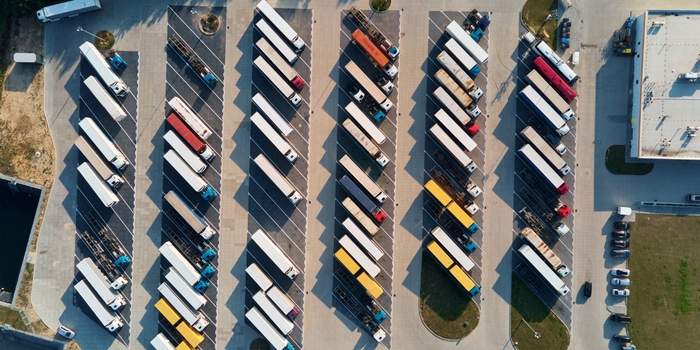
Standard Truck Parking Dimensions
To design or park safely and legally, you must know standard parking truck dimensions. So, you can provide enough space to fit and move large trucks.
Parking Space Width
The width for the truck parking zone can change based on the size of the truck. In most cases, the standard minimum parking space width you require to park a truck is 9 feet. However, bigger trucks may need more area.
Parking Area Length
The minimum length for a truck parking space is 55 feet. With this length, you can fit most smaller trucks safely. But, for longer trucks, you may need more space to park comfortably which is approximately 75 ft.
Maneuvering and Backing Area
Generally, you need extra area for trucks to turn and back safely. A good maneuvering zone prevents accidents and damage. Most lots provide 55 feet of lane width, so you can turn your truck easily. With clear markings and open space, you can make backing more safe.
Aisle Width Requirements For Parking Truck
An aisle in truck parking is actually the lane or space between rows of parked trucks. It allows trucks to move in and out safely.
| Type of Truck Traffic | Standard Aisle Width |
| One way traffic | 20 to 24 feet |
| Two way traffic | 36 to 40 feet |
| Emergency access | 20 feet wide to follow fire safety rules |
Inner & Outer Turning Radii
You should make sure that the inner turning radius must be 28 to 35 feet minimum. The outer turning radius can range between 40 to 60 feet. But, 60 feet is recommended by parking designers for most trucks. With proper turning radii, you can avoid hitting curbs or other vehicles in the lot.
Vertical Clearance
You also need enough vertical space for trucks to pass safely. The standard vertical clearance is 14 feet. This clearance area stops tall trucks from hit signs/lights or structures.
| Type of Parking/Truck | Minimum Vertical Clearance |
| Specialized loads (oversized cargo truck) | 15 to 16 feet |
| Refrigerated units | 13. 6 feet |
| Open truck lot parking | No standard height restriction |
| Covered truck parking space | 14 ft |
Loading Dock Area
In parking truck areas, loading docks are important to make loading and unloading of cargo safely. It should be large enough to cover two times the length of the truck bed. This size allows you to do your work without any risk. If the dock is too small, you may face accidents or damage to goods and trucks.
Loading Dock Height: A standard loading dock height is around 14 feet
Loading Dock Width: Loading docks must 10 feet wide
Individual Truck Parking Lot Design Standards
You need different design standards for different types of trucks and situations. Hence, you need to plan according to each type of truck to make your lot efficient.
| Dimensions | Semi Trailer | Truck+Trailor | Box Truck/Delivery | Standard Tractor |
| Width | 14 feet | 14 ft | 12 feet | 15 feet |
| Length | 55 feet | 75 feet | 25 ft | 30 ft |
| Over all Parking Area | 770 sq ft | 1050 sq ft | 300 square feet | 450 sq ft |
What Zoning is Required For Parking Trucks?
Zoning for truck parking means the local rules related to lots. These regulations decide where you can build a truck parking lot plus what type of trucks can use it. For example: some areas permit commercial parking truck, but others restrict large vehicles.
- You should allow enough space for trucks to park and move in in busy trucking areas.
- It’s also required that truck parking should be near highways or main roads to make access easy and avoid extra detours for drivers.
- You need properly zoned land for parking truck. But, if you have limited land, you must find alternative solutions for safe parking.
- You have to collaborate with trucking and logistics companies to know their needs and fulfill practical zoning rules for parking trucks.
Semi Truck Parking Dimensions
You need specific dimensions for semi truck parking because these trucks are larger and longer as compared to standard trucks. Below section show you the standard size for semi truck parking area.
Semi Truck Parking Lot Design: Small Truck Parking Dimensions
Just like regular trucks, small semi trucks need proper space to park safely. For a semi trailer, the parking space must be 55 feet long and 14 feet wide.
But, if it has an attached trailer, the space should be around 75 feet long and 14 feet wide. This way, you can park without hitting other trucks or structures.
Fire Truck Parking Dimensions
To park a fire truck, you definitely need a lot more space than a regular truck. A standard space for a large fire truck should be about 15 feet wide and 30 to 40 feet long. For bigger or to allow extra maneuvering space, you need parking space up to 75 feet long and 14 feet wide.
Different Truck Parking Design
Parallel Truck Parking
The parallel parking layout is best for narrow and long lots near highways. In this design, parking spaces are designed parallel to the traffic flow. Each space is 75 feet long and 14 feet wide for a truck with a trailer.
If we talk about aisle width, it must be at least 20 feet for one way traffic. This layout uses land efficiently and you can use 65 to 70% of the area effectively.
Angled Parking Spots
Angled parking spots allow trucks to park at different angles to the aisle.
- A 30 degree angle is best for easier backing. It needs an aisle at least 24 feet wide.
- You can design a 45 degree angle to balance efficiency and maneuverability. It requires a space of 53 feet long and 16 feet wide. Plus, you need an aisle width of 26 feet minimum.
- A 60 degree angle gives you maximum efficiency but requires skilled drivers to park safely.
Perpendicular Parking Space
In a perpendicular parking layout, you can park trucks at a 90 degree angle to the aisle. It is approximately 75 feet long and 14 feet wide for a truck with a trailer. Moreover, the aisle should be at least 36 feet wide for two way traffic.
Safe Parking of Your Truck
CCTV cameras are installed to monitor truck parking lots. This way, you can prevent theft/vandalism and track any suspicious activity.
Security fencing around the lot keeps unauthorized people out and shields your trucks and cargo.
Wheel stops and bollards are used to stop trucks from rolling too far and hitting other vehicles.
Reflective markings & parking signs are placed to guide drivers, so they can park safely.
Fire extinguishers & hydrants for quick access in case of fire. They keep trucks and drivers safe.
Speed bumps are perfect to slow down trucks inside the lot to avoid accidents.
Emergency exits & pathways clearly mark exits and paths so people can leave safely during emergencies.
Traffic cones & safety barriers used to manage traffic flow and block unsafe areas temporarily.
Drainage systems prevent water buildup and slippery surfaces which keep trucks and drivers safe.
Frequently Asked Questions
How To Find Hotels With Truck Parking?
You can search online with the use of maps or travel apps and filter for truck friendly hotels. You should look for places near highways with large parking lots. Also, you must call the hotel ahead to confirm truck parking availability.
Do Truck Stops Charge For Parking?
Yes, many truck stops charge you for parking in busy areas. Some still offer you free spots for a short time or with a purchase. Mostly, paid parking includes reserved spots and amenities such as showers. It costs you around $12 to $20 per night.
How Much Land Do I Need For a Profitable Truck Parking Lot?
Generally, you will need 4 to 6 acres for a medium sized operation. It includes roughly 40 to 50 spaces per acre. The exact size depends on location, truck types, amenities and layout. Other factors are land shape, road access, zoning and drainage.
Can I Convert An Existing Parking Lot To Truck Parking?
Yes, you can shift an existing parking lot to truck parking. But, you must check local zoning (industrial or commercial is best) and make sure pavement can handle heavy trucks. You will also need enough space for large vehicles and may require permits.
Conclusion
I hope you now have complete knowledge of truck parking dimensions and which rules you need to follow to design it. So, you can choose the right sizes and layout according to your business and number of trucks.
Once your parking layout is ready, you can contact us for truck parking safety products and markings to complete your project.


