

-80x69.png)
According to the latest study of HCSS and AGC in 2025, around 60% of highway construction companies experienced one dangerous car accident at the construction area. But you can avoid this accident ratio if you assign a flagger to that worksite.
We have made this guide to tell you what a flagger is and what role they play to maintain safety. Further, you can see the tools they use, how they protect you and legal requirements to become a flagger.
What Does Flagger Mean?
What is a flagger in driving? A flagger is a trained and certified person who controls traffic in work zones, construction sites, road maintenance and in emergencies. These professionals basically work for construction companies or government agencies to make workplaces safe. They are responsible for the protection of workers and drivers safety.
As a flagger, you have to stay active all time on duty and ready to handle any unexpected issue. Flagger also known as traffic control flagger, flagperson, flagman & flagwoman. They are also called signallers, traffic guards or traffic marshals.
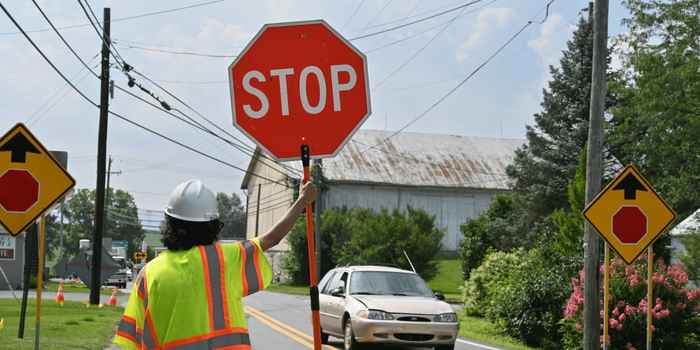
Road Work Flagger
A road work marshal is a professional who manages vehicles and pedestrians during road repairs. Majorly, you will see them on public and busy roads where one lane is closed or detours. A traffic controller stands in a safe location and guides you with signals or tools.
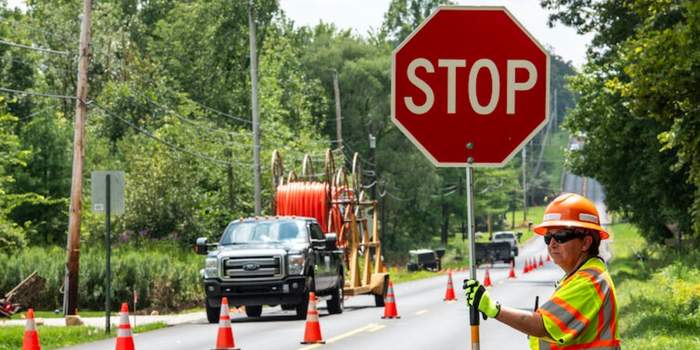
Construction Flagger
A construction flagman or traffic control technician is responsible for the management of traffic at construction sites. These places include near roadways, urban areas, parking areas or busy work locations. They protect you and crew from the danger of heavy equipment and risky areas at the workplace.
What Does a Flagger Do?
Following are major duties of a flagger or traffic controller.
Direct Traffic
With the use of safety signs and hand signals, traffic marshals guide you around construction sites. They may stop you and then inform you about safe directions/routes to manage the flow of vehicles. You should follow flagger instructions to drive safely in busy intersections and dangerous paths.
Guide Motorists About Detours
Flaggers give you clear instructions when roads or lanes are closed. For example: they show the correct detour routes with signs or signals. To avoid accidents and reach your destinations safely, you should follow their directions.
Collaboration With Construction Workers
It is one of the main duties of a signal person. You have to coordinate with utility crew, construction workers, supervisors or other signallers. This way, you can safely guide two way traffic on a single lane highway. You must inform workers if you notice any problem which can affect the progress & safety of heavy machinery and jobsite.
Keep the Record of Undisciplined Drivers
If you don’t follow rules, signal person instructions, construction signs and signals, the flagman will observe your behavior. After that, the record is submitted to a supervisor or law enforcement officers. As a result, you may face legal challenges and penalties.
Monitor Traffic Flow
A traffic controller is responsible for the monitoring of vehicles flow and road conditions. For example: they need to check motor vehicles volume, traffic pattern, pedestrian flow and any possible danger in the work zone. In case you observe any problem, you must inform the supervisor. In this way, construction managers and traffic authorities can make right decisions.
Communication With the Crew
As a signaller, it’s important for you to collaborate with site workers on site and employees instead of only supervisors. So that you can make the project successful without any delay and risk. Flaggers must share information with crew related to traffic patterns and possible risks. For this purpose, you can use two way radios or hand signals too.
Inspection & Placement of Signs
As you know, traffic safety signs and barriers are the most important tools for the safety of drivers and pedestrians around jobsites. Hence, flagman responsibilities also include to properly place and maintain these devices. They make sure defence barriers and cones stay visible, upright plus follow MUTCD rules.
Respond To Emergencies
Traffic guards also assist emergency vehicles such as police cars, ambulances & fire trucks. So, they can safely move around work zones and have easy access. For instance: controllers quickly stop traffic and create a clear path in case of danger. This way, they allow emergency vehicles to reach their destinations in less time.
How Long Can a Flagger Hold Traffic?
There is no fixed time and universal rule about how long road controllers can stop traffic. However, government traffic safety agencies such as OSHA in America and WorkSafeBC provide principles, which you must follow.
These standards say, traffic signallers generally can stop traffic for a maximum 15 to 20 minutes at a time. The reason is, if you hold traffic more than this limit, it can lead to congestion and frustration among drivers. This all may result in unsafe driving and delays. Remember, this time varies according to state regulations and volume of traffic.
Tools Used By Flaggers: Traffic Control Equipment
Below we mentioned flagging equipment which traffic controllers commonly use.
| Items For Flagging Operations | Quantity Required |
| Road Work Ahead signs | 2 |
| One Lane Road Ahead signs | 2 |
| Flagger Ahead Signs | 2 |
| Stands | 6 |
| Traffic Control Safety Vests | 2 |
| Stop Slow Bats /Paddles | 2 |
| Safety Cones | 15 |
Signal Flags/Flagger Sign
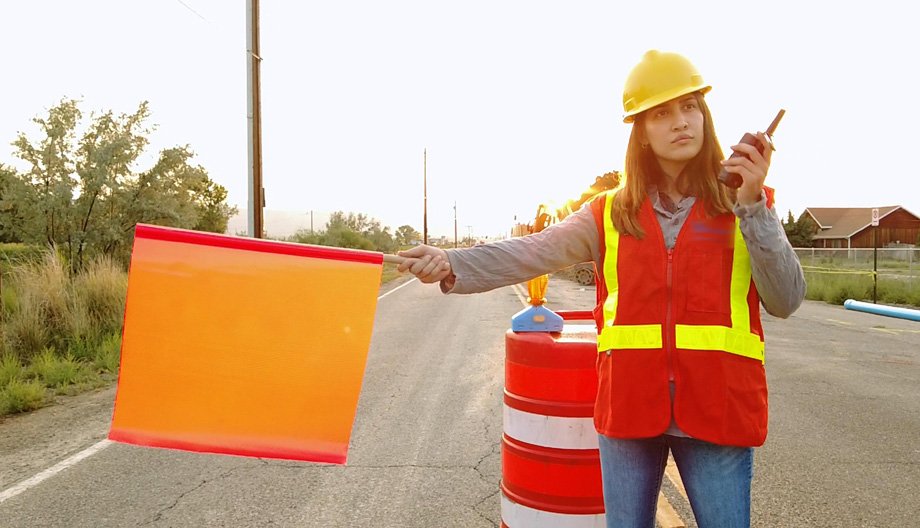
Flaggers use signs and signals to convey important information to drivers. For example: you will see speed limits, lane closures or detours on boards. Due to this guidance, you can drive safely in work zones.
Mostly, you will spot these signs placed on stands or vehicles. Further, signals can be hand held or on poles, which flaggers used to communicate with drivers from a distance.
Stop/Slow Paddles
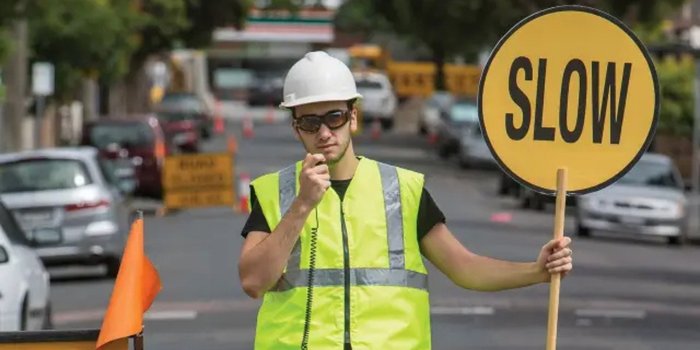
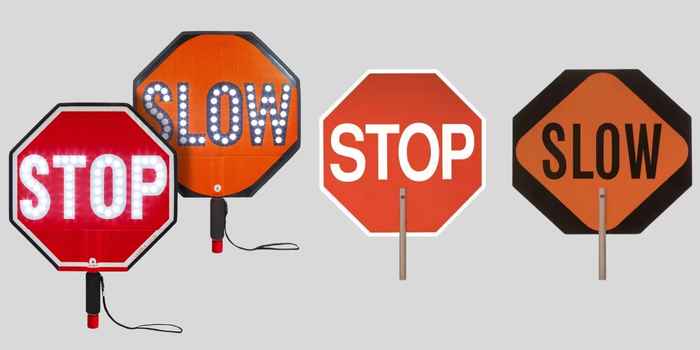
Traffic marshals use STOP/SLOW paddles to control traffic in jobsites. For example: the STOP side (red with white letters) informs you that you need to wait. But, the side of the paddle with text “SLOW” (orange background with black letters) tells you to move your car carefully. Additionally, you can easily see them from a distance due to their reflectivity and bright color.
High Visibility Vest
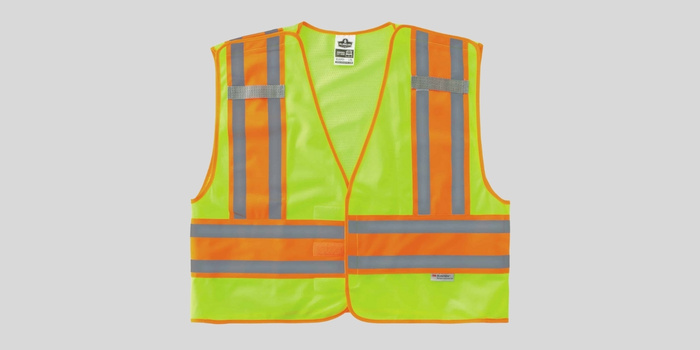
In low light conditions or at night, you definitely need personal protective equipment which makes you visible to others. That’s why you can wear reflective clothes such as high visibility vests.
These clothes are made with bright colors and reflective strips. Therefore, workers and drivers can easily see flaggers on the road. They not only protect controllers but are also helpful for drivers to follow flaggers’ signals and avoid accidents.
Helmet or Hard Hat
If you work as a flagperson, it’s compulsory for you to wear high visibility hard hats to protect your head from danger. The risky object can be anything like falling objects, vehicle crash impact or electrical hazards in workplaces. It’s also important to confirm that your hat or helmet is manufactured according to ANSI requirements.
Generally, ANSI Type I or II and Class E or G are safe options for you. We recommend you to use a helmet with chin straps for extra protection. Keep in mind, hard hats are still a standard choice.
Traffic Cones and Barricades
Road signallers widely use road safety cones and barricades to mark work locations. This keeps drivers away from dangerous areas. With the placement of cones, you can create a clear physical boundary between construction site and traffic.
Apart from this, barricades like barrels or drums are installed to completely block road sections and entire lanes. These are ideal tools used by controllers to manage motor vehicle flow and other road users.
Automated Flagger Assistance Devices
If we talk about automated flagger assistance devices (AFADs), these are advanced & remotely operated machines. You can use these equipment to control traffic and for the prevention of work areas. You need only one operator to handle this machine. Because it is designed with automated flags, 12 inch red signal lights plus reflective signs.
So, flaggers can control it with a radio remote or a cable connected directly to the unit. Somehow, AFADs remove the need for flaggers to live present in TTC zones. However, it is still not a complete alternative to a qualified signal person.
Flashlights or Wands
Flaggers also use flashlights or lighted wands to guide you in low light or at night. Basically, these tools make controller signals easy to see from a distance. As a responsible driver or pedestrian, you should watch these lights carefully and follow the directions. They keep you safe in bust areas when visibility is poor.
Flagger Positions
Stand in a Visible Spot: Flaggers must stand in front of the first cone (200-300 ft ahead of a work zone), so drivers can see them. Further, the flagging station must be visible too and not blocked by trees or shade. On curved roads, you can place cones in a way that you have a clear view of oncoming traffic.
On the Shoulder: Traffic controllers mostly prefer the road shoulder whenever possible to guide you. This keeps them safe from moving vehicles and still allows you to see signals clearly.
Center Line Exception: As a flagger, you should never stand in the middle of a travel lane. Because it can be risky for you. The ideal positions are on the shoulder or the edge of the road.
Escape Route: You always need to make sure there is a clear escape route behind you in case a vehicle enters the work zone. Also, this path should never be blocked by cones, guardrails or other obstacles.
Different Types of Flagger Jobs
| Flagger Types | Responsibilities or Job Function |
| Construction Flagman/Traffic Controller | Works on road, bridge, infrastructure projects & guide traffic with devices |
| Railroad Flagger | Operate manually to control train or maintenance traffic when signals fail |
| Utility Flagger | Handle traffic around temporary utility work such as electrical, water or underground cable installation or repairs |
| Airport or Aviation Flagger | Manages vehicle movement on airport taxiways or service roads |
| Emergency Flagger | They work in low visibility or emergency situations with high visibility PPE |
| Travelling Traffic Control Flagger | These flaggers moves with mobile or rolling work zones to control traffic along the route |
| Parking Traffic Control | They directs traffic for large crowds, concerts or sport events |
How To Become a Flagger?
- Basic Requirements: The candidate for flagman job must be at least 18 years old. It’s also important for you to complete your high school diploma or an equivalent certificate.
- Flagging Training: You need to get training from a professional. Well, you should choose a trainer who is certified by the American Traffic Safety Services Association (ATSSA). In these sessions, you will learn how to control traffic safely, handle emergencies, communication skills & equipment use.
- Pass the Exam & Get Certified: Finally, you need to clear the certification exam. Some allow you to use your training materials during the test. How to get a flaggers card? Once you pass the test, the organization will provide you with an official certification card. Thereafter, you are qualified to work as a traffic guard.
What is a certified flagger? A certified flagger is a person who has completed official training. They also passed a test to control traffic safely in work zones. The basic purpose of certification is to confirm that you know how to guide drivers & protect workers.
What is flagger certification? Construction flagger certification is the official approval you get after completion of training and exam. It’s compulsory for you to get certified if you want to be hired as a flagger. Because, this permit is mostly required by law or company rules before you can work as a traffic/construction controller.
You can read this Reddit discussion where people have shared their real experiences and advice about becoming a union flagger.
How Much Do Flaggers Make?
In the United States, flaggers generally earn around $36000 per year as of early 2026. Below are estimated salary ranges of a traffic controller based on job type.
| Type of Flagger | Monthly Pay | Weekly Pay | Annual Salary | Hourly Rate |
| Traffic Control Lead | $7373 | $1701 | $88,479 | $42.54 |
| Parking Supervisor | $4322 | $997 | $51871 | $24.94 |
| Road Work Flaggers | $3770 | $870 | $45243 | $21.75 |
| Transport Support Attendant | $3201 | $738 | $38415 | $18.47 |
| Entry Level Flagger | $2997 | $691 | $35965 | $17.29 |
Flagger vs Crossing Guard
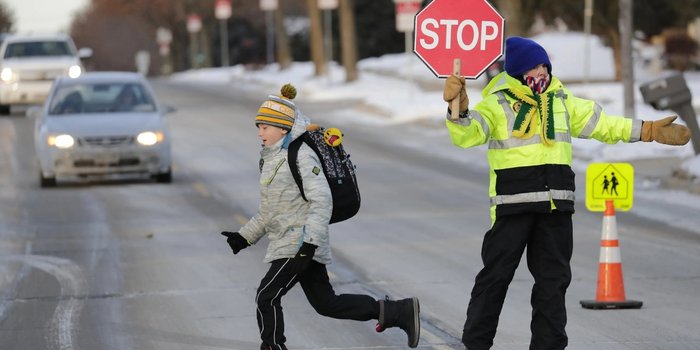
Traffic guards majorly handle traffic near construction or work zones. They guide vehicles, pedestrians, protect workers and use tools like STOP/SLOW paddles or signs.
In contrast, crossing guards are responsible for the protection of children and pedestrians. You will always see spotters near school zones. Hence, they focus on foot traffic instead of construction or road work.
Difference Between Flagger and Spotter
A signal person or TCP is a worker who manages road traffic around utility work & construction zones on public or private roads. Their main job is to protect both workers and drivers. Road controllers are among the most exposed workers on a job site.
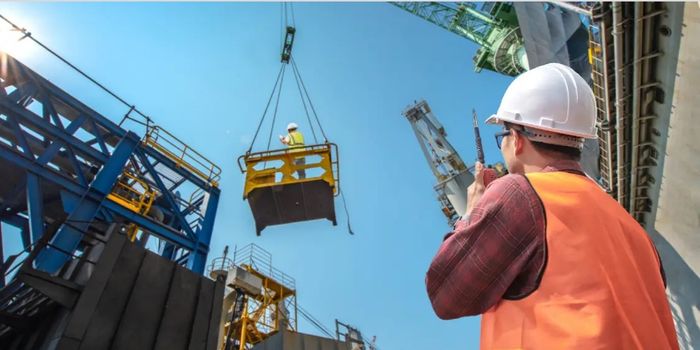
On the other hand, a spotter actually guides the movement of heavy equipment, vehicles, or loads where the operator cannot see clearly. Unlike flaggers, spotters do not control public traffic. They help equipment operators to prevent collisions and pinch point injuries.
Final Thoughts
It is clear that major responsibilities of a flagger include traffic handling, improving vehicle flow and safety of construction sites. But in Australia, you will see flaggers also help traffic police in the investigation of accidents. It’s also a fact that approximately 28% drivers violate signals of traditional flaggers. According to a recent study, when flaggers use a smart alert system, this ratio decreases to only 10% of drivers.
If you are a project manager or site supervisor who is looking for high quality safety products for flaggers, we are the perfect partner for you. We are proud to say, JACKWIN’s safety products are manufactured according to international safety standards. Contact us anytime!
FAQs
How Many Hours Does a Flagger Work?
Flaggers commonly work 8 to 12 hour shifts and spend long hours to direct traffic. However, the most common hours on a job are 40 hours per week. This time limit can range between 10 to over 60 hours based on the project.
When Can a Single Flagger Be Used?
One guard can handle traffic in a one lane and also in a two-way work zone when the area is short enough (under 200-300 feet). So, the controller can see the whole area. This setup works best on straight & low traffic roads with clear visibility from both directions.
When is it Not Typical To Use Flaggers?
Flaggers are mostly not required on freeways. The reason is that high speed traffic and multiple lanes make it unsafe. On these roads, traffic is controlled with signs, barriers, cones or police officers. You will also not find traffic guards in low risk survey work or areas.


