

-80x69.png)
Research says that about 14.89% of aviation accidents happen due to ground aircraft collisions. This means the risk does not only exist in the air. It is also present on the ground.
The solution to this problem is aircraft marshalling. That is why we prepared this guide for you. Today, you will learn about aircraft marshalling & its signals.
What is Aircraft Marshalling?
As you know, when an aircraft moves on the apron, clear direction matters. You will observe visual signals between the pilot and a ground crew member. This direct connection is called aircraft marshalling.
Marshalling is one-on-one visual communication. It is an important part of aircraft ground handling. Sometimes, it works instead of radio contact. In other cases, it supports communication between the aircraft and air traffic control.
What is an Aircraft Marshaller?
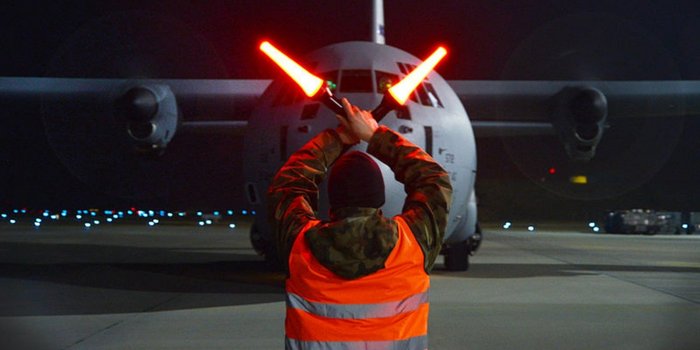
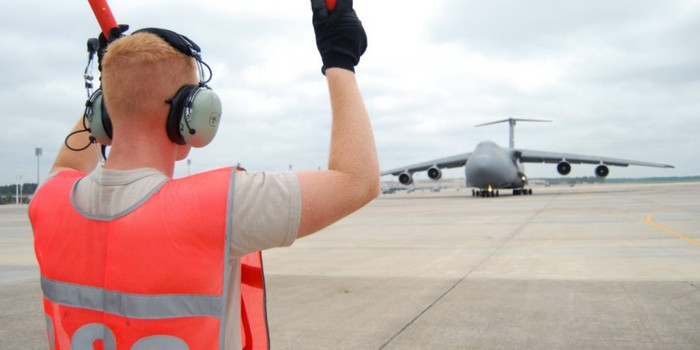
You will see a trained ground crew member in front of the aircraft. That person is an aircraft marshaller. An aircraft marshaller gives clear hand signals to direct the pilot during taxi & parking. The marshaller stands in full view of the cockpit.
Importance of Aircraft Marshalling
Protects Aircraft and Ground Staff
You are well aware that large aircraft block the pilot’s full view. The cockpit does not show every angle. Here, as a marshaller you have to act like the pilot’s eyes on the apron. You have to guide the aircraft away from vehicles, equipment, obstacles and other planes.
Gives Support in Low Visibility
Actually, fog, rain, smog or dust can also limit the view of pilots. Some airports also lack advanced surface radar systems. In such cases, clear hand signals from a marshaller guide the aircraft safely.
Ground Work on Schedule
Airports follow tight time slots. A small delay can disturb your flights. Marshalling directs the aircraft to the right stand without confusion. Parking, loading & unloading take place in an orderly way. This makes arrivals and departures on time, even in case of rush hours.
Reduces Ground Collision Risk
Busy airports have many aircraft, fuel trucks, baggage carts and service vehicles. One wrong move can cause a serious incident. The marshaller leads the aircraft safely during taxi and toward the runway or parking bay. This reduces the chance of ground collision.
Essential for Smaller Airports
Not every airport has modern guidance systems. Many small or remote airports depend on manual direction. For example, in countries like Nepal, several domestic airports rely heavily on marshallers for safe aircraft movement. In such places, marshalling is not optional. It is the main safety method.
Aircraft Marshalling Signals
Aircraft Marshalling Hand Signals
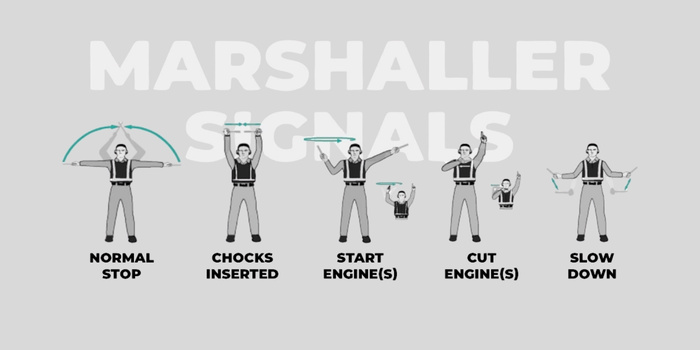
You can call these signals as FAA marshalling hand signals, aircraft marshalling wand signals or military aircraft marshalling signals. In this table, all the signals are elaborated.
| Marshalling Command | Marshalling Hand Signals |
| All Clear | Arms raised above the head with wands. The body faces you directly. |
| Turn Left / Right | The marshaller extends one arm at 90 degrees. You follow the extended arm. That arm shows your turn direction. |
| Slow Down | Extend your both arms slightly forward. Your hands should move up and down between waist and knees in a pat motion. |
| Shut Down Engine | You have to move the wand across the throat in a slicing motion. |
| Follow-Me | A clear point toward the “Follow-Me” vehicle, the vehicle directs forward to a parking stand. |
| Insert Chocks | You have to raise wands above the head and move inward until they touch each other. |
| Pull Chocks | There is the same position, above the head, but wands move outward. |
| Start Engine | One hand makes a circular motion while the other points to the specific engine. You should start the indicated engine only. |
| Proceed Straight Ahead | Repeated forward hand motion directs you to taxi straight without any turn. |
| Flagman Direct Pilot | The signalman stands in front of you and gives continuous hand signals as per required direction. |
| Normal Stop | Both arms extend fully sideways at shoulder height (90°). Then arms move slowly upward above the head until both wands cross. |
Helicopter Marshalling Signals
| Command | Meaning of Signals |
| Take-off | Raise your both arms above the head. Your palms should face upward. After that arms move upward in a smooth motion. |
| Land | Similarly, both arms extend downward at about 45°. Your palms should face the ground and arms move slowly downward. |
| Move Upward | Now, arms bend at elbows with palms up and hands move upward repeatedly. You should increase altitude slightly |
| Move Downward | Arms bend at elbows with palms facing down. Plus, your hands must move downward in short motions. |
| Move Left | The right arm extends out to the side. The left arm bends and moves toward the body. |
| Move Right | On the other hand, the left arm extends out to the side. The right arm bends and moves toward the body. It means move toward the right. |
| Move Forward | If the marshaller bent both arms at elbows and move hands toward the body in repeated motions it shows to move forward |
| Move Rearward | Arms extend forward and hands push away from the body in repeated motions. Now, as pilot you should move the helicopter backward. |
| Hold Hover | Both arms extend straight out to the sides at shoulder height with no movement. |
| Release Sling Load | One arm points downward toward the load area. The other hand makes a clear opening motion. |
Aircraft Marshalling Requirements
If you plan to work as an aircraft marshaller, you must meet some basic standards. This role needs focus, discipline plus a strong safety sense.
- You should have a high school diploma or equivalent. Plus, extra aviation training can give you more advantages.
- Previous marshalling experience is useful, but not always required. Many airports provide their own job training. Still, basic ground handling knowledge can strengthen your profile.
- You must understand airport regulations and aviation safety standards. Airports follow global practices from bodies like the International Civil Aviation Organization.
- You need full command of approved marshalling signals. Each arm position has a fixed meaning. Because mistakes can cause confusion or risk.
- Your clear speaking skills matter the most. You can use radio equipment to coordinate with ground staff and flight crew.
- This job requires stamina. Because you have to stand for long hours on the apron. You work in heat, cold, wind or rain.
- You must notice every movement around you. Aircraft, fuel trucks, service vehicles; all move at the same time. Strong attention to detail makes everyone safe.
- Here, pressure situations can arise, especially during emergencies. Therefore, you must stay calm and take correct action.
- Some airports require official marshaller certification. If you have it, your chances may improve.
Aircraft Marshalling Equipment
When you guide an aircraft on the apron, you do not rely on hand signals alone. Proper equipment makes you visible and clear in communication. Each tool has a specific purpose.
Aircraft Marshalling Lights
Aircraft marshalling wand & aircraft marshalling torch are tools that are used to improve visibility. Especially, in case of night operations or low light conditions. You have to hold them in your hands so the pilot can see your signals clearly from the cockpit.

Aircraft Marshalling Paddles
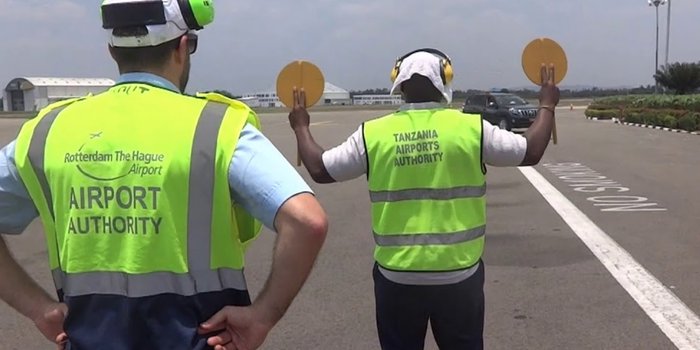
These paddles are simple hand-held signal tools. You can use them during daytime ground operations. They are flat, round or rectangular boards with bright colors like red, orange or yellow. You hold one paddle in each hand. Your clear arm position and body posture give direction to the pilot. Well, paddles do not produce light but they work best in good visibility conditions.

Airport Marshall Vest
This is a highly visible vest. You wear it on the apron, so pilots and ground drivers spot you quickly. The vest comes in bright colors like neon yellow or orange. Moreover, reflective strips are used on it that shine when aircraft lights hit them.
If you wear it, you become visible in day, night, fog, or rain. On a busy apron, many vehicles and aircraft move at the same time. So, clear visibility reduces risk and avoids confusion.
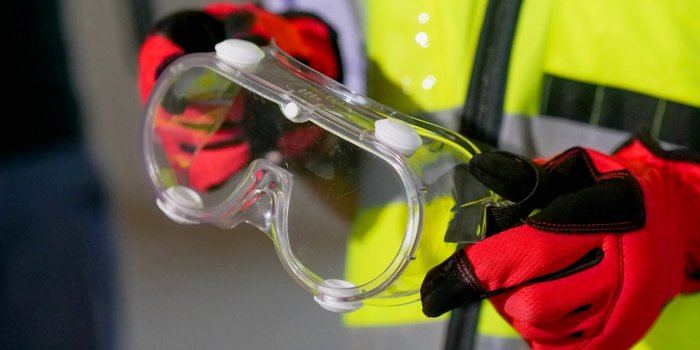
Safety Goggles
Safety goggles protect your eyes on the apron. You can stand close to aircraft engines, service vehicles & moving equipment. Which means strong wind, jet blast, dust or small debris can hit your face without warning.
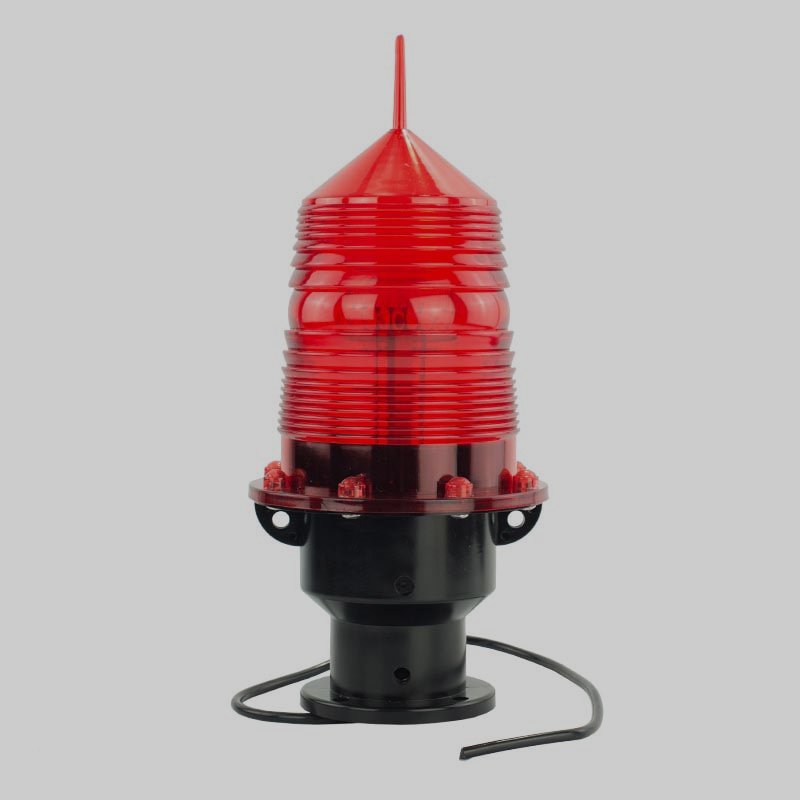
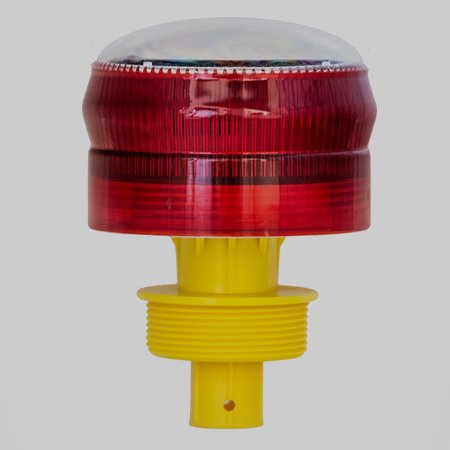
Beacon Lights
A flashing beacon gives a clear warning that aircraft activity is in progress. These lights usually mount on vehicles like the Follow-Me car or other ground support units. The bright rotating or strobe light catches attention from a distance. This reduces the risk of collision in low visibility or night operations.
Follow-Me Vehicle
This vehicle guides your aircraft on the ground. You see it ahead with bright flashing lights and clear “Follow Me” signs. The pilot stays behind it and follows the exact path. Airports use this vehicle when the stand is hard to find. For instance, when construction changes taxi routes or when a new crew arrives. This step prevents wrong turns on a busy apron.

Ear-Plug
As you know, aircraft engines produce very high noise levels. Like jet blast and auxiliary power units create a constant loud sound around you. You should place ear plugs inside your ears before the movement of the aircraft. They will reduce noise exposure and protect you from long-term hearing damage.

Aircraft Marshalling Qualification
If you want to work as an aircraft marshaller, you need specific qualifications. In many countries, official certification is mandatory; for example, India requires a certificate approved by DGCA. On the other hand, international certifications from IATA or ICAO are highly valued. You also need a strong understanding of aviation safety rules & airport operations.
Aircraft Marshalling Training
Most airports require you to complete a recognized training course. For example, training that is offered by IATA, TSA-approved sectors plus aviation colleges. In this training you learn standardized hand signals, ground safety & communication procedures.
Physical fitness is essential, as you must stand and signal aircraft for long hours. Clear communication skills are required to coordinate with pilots and ground staff, often using radios or other devices.
Aircraft Marshalling Salary
How much do aircraft marshallers make? Aircraft marshaller salaries depend on factors like location, experience, airport size, cost of living, local demand and airline policies. In this table you will learn about wages for aircraft marshallers in several U.S. cities.
| Cities | Hourly Salary | Weekly Salary | Monthly Salary |
| Seattle | $34.06 | $1362 | $5903 |
| Southwest | $32.85 | $1314 | $5694 |
| Prudhoe Bay | $34.76 | $1390 | $6025 |
| Renton | $32.82 | $1312 | $5688 |
| San Francisco | $36.88 | $1475 | $6393 |
| Andrews | $33.78 | $1351 | $5855 |
| San Jose | $35.18 | $1407 | $6097 |
| North Bend | $32.83 | $1313 | $5690 |
| Southeast | $33.30 | $1332 | $5772 |
| Waimea | $33.74 | $1349 | $5848 |
To Summarize
Now you can understand how aircraft marshalling plays a vital role in an airport. If you want to make your airport safe you should hire a well trained person and proper tools as well. The person should have adequate knowledge about runway lights, parking area, radio communication plus ATC signals.
Frequently Asked Questions
Dangers of Aircraft Marshalling?
Aircraft marshalling involves real ground risks. You may face jet blast, engine suction, moving aircraft and service vehicles closer to you. Moreover, high noise, harsh weather & long duty hours can also affect your safety.
What is VDGS?
Well, this is the modern alternative of aircraft marshaller. Basically, VDGS stands for Visual Docking Guidance System. It is an automated system that guides your aircraft to the correct parking position at the airport gate.
What is Wing Walker Marshalling?
Wing walker marshalling is a safety support role during aircraft arrival at the gate. Actually, wing walkers stand near the wings and ensure no staff or vehicles pass between the marshaller and the aircraft when it arrives.
Related posts:
Airport Signs and Markings: Your Complete Guide For 2026


