

-80x69.png)
If we talk about the global market size of airport construction, it was $1.2 trillion in 2024. In 2030, it could be projected to cross $2.5 trillion. This growth shows you more airports will be built and updated.
So, if you want to build an airport, you can read this guide. You will learn about major components of the airport, its operational steps for construction and cost breakdown.
Aviation Construction
Airport or aviation construction means the process of building complex infrastructure for your air travels. This construction mainly includes constructions of terminals, runways, hangers or control towers. Basically, these things are built under regulatory bodies like the FAA (federal aviation association).
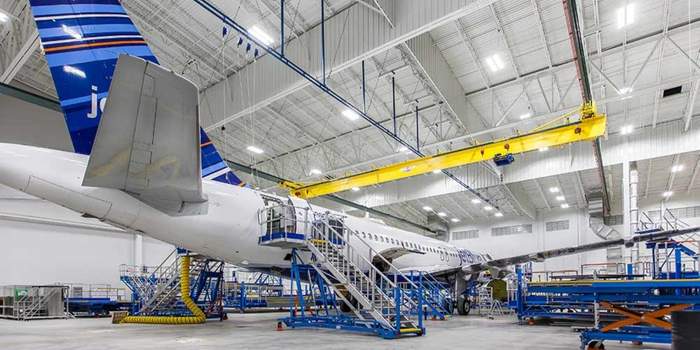
Major Components of Airport
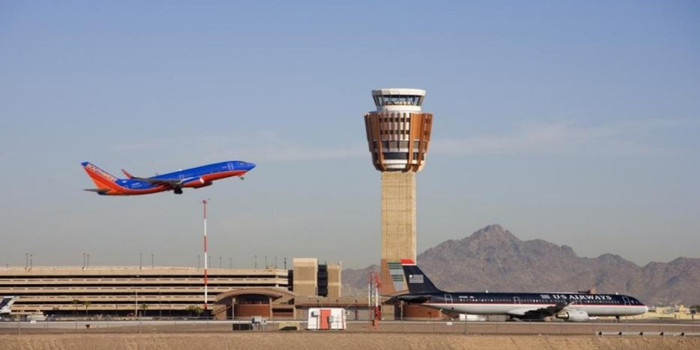
Airport Control Tower
Airport control tower is a tall building that is designed according to the requirements of your airport capacity. It is equipped with ATCs (air traffic controls). Because the movement of the flights on runways, taxiways, apron and near air space is controlled by this tower.
The experts in the control tower guide pilots at each and every second. That’s why it must have an advanced communication setup & navigation system.
Airport Terminal or Airport Terminal Floor Plan
You can build an airport terminal in many designs like pier, satellite, linear, star or a half-circle style. But each design should be made with proper security facilities. Because, this is the main building where you check boarding passes before and after the flight.
Your proper checking is done in this section of the airport. So, you have to make an airport terminal floor plan first.
Construction of Airport Runway
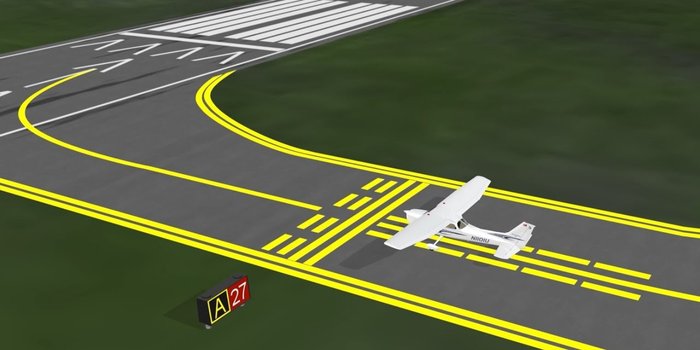
An airport runway is a long strip where a plane starts its flight and ends it. You find it in the direction of the wind for the safety of the plane. You may also see clear numbers on it. These numbers show the direction of the runway. For example, runway 27 means 270°.
When you construct a runway you have to consider the solid ground & strong layering of concrete or asphalt. In addition, right friction is also necessary for the secure landing and takeoffs.
Airport Taxiway
A taxiway is a marked path on the airport. Mainly, it connects runways, terminals, hangers and other related portions. This is designed in such a way that planes can move easily between the runway and parking. In this way, they keep the runway clear for takeoffs and landings. You see clear markings and blue lights to guide planes on it.
Airport Apron Design & Dimension
Well, the aircrafts are parked in aprons. This is the place where the luggage is loaded & unloaded. Moreover, planes are refueled & maintained here. A good apron must be designed to allow safe movement of the aircrafts. For this reason, your apron must have connections with multiple taxiways.
Airport Parking Design
Airport parking garages follow accessibility rules like AODA. You may see special accessible parking spots, ramps & elevators here. Clear signs are installed to guide you safely through the garage.
Airport Construction Requirements
Airport Pavement Design
There are two types of pavement on an airport: flexible pavement and rigid pavement. Well, these both are selected on the basis of traffic volume on the runway. They are designed to bear the load of heavy aircrafts. Therefore, FAA provides proper guidelines and software for design and evaluation of airport pavement. But when you construct it you must keep in mind about;
- Soil condition
- Type of material (asphalt or concrete)
- Durable marking lines
- Traffic volume
- Moisture
- Strong drainage
Airport Security Equipment
Airport security is very important for secure international travel. Therefore, many security equipment are installed for checking your bags and passengers.
| Security Equipment | Usage |
| Walk through metal detector | Finds metal items on your body |
| Millimeter wave scanner | Checks non-metal threats without touch |
| Body scanner | Sees hidden items under clothes with safe waves |
| Handheld metal detector | Inspect the spot after an warning or alert |
| Explosive trace detection | detect tiny explosive particles or material |
| X-ray machine | Scans carry bags for banned items |
| Explosive detection system | Uses CT to check already checked bags |
| Fencing & Barriers | Blocks unauthorised entry |
| CCTV & Access control | Watches and controls sensitive zones |
Airport Lighting
You see multiple lights on airports. Actually, each light is installed at a specific place for a special reason.
Runway Lighting: These lights are placed on the edges (white lights), ends (red lights) & touchzone (green lights) of a runway. They show pilots where to land and stay on the runway during landing or takeoff.
Taxiway Lighting: You may see blue lights near the runway, they represent the taxiway. So, you can use it for landing in case of a busy runway or move your aircraft easily.
ALS( Approach Lightning System): These white lights are placed on heighted poles before the start of the runway. It guides pilots toward the runway from the air and helps them to align the plane. These lights are very important especially in fog or low visibility.
Visual Approach Slope Indicator: VASI are groups of red and white lights near the runway. They guide your pilot to the correct glide path for landing. If the pilot sees more white lights, the plane is too high. In case of more red lights, the plane is too low.
Airport Beacon Lights: This is a white & green or blue & red rotating light for civilian airports. These are placed at high altitude so pilots can see the airport from a distance. This is more helpful in case of bad weather and at night.
Airport Drainage Systems
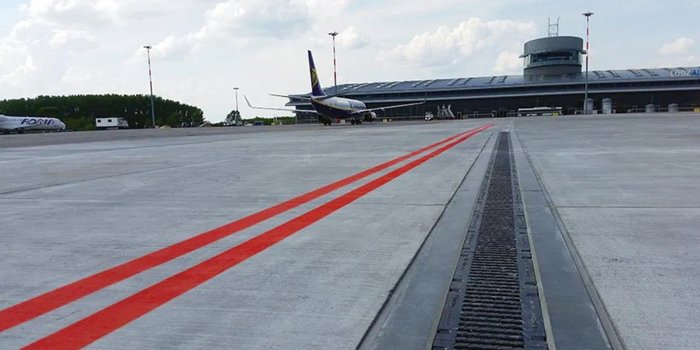
In airport construction, a strong drainage system is very important. A complex structure of pipes and trenches are built to remove rainwater from runways, taxiways and aprons. This is necessary for the protection of aircraft and to keep pavements clean.
Airport Electrical Systems
Electrical systems are a major part of your construction project. Because they provide reliable power for runway lights, taxiway lights, radar & ATC communication.
Your terminal operations like AC, lifts, baggage systems and security work also need electric supply. Therefore, your system must include backup generators, UPS, high-voltage circuits plus advanced monitoring systems.
Simple Steps of Airport Planning and Design
Airport Site Selection
This is the first step of airport construction. The selection of the right site for the airport takes many months and sometimes even years. Because there are many factors that affect the selection of a site.
Site Ability: First of all, you must check the weather scenario of the location. Like wind, snow, ice and fog. Some experts also check for obstacles near the runway and taxiway.
ATC: The distance of the site from the air traffic control also impacts the takeoffs and landing of planes. Therefore, your airport must have a relative connection with the air traffic controller.
Land Condition: Then, the land itself is checked to see if it can fit the runways and buildings. The land should be flat or almost flat. Because runways must follow strict slope limits for safe landings and takeoffs.
Distance from the City: You should inspect how far the site is from your main city. It is needed to take noise away from residential areas.
Access Roads: Always, make sure your selected site must connect with highways or main roads. Because easy access saves time for passengers and cargo trucks.
Security: You note nearby military zones, restricted areas or sensitive locations. A secure zone keeps flights safe.
Regulatory Approval
After the selection of the site you have to approve it from government bodies. They also check all these things and issue a permit to legalize your project. This permit is issued with the collaboration of the FAA and Center For Air Transportation System Research.
Design of Airport
Design of Airport When you design an airport, you focus on real technical needs. You see how many passengers your airport handles each hour. You also follow ICAO and FAA rules because these rules set every limit from slope to safety area.
Runway Design: You fix the runway length after you note aircraft weight and local temperature. Mostly, big jets need long runways 2,700 m to 3,600 m. The slope is kept under 1.25%. And the width is approximately 45 to 60 m on the paved part.
Taxiway Design: You set a parallel taxiway to avoid runway delay. The width stays nearly 23 m for large aircraft. You leave shoulders for extra safety.
Apron Layout: You set the apron by first noting the wingspan and tail height of each aircraft type. For example; Code C aircraft (like A320 or B737) need stand spacing close to 26–28 m for safe wing clearance.
Airport Terminal Layout: You size the terminal according to your peak-hour passenger flow (PHP). This number also sets the area for check-in counters, security lanes plus boarding gates.
Right Material For Building Airport
You have to select the material according to traffic volume at your airport. These are some common materials you must read their advantages and then select for your airport.
| Material Type | Advantages |
| Asphalt | Flexible, even surface, quick repairs, lower initial cost |
| Concrete | Strong, durable, heat-resistant, handles heavy traffic |
| Reinforced concrete | Tough, resists cracks, manage heavy loads |
| Composite pavement | Combines strength + flexibility, easy to repair |
| Subbase/base layers | Distributes load, improves drainage, strong foundation |
| Grooved surfaces | Improves water drainage, reduces hydroplaning |
Airport Control Tower Floor Plan
The base building might be a multi‑storey RCC (reinforced concrete) frame structure. The base of your building should hold offices, equipment rooms and utilities. While the upper floor leads to the control cabin on top. The cabin should give controllers a clear 360° view of runways and aprons.
Airport Ground Work
Airport ground work covers all the important tasks that you have to do on the ground. This includes passenger services like check-in, ticketing, boarding, baggage handling and aircraft servicing. Basically, aircraft servicing includes refueling, catering, cleaning and maintenance.
Airport Safety
Airport safety starts with construction of terminals and runways. Because they must be designed for secure movement of passengers and staff. This is why you should build security checkpoints, scanners and detectors on the entrances.
So, runways and taxiways get clear markings and protective barriers. Fire exits, hydrants, safety signs and emergency routes are planned from the start. These all security measurements are controlled from control rooms.
Final Checks
Before the opening of the airport, every section of the airport is tested and verified. That’s why you must inspect runways, signages, lighting, security systems and flow of passengers. Actually, final checks make sure the airport is fully safe and ready for flights.
Operational Safety on Airports During Construction
Operational safety during airport construction ensures that work and airport activities happen without risk to workers or passengers.
- Construction areas are marked and fenced off to keep workers, staff, passengers and machines away from active runways, taxiways, hangars and terminals.
- Your ground staff and construction workers must follow strict rules. So, they wear protective gear and use approved tools or machinery.
- You have to install barriers, cones, signs and lights to guide vehicles and personnel safety around the construction site.
- Special pathways are planned for construction vehicles and airport traffic. Because this step prevents accidents and avoids delays.
- As a supervisor, you must check the site daily to ensure all equipment and safety measures.
- Your work site must have fire extinguishers, medical kits & evacuation plans or signs. So, you can handle sudden accidents or hazards.
- The construction teams must communicate with ATC to prevent interference with aircraft takeoffs & landings.
FAA Construction Specifications
Federal Aviation Association has provided some safety standards to develop an airport. These standards cover almost all required specifications that you will need in your project.
| Airport Area | FAA Specification |
| Pavements | Designed with layered elastic theory to handle aircraft loads. |
| Material | Quality standards for aggregates, cement & admixtures, tested per ASTM/AASHTO |
| Barriers | Chain-link or wildlife exclusion fences |
| Drainage | Durable pipes, Inlet and deep gutters |
| Turfing | Plant grass or cover soil near runways and taxiways |
| Lighting | Beacons or wind cones connected with secure underground cables |
| Modification | Deviations need a Modification of Standards (MOS) per FAA Order 5100.1 |
Airport Construction Cost Breakdown
The cost of the airport construction depends on the size of your airport and selected site. But we have made this table to show the planned costs for it. This cost is recommended for over a 20-year period from 2017 to 2037.
| Section or Equipment | Estimated Cost (USD) |
| Primary Runway | $113,864,850 |
| Primary Taxiway | $29,136,030 |
| Apron | $1,631,700 |
| Instruments | $325,000 |
| Beacon Lights | $125,000 |
| Hangars | $101,165,00 |
| Wind Indicator | $20,000 |
| Segmented Circle | $80,000 |
| End Indicator Lights of Runway | $560,000 |
| Runway Lighting | $590,320 |
| Visual Glideslope Indicators | $220,000 |
| Weather Reporting Machines | $1,200,000 |
| Taxiway Lighting | $16,562,650 |
| Approach Lighting System | $3,600,000 |
| Restrooms | $250,000 |
| Auto Parking | $600,000 |
What is Airport Construction Project Management?
Airport construction project management helps you to plan and manage your airport building projects. This includes your runways, terminals and security systems. The goal is to complete your project on time in a given budget.
It also makes sure your ongoing airport operations stay smooth without any disruption. As a project manager, you have to coordinate teams, manage stakeholders and use smart construction methods like Design-Build or CMAR to complete your project efficiently.
Final Words
We hope you understood the overall process of airport construction. Each component of this procedure should be designed with proper regulations & dimensions. So, you must have a documented plan of your airport if you want to apply for an airport construction permit.
Let’s talk to our engineers for getting high quality airport safety, parking, lights, design and construction products. We will manufacture everything in our factory and deliver to your doorstep at highly affordable prices.
FAQs
How Much Does it Cost to Build an Airport Runway?
Well, the answer to this question depends on length, materials, soil, engineering, land and supporting infrastructure of a runway. But according to an estimation building a runway can cost from under $10M for small to billions for major airports.
How Much Does a Small Airport Cost?
A small airport can cost you from under $100,000 for a simple grass strip to several million for paved runways & terminals. A private general aviation airport may range $1M–$10M. On the other hand, a simple paved runway can reach $50–$300M. Because the factors like location, size, land and technology can change the budget.
How Long Does it Take to Build a Small Airport?
If you want to build a small airport it can take from a few months for a very basic private strip (grass path) to 3-5 years for a small commercial field’s first phase. But larger commercial airports often take years or even a decade to build.


