

-80x69.png)
There are various types of personal protective equipment (PPE) & safety helmets which you can use for your workplace safety. All of them have their own purpose & unique features.
Common examples include hard hats, safety goggles, gloves and safety boots. If we talk about hard hats, they provide protection from head injuries and electrical hazards. So, if you want to learn more about hard hats and their types, you can read this guide.
Hard Hat Material Based Types
وفق ANSI standards for hard hats (ANSI/ISEA Z89.1), you have to use strong and impact resistant materials to manufacture hard hats. Further, you should test the material for fire resistance and electrical protection. Below we mention the major hard hat types based on materials.
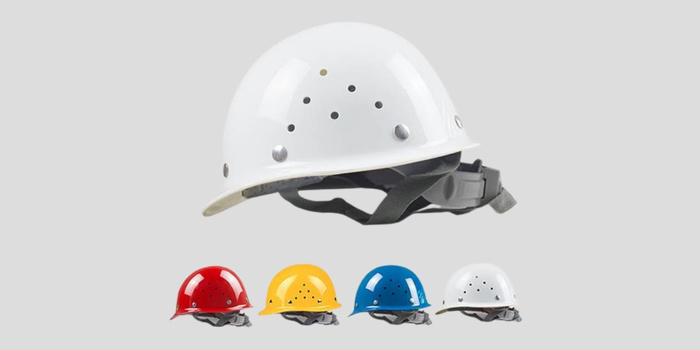
1. ABS Plastic Helmet
ABS is a thermoplastic polymer that is widely used to design safety hard hats. You can convert ABS plastic into your desired shapes. These helmets are perfect for rough conditions because they resist cracks and impacts.
When you wear it, you get good protection as well as long-lasting use. ABS helmets are common in construction safety, electrical work, industrial jobs and high-risk zones.
2. Molded Thermoplastic Hard Hat
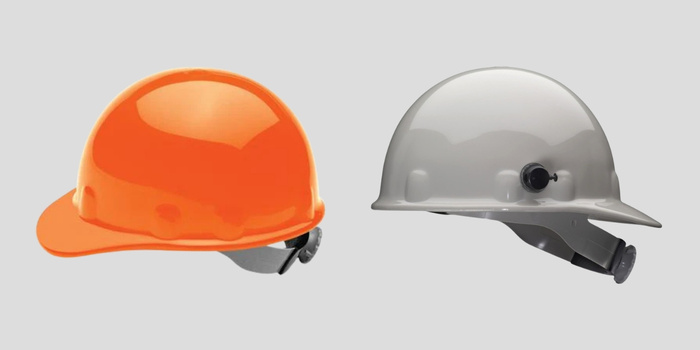
Molded لدن بالحرارة hard hats are lightweight and strong. You should wear these hats for long hours without feeling tired. These headgear are generally used in construction sites and factories.
Basically, engineers melt the plastic palettes and then put the melted materials into a mold for the final shape of the helmet. You can use this method to design hard hats with high precision and smooth surfaces.
3. HDPE Hard Hat
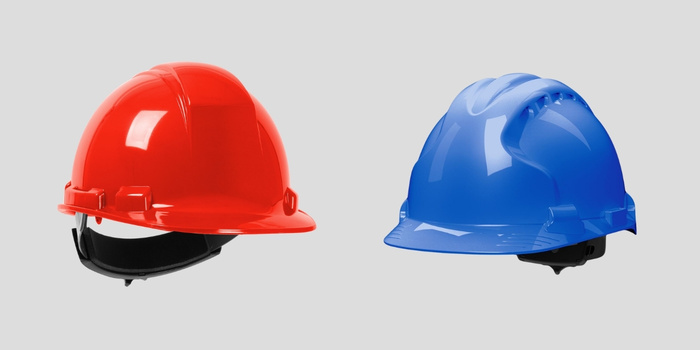
Currently, high density polyethylene is one of the most commonly used materials for hard hats. This is durable plastic and has excellent strength. You must use HDPE made helmets at your construction sites or during safe electrical work.
Although when you use these helmets frequently, its resistance to wear may be reduced. Regardless of this limitation, these hats are still the most popular and affordable options in the market.
4. Bakelite Hard Hat
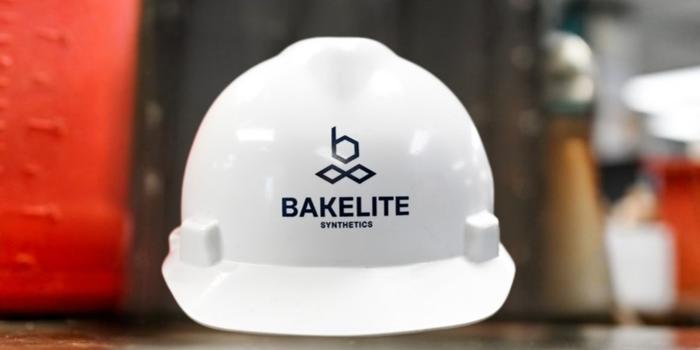
If we talk about bakelite hard caps, workers mostly used them during mining operations or general construction work. These hats are made from strong and heat resistant material which is called phenolic resin.
However, bakelite hats have less strength as compared to modern materials (HDPE). Some brands still manufacture these helmets according to ANSI Type 1 safety standards.
5. Polypropylene Hard Hat
Polypropylene hard hats are made from polypropylene plastic. It is a lightweight and strong substance. This material also resists chemicals and moisture. These properties make it suitable for your many work environments.
On top of that, you can easily repair these helmets after damage. Furthermore, polypropylene made hats are able to resist electricity better. The only drawback you will have is that they can deform in heat and are sensitive to UV light.
6. Fiberglass Hard Hat
Fiberglass material is used to make strong and heat resistant protective helmets. If you work in a welding foundry, a fiberglass hard hat is your go to choice. In fact, these helmets are now standard personal protective equipment for electrical and mining workers.
They are available in various styles because fiberglass is less rigid, and you mold it into almost any shape.
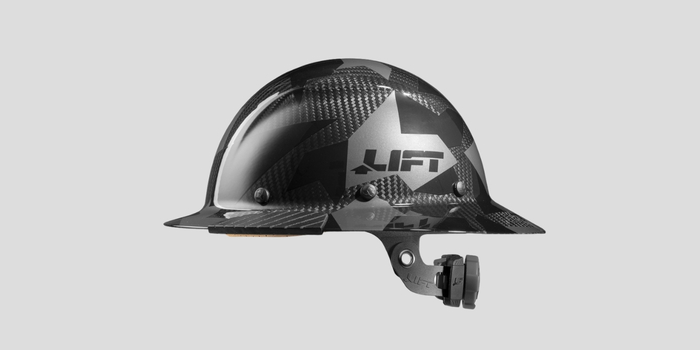
7. Metal Hard Hat
The hard hats made from steel or aluminum provide you maximum protection at dangerous workplaces. Because, this material can handle heavy impact and extreme conditions too.
Yet, they are not safe for you if you are an electrician. Hence, you mostly see these helmets in mining, steel plants, metal fabrication and other heavy industrial jobs.
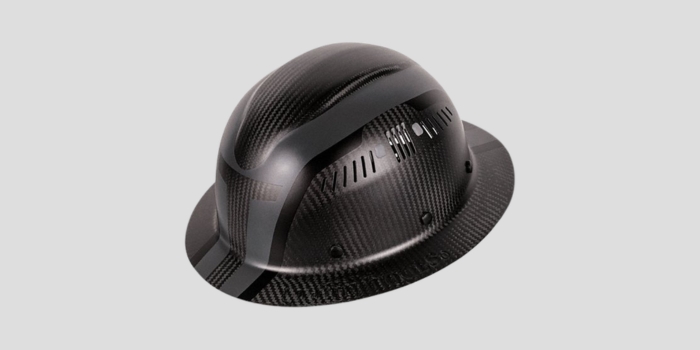
8. Carbon Fiber Hard Hat
Carbon fiber headgear is basically created from carbon fiber material. This is an extremely strong and very lightweight substance. Therefore, these helmets are ideal for long hours of work.
When you wear carbon fiber made hats, it feels comfortable plus protects head injuries. These safety helmets are 17 times more expensive than HDPE or ABS hats.
Electrical Hard Hat Classification
As stated by ANSI hard hat standard and Canadian CSA Z94.1-2005 rules, there are following types of protective helmets based on their electrical performance.
Class E Hard Hats
Class E or electrical hard hats are designed to provide you with the highest electrical protection. This is the reason, these helmets can protect you from voltages as much as 20000 volts.
These hats are ideal for electricians, power line technicians, utility workers (underground operations) & anyone who works near high voltage equipment. Well, these hats were previously known as Class B and can also meet Class G standards.
Class G Hard Hats
Class G (previously called Class A) are basically general hard hats. Hence, these safety equipment are only suitable for your construction and industrial work where electrical risks are low.
You must make sure Class G hard hats meet ANSI’s basic regulations for impact and penetration protection. You should use this safety cap to shield your head from up to 2200 volts of current (phase to ground).
Class C Hard Hats
If we talk about ANSI Class C hard hats, they are also known as conductive hard hats. These safety tools are different because conductive hats do not provide you protection against electrical contact. Therefore, you should use these hats for safety from impact and penetration only.
This way it keeps your head safe from falling objects and bumps. These hard hats are best for your construction and industrial jobs where you have almost zero risk of electricity.
ANSI & OSHA Hard Hat Types
Type I Hard Hats
Type 1 hard hats are manufactured to provide you with safety from vertical impact. So with this hat, you can save the top of your head only. Suppose you are working on scaffolding.
In this case, you have high chances to be hit by falling objects and debris. For that purpose, you have to use type I safety helmets. But remember, this tool offers limited protection from side or lateral blows. Majorly, types I helmets are most popular in America.
Type 1 Hard Hat Specifications: Made with HDPE or fiberglass materials, has a 4 or 6-point suspension system and adjustable bands for your comfort.
Type II Hard Hats
If we talk about type 2 hard hats, you must use these products to make your head safe from top, back, front as well as from sides. When you wear a Type II helmet, it keeps you safe from falling dangers, materials, bumps and side impacts.
These hard hats are generally used in industrial sites or other workplaces where hazards can appear from many directions. They have thicker shells and suspension systems which actually absorb shock and provide you with an extra layer of safety.
Type 2 Hard Hat Features: Designed from non conductive thermoplastic, follow AS/NZS 1801:1998 for electrical work and can handle shocks up to 20000 volts.
Hard Hat Color Coding
The different colors of safety caps are helpful for you to identify a worker’s role & responsibilities on the job site. Although ANSI does not require this color system, many workplaces use it as a visual guide.
| Color of Hard Hats | Hard Hats Color Meaning |
| Blue hard hat | Technical workers, electricians, technical advisors & carpenters |
| Yellow hard hat | General Laborers, Earth-Moving Operators |
| Orange hard hat | Surveyors, road crews, traffic marshals or lifting operatives |
| Red hard hat | Emergency personnel, fire marshals and inspectors |
| White hard hat | Management, supervisors, engineers, visitors |
| Brown hard hat | High heat applications and welders |
| Green hard hat | Safety personnel/inspectors, new hires or trainees |
| Black hard hats | Forepersons, high voltage electricians plus management |
| Pink Hard Hats | Mostly used for workers who forget their hard hats or when you need better visibility |
Hard Hat Styles
Cap style hard hat: You will find this hat like a baseball cap with a short front brim. It gives you top impact protection in a lightweight design.
Full brim hard hat: This safety hat has a wide brim around the whole helmet. This way, it gives you extra shade and keeps rain or debris off your neck/face.
Safety helmets: Well, safety helmets have a modern shape and a secure chin strap. Hence, they stay in place when you climb or move a lot.
Bump hard hats: You can use this headgear to prevent your head from minor bumps and scrapes. They are light and comfortable for low risk areas.
Hydro dipped hard hats: You will see special patterns or designs on the surface of these hats. With the dipping process, you can add color and style in the hat without changing safety features.
Vented hard hat: Vented protective helmets have small openings. These holes let air flow inside. As a result, it keeps your head cool in hot conditions.
Side impact hard hats: They are manufactured in a way that these hats handle side impact. With this helmet, you must make sure your head top and sides are safe.
Slotted hard hat: Slotted hard hats basically have side slots for accessories. So that, you can attach face shields, earmuffs or lights when needed.
Cowboy hard hat: Cowboy safety cap has a wide and curved brim like a cowboy hat. They give you extra sun and rain protection. You mostly see them in outdoor construction and field work.
High visibility hard hat: High visibility safety caps use bright colors so you can notice them easily. They improve safety in busy or low light areas.
Hard Hat Manufacturers
Following are some top manufacturing companies of hard hat which meet ANSI and OSHA hat safety standards.
- جاكوين سيفتي
- MSA Safety
- Delta Plus
- Pyramex
- شركة 3M
ملخص
Our factory JACKWIN is located in China. We specialize in workplace safety products and PPE you require for your site safety. With over 18 years of experience, we have supplied high quality safety items in 70 countries around the world.
If you are a wholesaler or need hard hats for your workers, اتصل بفريقنا and share your requirements. We will ship your order directly to your desired location.
الأسئلة الشائعة
When Should You Wear A Hard Hat?
You should cover your head with a hard hat whenever there is a risk of head injury. This includes construction sites, industrial workplaces, warehouses or areas where objects could fall or hit your head.
How Often Should Hard Hats Be Replaced?
How long do hard hats last? عليك أن replace the hard hat after every 2 to 5 years. However, it depends on how often you use them plus the manufacturer’s instructions. The shell can last up to 5 years but the suspension system must be changed every year.
Why Do Hard Hats Expire?
Generally, hard caps expire due to plastic shells (HDPE or ABS) and suspension systems damaged over time. For example: sunlight, extreme heat & chemicals can reduce their ability to protect your head.
Are Chin Straps Required on Hard Hats?
Mostly not. Chin straps are not required by OSHA for all hard hats. But many companies and safety standards now require them for high risk tasks. So, you need them when you work at heights or in areas with danger of slips, trips, falls or side impacts.
How To Wear a Hard Hat?
To fit a hard hat correctly, you need to place it straight on your head with the brim facing forward and approximately 1 to 1.5 inches above your eyebrows. Then adjust the suspension harness so it fits snugly. Also leave a 1 to 1.25 inch gap between the shell and your head.


