

-80x69.png)
In November 2021, 22 year old worker (Connor Borthwick) died when a large cutting press became unstable and fell on him. According to the HSE investigation, main reason for this accident was that the company did not assess the risks of the machine and no safe system was provided to workers.
In another case, a factory worker (50 years) lost his left arm in an industrial accident. He was caught in a running lathe machine that had no proper safety guards. There are many such unfortunate accidents that machine operators face. Therefore, it’s compulsory for you to install machine guards & prevent such injuries. Read our article to learn different types of machine guards that you can use.
What Are Machine Guards?
Machine guards are safety components or physical barriers that you can install on or around dangerous moving parts of machines. This way, you can create a protective wall between risky equipment and workers.
These safety guards are mostly used in factories, warehouses, manufacturing plants and many other industrial facilities. Machine guards block your hands, clothes and body from dangerous areas like sharp edges and rotating parts.
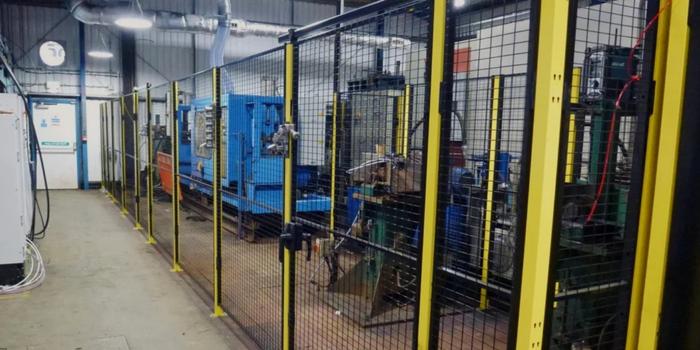
Machine Guard Types Explained
1. Fixed Machine Guards
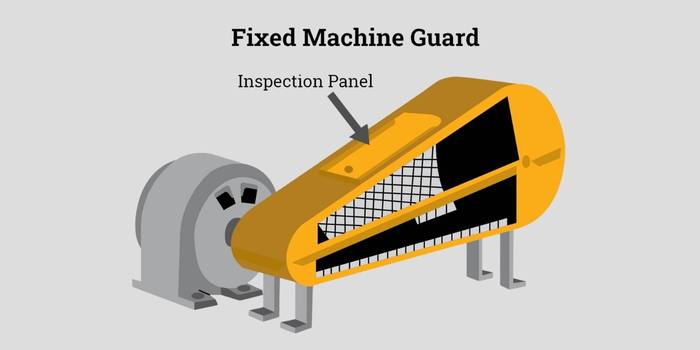
Fixed machine guards are stationary and permanent barriers attached to machines. You cannot move or remove a fixed guard without tools. They have no moving parts so these guards stay stable during normal machinery operations.
You can use permanent guards to protect operators from gears, drive shafts, rollers, belts, flywheels and fan blades. You should only remove them when you need to maintain or adjust guards. They are made from strong materials like aluminum, plastic, sheet metal, bars or screens.
Ideal Applications: Automated assembly lines, press equipment, conveyor belts, rotating blades and saws.
2. Interlocked Machine Guard
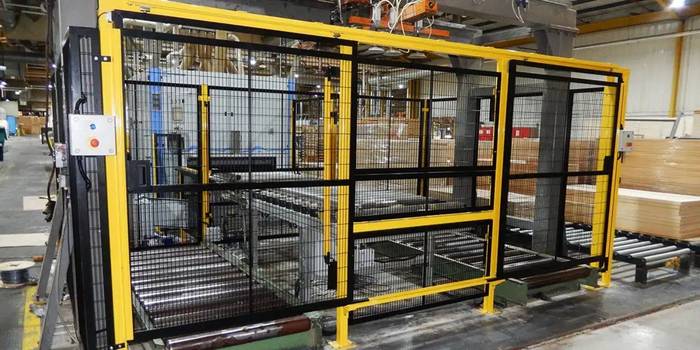
Interlocked safety guards shut off your machine when it is opened or removed. You must install these barriers when you want to add an extra layer of safety. Because, you cannot operate the machine unless you again fix the guard in its exact position. The reason is, these shields such as gates, covers or doors are directly connected to the machine control system.
You should use interlocked guards when you need to perform tasks like loading materials, regular cleaning, maintenance or clearing jams. Most commonly used interlocking devices in factories include magnetic/coded non contact switches, trapped key (solenoid locking switches) & actuator key switches.
مناسب ل: You can use for high risk environments including heavy duty industrial presses, robotics or automated machinery, high speed packaging systems, pharmaceutical and medical production lines.
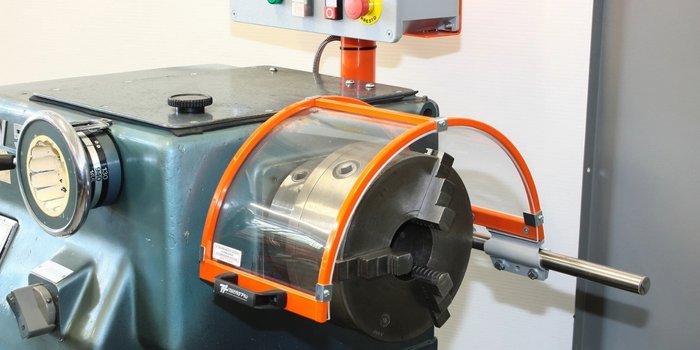
3. Chuck Machine Guards
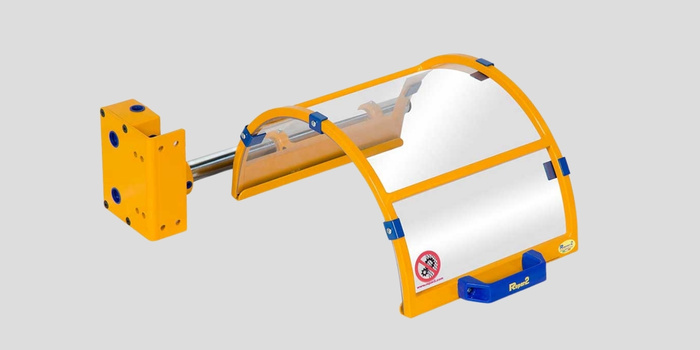
These protective barriers keep you safe from flying debris such as broken tool pieces and metal shavings/shards. Engineers design chunk guards with clear and curved panels. So that you can easily see the machine when you operate it.
Generally, you will see these guards on lathes that spin materials like metal or glass at high speeds. The chuck holds the spinning material. The guard blocks anything which can harm you. However, when you wear goggles or protective clothing, chuck guards provide both visual and physical protection.
Top Use: Drilling equipment, cutting or shaping machinery, hydraulic presses, power transmission apparatus and milling equipment.
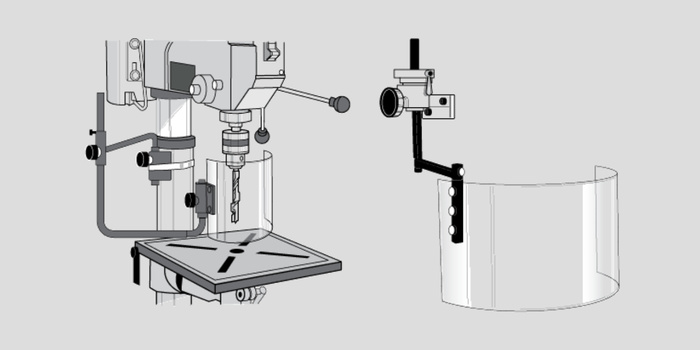
4. Drill Press Guards/Drilling Machine Guards
As the names indicate, you can use these guards to protect yourself from vertical drilling machinery. It is also required by OSHA standards for the safety of workplaces and machine operators and minimizes the risk from hazardous components.
These guards protect your hands and eyes from cutting tools, hot chips, blades, oils plus splash. In the market, these guards are available in various styles. These include adjustable barriers, transparent shields & interlocked doors.
متى يُستخدم هذا؟ Column drilling machines, bench drills, inline drilling equipment, lathes and boring tools.
5. Lathe Machine Guard
You can install these guards to stay safe when you operate any type of lathe machine. These devices mostly spin dangerous materials such as metal and plastic at very high speed.
Without a barrier, your clothes and hands are at high risk of getting cut by the rotating parts. Hence, you can cover spinning parts, cutting areas and chunks with lathe machine guards. They also block sparks, debris or flying chips from hitting workers.
يُنصح به لـ: CNC machines, precision lathes, benchtop lathes, toolroom and heavy-duty industrial lathes.
6. Milling Machine Guards
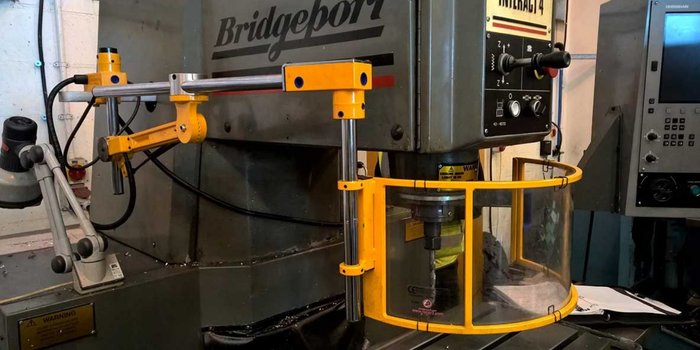
You have a risk of injuries from moving parts of the machine and debris during milling work. In such a case, you can use milling guards as a protective cover. They keep your workplace clean and organized, so you can work safely.
Engineers manufacture these tools with the use of clear polycarbonate panels inside strong aluminum or steel frames. These materials have the ability to handle haet and chemical damages. Mostly, you will find milling machine guards in factories & training centers.
مثالي ل: CNC mills, heavy production lines, bed type and gantry milling machines, horizontal or vertical milling apparatuses and bench mills.
7. Safety Barrier
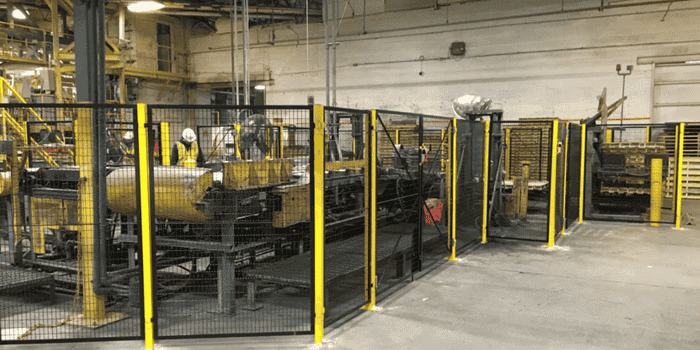
Safety barriers widely used in factories, warehouses, industrial set ups, workshops and at production plants. With these physical tools, you can create a clear boundary between you and dangerous machine areas. This way, you can easily control the movement of vehicles and workers in high risk zones of your workplace.
You should always use these barriers around heavy equipment (robots) and hazardous work areas for the safety of valuable assets. Other than that, you can stop unauthorized entry into machine areas. There are two main types which you can install: wire mesh fencing and panel barriers.
Good for: Robotic arms, CNC equipment, press machines, conveyor systems, packaging machines, injection molding machines, cutting machines, welding tools and assembly lines.
8. Safety Guards
Safety guards are also protective covers. They are available in multiple shapes and sizes. Hence, you can choose one according to your machines and type of danger.
Safety guards are designed with different types of materials including plastic, heavy duty wood, metal and many more. Some guards stay fixed in one place but others can move or stop the machine when opened.
الاستخدام: Best for machines like press, cutting, saws, drilling or milling, conveyor systems, packaging and grinding.
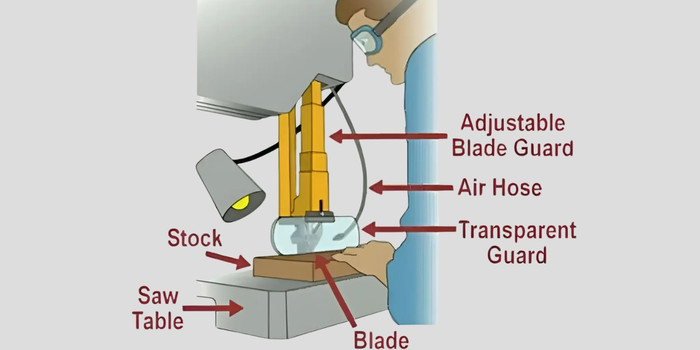
9. Adjustable Machine Guards
You can move or change these guards to fit your different tools or tasks. For example: you can change their size, height plus position. This way, they protect but also allow you to work without any interruption.
These guards are useful on equipment where materials or tools change most like lathes or drilling machines. So, you can use them to fully block flying debris and sparks.
طلب: Lathes, milling machines, drilling machines, injection molding systems and grinding equipment.
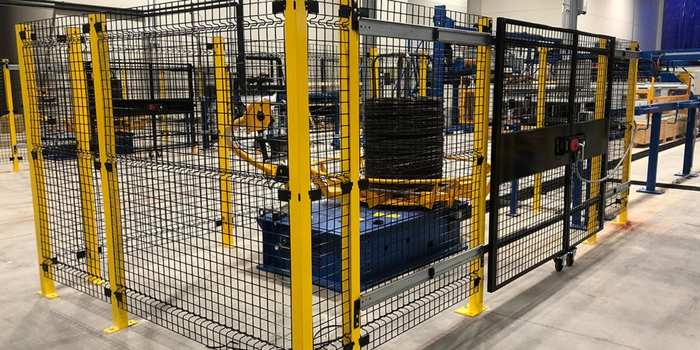
10. Wire Machine Guards
If we talk about wire safety guards, these are flexible safety devices which you can use to protect workers, hold debris, reduce harms and control traffic as well. You can place these guards in your various industrial settings. It is because wire barriers are easy to install and don’t need any kind of power.
They not only make your workplace safe but also block unauthorized entry on your site. Well, they are painted in bright colors, such as orange or yellow along with warning signs. In such a way, these devices keep your staff and visitors alert about potential risks.
Main use: Conveyors, high speed machinery, robotic workstations, motors and fans.
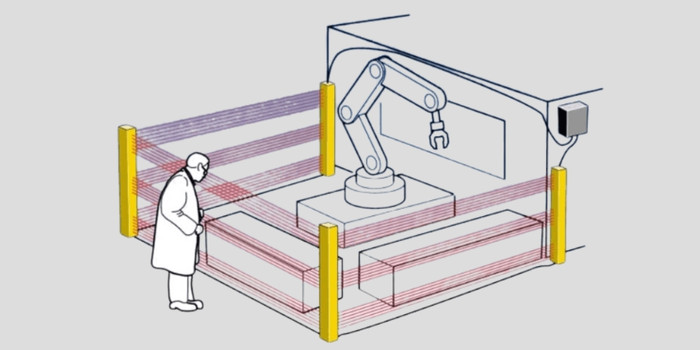
11. Presence Sensing Machine Guards
These are advanced and modern types of guards. Basically, they use sensors to detect your presence near a dangerous part of a machine. The most common types include beams, laser scanners, pressure sensitive mats and light curtains.
These devices connect directly to the machine controls as same as interlock guards. When the sensors sense your hands or body, they stop the machine right away. This prevents injuries in advance. Although, they do not block your view (like physical guards) but create an invisible safety zone around moving parts.
يُنصح به لـ: Presses, stamping machines, robotic equipment and automated assembly lines.
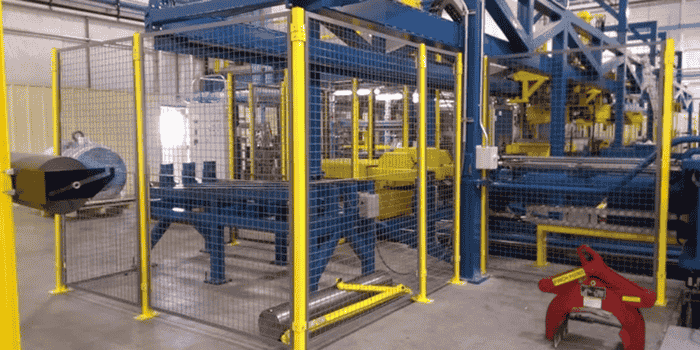
12. Perimeter Machine Guard
You should use perimeter guards when you want to create a protective boundary around a whole machine or your work area. They shield you from sparks and flying debris. الأسوار and railings are best examples of perimeter guards. They also restrict workers from entering dangerous zones.
يُنصح به لـ: You can use these devices around robotic work cells, areas where multiple machines operate at the same time plus automated assembly lines.
13. Power Transmission Guards
Power transmission guards provide you prevention from moving parts which transfer power in a machine. These include gears, belts, chains and pulleys. Basically, these parts can spin fast and lead to serious injuries if you touch them.
So you can install these guards to cover the power transmission system. Mostly, these devices are designed with metal or strong plastic.
التطبيقات: Best for heavy machinery in industries like automotive, mining or manufacturing.
14. Coupling Guards
Coupling guards keep you safe from the rotating couplings, which actually connect two shafts in a device. These couplings can spin fast and may pull in your clothes, hair, hands and lead to serious injuries.
These guards cover the couplings completely and block access. However, they still allow the equipment to work. Once you install coupling guards, they stay fixed in place for safety.
الأفضل لـ: Electric motors, compressors, gearboxes, and various industrial fabrication machinery.
15. Return Idler Baskets/Return Idler Guard
Return idler baskets are safety devices that you can place under conveyor return rollers. They cover the return side of the belt and the rollers. Further, these baskets stop broken/failed or loose rollers from falling on you or equipment below.
These tools are generally made of strong metal and are placed along the conveyor’s path where the belt moves back. Return idler baskets are also called cages and guards.
التطبيقات: Industrial conveyor systems, heavy-duty mining machines, overland conveyors & elevated conveyor systems.
16. Flange Bearing Guards
Flange bearing guards are manufactured to protect operators from exposed bearings on machines. Well, bearings support parts to rotate smoothly. But, they can spin fast and cause injuries if your body parts come into contact with them.
Hence, these guards cover the bearings completely which keep your hands and tools away. They are made of metal or strong plastic and stay stationary when the machine is functional.
متى يُستخدم هذا؟ Conveyor systems, food processing machinery, agricultural equipment, material handling equipment, HVAC systems and heavy duty industrial machinery.
17. Self-Adjustable Machine Guards
These are smart safety devices that move and adjust automatically according to material size. Therefore, you do not need a manual set up to control this guard. When the machine is not operating, the safety guard stays in its resting position.
But when you feed any kind of material into the device, the guard moves enough to let it pass but still blocks your access to harmful parts of that machine.
مناسب ل: Woodworking machinery, cutting tools, circular saws, and industrial equipment.
18. Surface Grinder Guards
Surface grinder guards are important safety devices for industrial set ups. You must install it to protect operators from coolant splash and fast spinning grinding wheels. They mostly have clear and impact-resistant polycarbonate panels with steel frames.
Moreover, many guards include interlocked, sliding or hinged doors. You can load the workpiece safely and stop the operation when the guard is open.
مثالي ل: Surface grinders, bench grinders, cylindrical grinders, tool and cutter grinders plus precision grinding machines.
19. Two Hand Control Guard
If we discuss the two hand control guard, it keeps you safe from equipment harm that requires you to use your both hands to operate a machine. This way, this barrier makes sure that your hands are away from dangerous parts when the machine works.
The machine will only run if you press two buttons at the same time which prevents accidental injuries.
الاستخدام: Presses, cutting machines, stamping equipment and plastic processing industries.
20. Distance Machine Guard
Distance guards keep you at a safe space from dangerous parts of a machine. So they do not cover the parts directly but create a barrier. As a result, you cannot reach dangerous components of machines.
You should install these guards on large machines where direct contact is risky for you. They control your movement and prevent accidental injuries.
Best uses: Press equipment, stamping machines, large lathes, milling, conveyor systems, packaging and robotic equipment.
OSHA Requirements For Machine Guarding
According to OSHA (إدارة السلامة والصحة المهنية) safety guidelines, you have to install machine guards for following types of equipment or machinery.
- ل maritime industry, you have to cover machinery zones and guard the all rotating parts, belts, shafts and wheels.
- If you work in construction sectors, you have to make sure the machinery with chains, flywheels, belts, power tools, spindles, pulleys, gears and hand tools are properly guarded.
- Woodworking factory owners are responsible for the protection of machines like jointers and milling machines.
- You should use safety devices to cover milling machines, drill presses, lathes and other machinery which have rotating parts or belts.
- All cotton gins, farm equipment & field tools must have guards to reduce accidental contact with moving parts.
Machine Guards Manufacturers
Below we listed top machine guarding suppliers and manufactures who design quality machine safety devices for industrial equipment.
- جاكوين
- Machine guard & cover company
- Axelent Group
- Rite‑Hite
اختتام
JACKWIN rack protector is another machine guard option for you to keep your warehouse and factories safe. With our safety barriers, you can separate people from dangerous machines and equipment. They also reduce damage and prevent operators from injuries. اتصل بنا للحصول على مزيد من المعلومات.
الناس يسألون أيضا
Which Machine Parts Require Guards?
OSHA standards clearly say that any component of a machine which can harm workers needs guard. This includes cutting, shaping, boring tools, belts, gears, chains, shafts, rotating or reciprocating parts.
Which is the Most Effective Type of Machine Guard?
According to industrial safety standards and OSHA guidelines, fixed guards are generally considered the most effective & preferred type of machine guard. However, the best guard depends on your machine’s operation.
Can Different Types of Machine Guards Be Combined?
Yes, you can combine different types of machine guards to improve operator safety. But you need to make sure that guards are designed to work together properly. You can use a fixed guard for basic protection along with interlocked guards in high-risk areas.
Are Plastic Machine Guards Strong For Industrial Use?
Yes, engineered plastic machine guards are very strong and well suited for your industrial application. They provide high impact resistance and are considered unbreakable. Additionally, plastic guards have good resistance to chemicals and corrosion.
انظر أيضًا:
UAE doctors race against time to reattach worker’s arm torn off by machine


