

-80x69.png)
When you move across rivers, valleys, intersections or busy city roads, you may notice large built structures like bridges or flyovers. Both make your travel faster and safer, right?
But, they are different in design, purpose, safety measures and how they are used. Today, we will guide you on how bridges and flyovers are unique for traffic flow, location & construction.
What is Bridge in Civil Engineering?
A bridge is a structure that is built to connect two places that are far apart. These areas include riverbanks or roads. Due to bridges, you can cross rivers, roads, valleys or other natural barriers. You can use it to carry cars or trains safely. Engineers design bridges to make your life easier and safe.

Types of Bridges
Based on their design/structure and use, bridges have different types. Every type of bridge works in a special way to carry weight and stay strong.
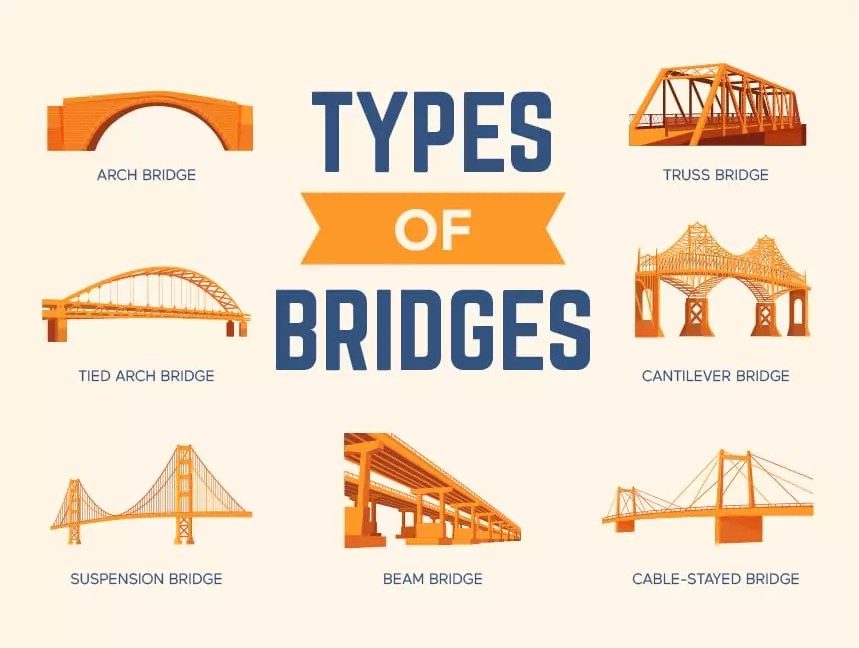
- Beam Bridge: This bridge has a simple design and construct with horizontal beam rests on supports at both ends. You can use it to cross short distances.
- Arch Bridge: It uses a curved arc shape to handle heavy load. This design makes this bridge stronger and stable.
- Tied-Arch Bridge: It is an arch bridge where a tie connects the ends of its arch. This tie holds the arch together and carries the load safely.
- Cantilever Bridge: This bridge is built with horizontal sections. You will find these sections extend outward from supports and meet in the middle.
- Truss Bridge: Truss bridge is constructed with a framework of connected triangles. Hence, it has excellent strength & stability.
- Suspension Bridge: A suspension bridge is a bridge where you need to hang the road deck from strong cables. These cables are supported by tall towers.
What is Flyover?
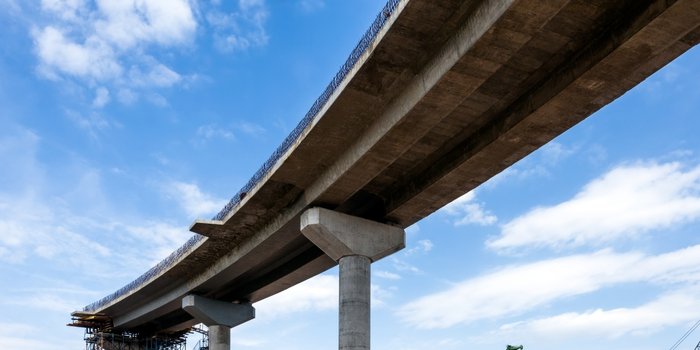
A flyover is a type of road that you will see above other roads, railway or intersections. It is also called an overpass. Further, you can use it to pass over traffic and avoid crowded areas safely.
Flyovers are constructed to make your travel faster and reduce traffic jams. Mostly, overpasses carry cars, bikes as well as sometimes pedestrians safely.
Types of Flyover
You will find various types of flyovers. Flyovers are classified based on their formations and construction materials.
- Curved Flyovers: These are elevated roads that bend instead of a straight design. So, you can turn your vehicles easily on curved flyovers.
- T-junction Flyover: You will see this flyover at busy T shaped intersections. It allows traffic to move smoothly and prevents accidents.
- U-Turn Flyovers: U-turn flyovers allow vehicles to make a U-turn safely and smoothly.
- Composite Flyovers: These flyovers built with the use of two or more different materials. These include steel and concrete.
- Box Girder Flyover: In its construction, engineers use hollow and box shaped beams to support the deck. It can carry heavy loads safely.
- Diamond Flyovers: You will find these flyovers at diamond shaped intersections. They allow traffic to move smoothly in all directions at the junction.
- Steel Flyovers: These flyovers are basically made of steel. That’s why, they are durable and quicker to build as compared to other materials.
Difference Between Flyover and Bridge
Flyovers and bridges are both raised structures, but they serve different purposes. Below is the main contrast between the overhead bridge and flyover.
Design
Flyovers are elevated routes supported by piers or columns. You can use this area to move your vehicles both above and below them. Commonly, flyovers have a short length.
Bridges also use supports, but you can drive your vehicles only on top of them. On water, you can also pass your boats and small ships under a bridge. Bridges are usually long and may cover many kilometers.
Purpose
Flyovers are built to reduce traffic congestion and manage transport at junctions. They give you an extra road above the street. Further, flyovers save space because they are elevated.
On the other hand, bridges connect two places separated by rivers, valleys, rough land or any physical obstacles. Hence, you can use bridges for cars, buses, bikes or trains to cross these obstacles.
Location
Mostly, you will see flyovers in large cities and congested zones. For example: they are found in urban areas where you need to handle heavy traffic and jams on roads.
Bridges are constructed in remote locations. You will find bridges in areas such as rivers, lakes, seas, valleys and canyons.
Traffic Flow & Congestion Reduction
Flyovers only allow one way vehicles movement. You will find separate ramps and lanes to enter or exit your at flyover. Plus, they reduce jams and save travel time.
In contrast, bridges can handle two way traffic easily. That means, you can travel in both directions. However, they do not directly reduce city traffic but let your vehicles cross obstacles.
Environmental Factors
Flyovers are mainly built to reduce traffic congestion and make transportation smoother. So, they have less focus on natural elements.
To design bridges, you have to consider natural factors such as water flow, tides, landslides or earthquakes.
Integration
Engineers connect the flyover with the existing road. This way, it lets vehicles enter or exit at specific points, which makes your travel smooth in busy areas.
However, bridges integrate with the road network to cross obstacles. They link two points such as riverbanks or valleys. So, you can continue driving on the road.
Length & Span
Flyovers are generally shorter. They are designed to cover specific areas such as intersections or busy roads.
But, bridges can be short or very long. Well, it depends on the obstacle they cross. For example: some bridges (like suspension or cable stayed types) can span great distances.
Construction Cost & Land Acquisition Needs
Flyover construction may be expensive but comparatively low. They may cost slightly higher due to the need for strong columns & ramps. Commonly, they take less land because of elevated structure.
Bridges over rivers or valleys can cost you more because of materials and length. Furthermore, they may need more land or space for approaches on both sides.
Load Capacity
Flyovers are built mainly for road traffic. Hence, they carry light traffic like cars, buses & trucks. Their design focuses on safe handling of city traffic.
But, bridges are built to carry heavier loads such as trains, large vehicles or pipelines. Also, some bridges can handle much more weight than flyovers.
Bridge Safety & Flyover Safety
Safety of Bridges
As you know, bridges face natural and many traffic related risks. That’s why you have to use safety products to protect them.
- Speed limit signs are installed to warn drivers to maintain their vehicles speed to avoid crashes on bridges.
- Guardrails & crash barriers used to stop vehicles from falling off the bridge in case of accidents.
- Lights and reflective signs make the bridge visible at night, so you can see edges and lanes clearly.
- Safety fences protect both pedestrians and cars from falling off the bridge.
- Friction treatment or anti skid coatings on the bridge prevent your vehicle from slipping in wet weather.
- PFAS (Personal Fall Arrest Systems) involve safety harnesses and equipment for workers during bridge construction.
Flyover Safety
Flyovers deal with urban traffic challenges. So, installation of safety items can reduce accidents and protect vehicles and pedestrians.
- Signs are placed to show you direction, hazards, speed limits and rules to follow.
- Road markings & studs guide drivers and mark lanes clearly.
- Guardrail and barriers are used to protect vehicles from going off the flyover edges.
- Rumble strips make noise when your car moves over them which alert you to slow down.
- Convex mirrors are useful for drivers to see blind corners and avoid accidents.
- Warning lights flash to warn you about hazards or bad weather conditions.
Flyover Advantages and Disadvantages
Flyovers allow you to move faster and protect you from accidents at intersections. Additionally, they reduce congestion and make travel safer for vehicles. But flyovers can be expensive to build and may cause noise. Also, they mostly don’t allow pedestrians or cyclists.
Bridge Advantages and Disadvantages
Bridges let you cross rivers, valleys or other obstacles safely. They can carry heavy vehicles and trains. However, bridges can be expensive to build and may require a lot of land. Also, you need to perform regular maintenance. Some designs of bridges can not handle heavy loads and take a long time to build.
World Largest Flyover
The longest flyover in the world for vehicles is the Bang Na Expressway which is located in Thailand. It is approximately 54 to 55 km long. In Asia, the Kamptee Road Flyover in Nagpur (India). It is the longest double decker flyover at 5.6 km, which shows a unique type of elevated structure.
Largest Bridge in World
The Danyang-Kunshan Grand Bridge in China is the longest bridge in the world. It is 164.8 km (102.4 miles) long. This bridge can carry high-speed trains between Shanghai and Nanjing.
It was completed in 2010. An interesting fact is that many of the world’s longest bridges are in China and Asia. These include the Changhua-Kaohsiung Viaduct in Taiwan and the Tianjin Grand Bridge in China.
FAQs
Which is a Better Flyover or Elevated Road?
Both have some limitations. Elevated roads can make a lot of noise in crowded areas. They may need more land. However, flyovers are mostly for vehicles, so pedestrians and cyclists cannot use them easily. This can reduce access for people who walk or ride bikes.
What Do Americans Call a Flyover?
In the US, a road bridge over another road is mostly known as an overpass. On the other hand, the term “flyover” is more common in countries like India or UK.
Why are Flyovers Important in Cities?
In busy areas, flyovers are important to avoid traffic jams. They let vehicles move faster and more safely over intersections or busy roads. So, you can save time and reduce accidents. This way, flyovers make travel smoother in crowded cities.
Wrapping It Up
We hope now you are well aware of the comparison between bridges and flyovers. As cities grow, these structures continue to shape the way you live, travel as well as experience the world around you.
If you are planning a project related to bridge or flyover construction, you must make sure to invest in the right safety products. You can contact JACKWIN’s team to get high-quality safety items at affordable rates.


