

-80x69.png)
Busy roads and high-speed traffic mostly create danger for you near schools and crossings. Many pedestrians and school students feel unsafe when they want to cross the streets.
Therefore, you will see a person near schools and busy intersections who carries stop signs & guide you to cross roads. That safety worker is a crossing guard. Today we will tell you about crossing guard duties, hand signals, salary and which safety equipment they use.
What is a Crossing Guard?
A crossing guard is the person who keeps people safe when they cross intersections or busy roads. You will see these professionals at crowded intersections and near large hospitals.
The crossing supervisor you find at school is called a school crossing guard. As a crossing guard, you must always watch traffic carefully. So that, road users can avoid dangers such as potholes and other road hazards.
Crossing Guard Rules
Crossing guards must wear high-visibility safety vests and use STOP signs. You should be the first person as a guard to enter the crosswalk before pedestrians start crossing. You must stand in a visible position inside the crosswalk to control traffic.
Crossing guards need to stop traffic with the use of clear hand signals and also maintain eye contact with drivers. It’s important to keep the STOP paddle raised during crossing and do not touch children. You should avoid distractions such as mobile phones or headphones when you are on duty.
Crossing Guard Duties
Below are the responsibilities of a crossing guard to protect pedestrians and drivers near schools and busy junctions.
- Discourage children from unsafe behavior near traffic and encourage safe crossing habits for all pedestrians near school crossings.
- You should use natural gaps in traffic so the students can cross safely. In case traffic does not provide enough safe crossing time, you can briefly stop traffic to create a safe crossing.
- Crossing guards also need to report unsafe driving to local authorities when drivers violate traffic rules.
- Always use hand signals or stop paddle to stop vehicles and then clearly tell children when you see crossing is safe.
- The crossing guard must be the first person to enter the street and the last to leave.
- Guards assess traffic conditions and react quickly to keep you safe. You must adjust safety signals when traffic is busy or fast.
- It is crossing guard’s duty to alert drivers that pedestrians are crossing the road near school.
- If you notice any dangerous situations or hazards that can be harmful for students, you should report to authorities.
Also Read: 20+ School Safety Signs and Symbols You Should Know
Crossing Guard Hand Signals
Stop Signal: The crossing guard raises a stop sign or holds his one hand up. This means you have to stop and wait on the sidewalk. Because cars are still moving so you are not allowed to cross.
Walk Signal: For a walk signal, a crossing guard will lower his hand or wave you forward. This indicates that you can start walking across the road carefully. But remember this thing when you cross, you should walk, not run.
Slow Down Signal: The crossing guard moves their hand slowly to tell drivers to slow down. This keeps traffic movement safe when you are crossing the road.
Three Whistle System
First Whistle: It is one long whistle which a signal driver must stop. Further, children have to wait at the curb. After that, the crossing guard will enter the street and raise the stop sign.
Second Whistle: This involves two short whistles which used to give indication that children can start crossing the road safely.
Third Whistle: This one is a very long and one whistle signal. This is used when everyone has crossed safely. In this stage, the guard leaves the road and drivers can move again.
Crossing Guard Equipment
Crossing Guard Vest
It is a bright safety jacket which you have to wear as a crossing guard during duty. Due to reflective strips, drivers and pedestrians can see you from far away. Mostly, they are available in lime yellow or bright orange. Plus, you will see “CROSSING GUARD” text printed on reflective safety vest for easy identification.
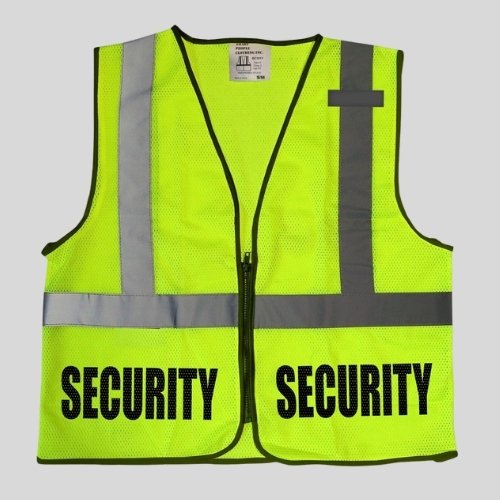
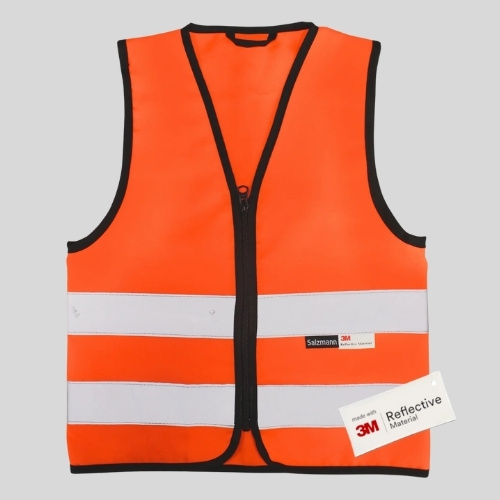
Crossing Guard Sign/Crossing Guard Stop Sign
A crossing guard sign is also called a crossing guard stop sign and stop paddle. Crossing guards use these signs to control traffic. You will notice the word “STOP” in large and clear letters so drivers can see it easily. The crossing guard raises this octagon sign to make drivers stop. As a result, it gives you time to cross the road safely.
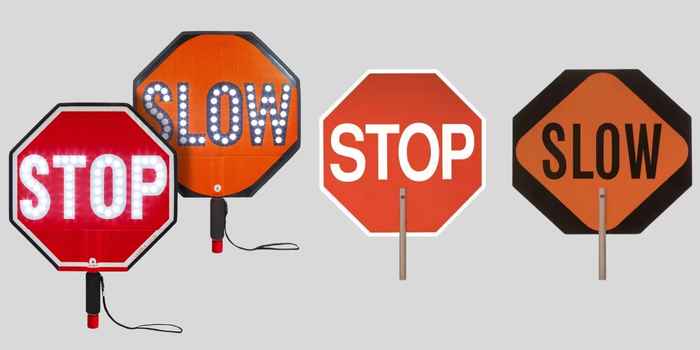
Crossing Guard Flags
A crossing guard flag is a bright hand flag. You can use this safety flag to handle traffic flow and make pedestrian crossing safe. The flag is commonly orange or red so it is highly visible to road users. The crossing guard waves the flag to get drivers’ attention and make traffic slow down or stop.
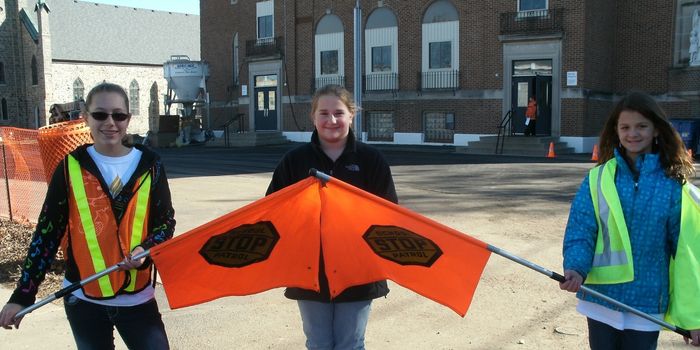
Crossing Guard Gloves
These safety gloves are highly recommended for crossing guards. Because they are designed with bright colors or reflective material. When you are on crossing guard duty and wear these safety gloves, they make your hand signals more visible to drivers. This way, crossing guard gloves show clear directions and improve overall safety.
Crossing Guard Uniform
A crossing guard uniform is a bright and high visibility outfit. Basically, it is made for safety and easy identification of crossing guards. It also includes a fluorescent yellow-green or orange vest and sometimes a safety hat or rain gear. Further, this uniform follows traffic safety standards so drivers can easily notice safety guards on busy roads.
Crossing Guard Benefits
When there are crossing guards at intersections and bust streets, you will get the following advantages.
- Maximum road safety
- Decrease in the ratio of accidents
- Better traffic control
- Promote school children’s safety
- Pedestrian safety
- Elderly protection assistance
- Stress free road crossing
- Improvement in community safety
Crossing Guard Salary
How much does a crossing guard make? The salary of a crossing guard generally depends on your location, experience and the organization. For example: the average income of crossing guards is $18 per hour in the United States.
In Florida, this amount is $18.15 per hour. In 2026, crossing guards paid $35,707 per year in the USA. This table will show you the salary comparison of crossing guards across different cities.
| City Name | Annual Salary | Monthly Pay | Weekly Income |
| Santa Clara, CA | $43 | $3596 | $830 |
| Seattle, WA | $41899 | $3491 | $805 |
| Sunnyvale, CA | $42213 | $3517 | $811 |
| Oakland, CA | $43155 | $3596 | $829 |
| Mill Valley, CA | $42797 | $3566 | $823 |
| Mountain View, CA | $43164 | $3597 | $830 |
| Campbell, CA | $43213 | $3601 | $831 |
| San Jose, CA | $43277 | $3606 | $832 |
| San Francisco, CA | $45376 | $3781 | $872 |
| Corcoran, CA | $52172 | $4347 | $1003 |
How To Be a Crossing Guard?
In the section below, you can understand the main crossing guard job requirements if you want to become a crossing guard.
-
High School Education
You should complete your high school education. Although there are no strict education requirements for crossing guards. But many companies or employers prefer candidates with a high school diploma. In the United States, the age limit to be hired as a crossing guard is a minimum 18 years old.
-
Build Safety Skills
As we told you above, crossing guards are responsible for pedestrian safety so you must learn traffic safety rules. Moreover, you need to understand traffic signals and safety signs as well. For that purpose, you have to study traffic safety laws. We advise you to talk to experienced crossing guards and ask them for advice. They will guide you about important job skills and how you can improve your performance.
-
Prepare Your Resume
Next, you need to create a resume when you want to apply for crossing guard jobs. Remember, crossing guards can work for different organizations. To stand out among other applicants, you must have a strong resume.
It’s good for you when you review job descriptions for crossing guard positions. After that, you can easily match your skills and experience to the requirements listed in those jobs. This way, you will be able to prepare a strong resume.
-
Apply For Jobs
Finally, you need to find companies that advertise crossing guard positions. Once you have improved your skills and prepared your resume, you can apply for the jobs. These positions are mostly available through local government offices, school districts or traffic departments.
Crossing Guard Certification
Crossing guard certification is official crossing guard training. It teaches you how to assist people cross roads safely. You will also learn traffic rules, safety signals, child safety and state-specific standards.
Not only limited to this, you will also get training about proper equipment use and emergency procedures with main focus on MUTCD regulations. When you complete your training and are certified, it will show that you are trained and qualified for the job. Mostly, this training is arranged by schools, police departments plus local government authorities.
Final Takeaway
So, crossing guards have an important role in keeping you safe near roads and schools. Companies that hire them should provide proper training and safety gear to crossing guards. Its is a basic requirement for a job and also keeps crossing guards safe.
If you need high-quality crossing guard safety equipment, you can contact us. You can get bulk safety solutions for your team at a wholesale rate.
People Also Ask
What is a Crossing Guard Called in England?
In the UK, a crossing guard is officially called a school crossing patrol officer. However, most people call them a lollipop lady or lollipop man. This name originates (in the 1960s) from the large round stop sign crossing guard carry, which looks like a big lollipop.
Are Crossing Guards Law Enforcement?
Crossing guards are not law enforcement officers. They are trained school safety staff who control traffic and protect pedestrians. So it’s clear that they can stop traffic for safety but cannot arrest people, give tickets or carry weapons. But remember, these guards can report safety violations to the police.
How Long Do Crossing Guards Work?
Crossing guards work part-time, mostly around 10 to 25 hours per week, during the 180-day school year. Work shifts are generally in the morning (around 7:00 am to 9:30 am) and afternoon (around 1:30 pm to 4:00 pm). Well, some jobs may require 7.5 hours per week.


