

-80x69.png)
Are you confused about where to hang bunting flags and how to fix them properly? Well, many people struggle with this problem because you need unique methods to hang bunting on different places.
In this article, you will learn how to hang bunting flags correctly. You will see easy and practical fixing methods for different spaces as well.
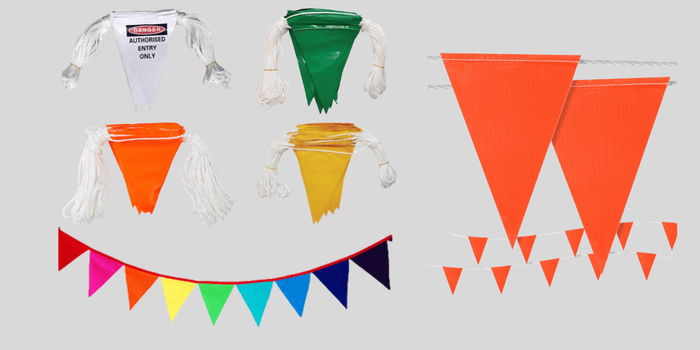
Tools/Materials You Need To Hang Bunting Flags
To hang bunting flags, you need a few simple tools. You can find almost all at home or can purchase from your local store.
- Bunting flags
- String or wire
- Hooks, nails or clips
- Measuring tape
- Ladder or step stool
How To Hang Bunting Flags?
There are two unique methods which you can use to display your bunting flags. The first one is hang bunting with nails/push pins and the second one uses adhesive hooks. You can choose any technique based on your convenience. Below you can explore both.
Method 1: Use Nails or Push Pins To Hang Bunting
This method works well on wooden walls, fences or soft surfaces. It is affordable and easy to do at home. Follow below simple steps.
Measure the Length of Bunting
You should take the estimate of your bunting. For accurate calculation, you can use tape. Check the space of both ends to see how much room you need. You need to leave a little extra length, if you want the bunting to hang loosely. But, for cord or twine, you can allow a slight sag in the middle for a neat look.
Mark the Hanging Area
Now, you have to mark the location where you want to hang your flags. For more ease, we recommend using tape measure to find exact spots. You should also make small pencil marks on each end. For outdoor use, you can hang bunting on the railing or wall. You can place flags on tables or shelves indoors.
Fix Nails or Push Pins in Place
Next, you need to place a nail or push pin at each mark. The nail option is good for heavy bunting. You can use pins for lighter or temporary bunting applications. On stone walls, you need to insert nails carefully between the stones.
Secure Bunting Ends
It’s time to tie each end of the bunting cord to a nail/push pin. You must make sure the knots are tight, so the bunting does not fall. If your bunting has holes (grommets), you only need to slide the holes over the nails or push pins.
Remove Bunting Safely (If Required)
If you want to remove your bunting, you only need to pull out the push pins. For nails, you can use the back of a hammer to gently pry them out. This works well on walls/windowsills or shelves.
Method 2: Hang Bunting With Adhesive Hooks
Adhesive hooks are an easy way to hang bunting flags without nails or pins. They stick to walls and you can remove it later without leaving marks.
Measure the Bunting Length
This technique also requires measurements of your bunting, so you can know its exact length. You should keep it stretched tight unless you want it to sag. Then, you have to note the length or use a tape measure to mark the spot on your wall.
Clean the Hanging Surface
In this phase, you should clean the surface with drops of dish wash or simple warm water. Remove all dust and dirt. Then wipe again with a clean & damp cloth. You must let the area air dry for roughly 30 minutes. However, for brick walls, you can use brick clips instead of adhesive hooks.
Mark Hook Positions
You have to measure the length of your bunting where you want to hang it. For this purpose, you need to make 2 to 3 pencil dots at the start, middle and finish of the bunting area. In short, the more accurate your marks, the better way you can hang bunting flags.
Fix Adhesive Hooks
You need to position 2 to 3 hooks at the ends and one in the middle for support. Now, you can remove the backing from the adhesive hooks and stick them 1 inch (2.5 cm) above your marks. Always space them in a way that there are 2 hooks at each end and 1 in the middle.
Tie Bunting To Hooks
In this final step, you can easily secure your bunting to the hooks with 1 inch (2.5 cm) pieces of metal wire. Plus, wrap the top around the hook and the bottom around the bunting cord or grommets. If you don’t have wire, twine works as well.
Where To Hang Bunting Flags?
Bunting flags are versatile items and can brighten up and decorate almost any space. You can hang them indoors or outdoors. It totally depends on your choice, event, safety or decoration needs. Following are common areas where you can put them.
- Walls
- Windows
- Doors
- Walkways
- Railings
- Fences
- Pathways
- Tripods
- Ceilings
- Party tables
- Balconies
- Gardens
- Patios
How To Hang Bunting on a Brick Wall?
If you want to hang bunting flags on a brick wall without drilling, you can use many other alternatives. For example: you can use brick clips which can grip the edges. There are also heavy duty adhesive hooks available in the market that are made for brick. But, you must make sure they are spaced properly to hold the weight of your bunting.
For a permanent option, you can use masonry screws in the mortar. For a temporary display, you can try strong Velcro or double sided tape. Apart from that, you can tie the bunting to existing structures such as railings.
How To Hang Bunting on a Fence?
To put bunting flags on a fence, you can use the built in loops to tie or clip it to the posts. You can also install a string through the loops to drape it. For your temporary setups, you should choose outdoor adhesive hooks, zip ties or clips that grip the fence.
It’s also important to leave a little slack for a natural drape. You have to start in the middle and work outwards for even space.
How To Hang Flag Bunting on Porch?
First of all, you need to pick your spot where bunting can easily install. For example: you can consider options like the railing or under the eaves. Now, you can measure the length you need.
You should use removable hooks, zip ties or clips to keep it taut. You can also drape it for a swagged effect. After that, you can start in the middle. Then, secure the ends and intervals to prevent sagging.
How To Hang Flag Bunting Outside?
If you need to hang flag bunting outside, you must attach it to hooks, posts or other structures with the use of loops. You can also place removable adhesive hooks, zip/ties or clips on flat surfaces such as porches or rooflines.
Now, you can start in the middle and work outwards for a smooth drape. You should keep it tight for a flat look if you want it. For brick or siding, you should go for nails, staples, brick clips or strong adhesive hooks.
Different Ways To Hang Bunting Flags
You can hang buntings in many ways. Basically, the method you choose depends on the surface and location. You should use the right technique & pattern to match display needs like temporary or permanent set up.
- Criss Cross: Put your bunting in an overlapping and diagonal pattern across a space. It uses a marquee with 2 or 3 poles. You can start by attaching the bunting to each corner pole. Then you can stretch it diagonally to the center of the wall.
- Around the Space: You can drape the bunting along the edges of your room, patio or garden. This frames the area nicely and adds color to the perimeter.
- Horizontal Lines: You need to install bunting in straight and parallel lines across your walls, fences plus ceilings. This classic style is organized and works well for both indoor and outdoor events.
- Star Pattern: This is a traditional and most commonly used style. You need to arrange bunting in a star or radiating pattern from a central point. This way, you can create a focal point and an attractive display for celebrations.
Wrapping It Up
JACKWIN’s factory is located in China. We are a trusted manufacturer and supplier of bunting flags and safety products. With 18 years of experience, we have been serving global customers.
If you need bunting flags in bulk, you can get at factory price. However, if you have inquiries about how to hang buntings, our team is ready to guide you. So, contact us now!
Commonly Asked Questions
How To Keep Flag Bunting From Flying Up?
To stop this, you should secure the bottom edge of bunting with weights or tie it to stakes. You can also use clips or rings to attach it. Moreover, you must make sure the top is tightly fastened with hooks and clips.
How To Hang Bunting Without Nails?
It is simple to hang bunting without the use of nails. You can use removable adhesive hooks & double sided tape. Another option is suction cups for windows. You can also tie it to curtain poles, peg rails, fence posts or tree branches. For railings, the use of zip ties or wire is ideal.


