

-80x69.png)
Metal stamping process is a widely used method in different industries to manufacture high-quality metal products. So, you should be well aware of the right metal stamping steps and presses.
That’s exactly what we have explained in this guide. You will learn all types of metal stamping and materials you can use.
What is Metal Stamping or Metal Pressing?
Metal stamping is also called metal pressing. It is a process in which you can produce different types of metal designs and parts from a single sheet of metal. This process involves pressing metal using a die to obtain the required shape of the metal parts.
There is a significant demand for metal stamping in various industries, including construction, automotive, manufacturing, aerospace, the health industry and other key sectors.

Metal Stamping Process – 10 Simple Steps
1. Design and Tools Preparation
First of all, you should be clear about your metal design, so according to it, a die will be designed through CAD, including all the minor details regarding the bends, thickness & turns.
The tool should be made of steel, so it can withstand heavy pressure and heat. There should be a proper clearance between the punch and the die, because it affects the cut edge quality. Once the tool is prepared, you can proceed to the next step.
2. Base Material Setup
The selection and preparation of base material is another important step in metal stamping. You can select the metal type based on your requirements according to different industries.
Normally, low-carbon steel, copper, aluminum and high-strength steel are used in metal stamping. You can use a metal sheet or a coil. Even a coiled metal will be transformed into a metal sheet by passing through a complex process.
3. Metal Cutting
Another basic step in the process is to cut metal into the shapes that are more suitable for final punching and trimming. You should remove the waste material from the metal and cut it into the required shape before the final process.
You can cut metal by using big scissors, laser cutting, water jet cutting, plasma cutting and slitting. The metal in a proper shape gives you a better final shape.
4. Blanking
Blanking is the process in which predefined shapes of the metal sheets are prepared. In this procedure, the short metal parts are cut and the extra waste is removed from the sheets. Blank sheets ensure a more precise and required design of metal parts.
The extra metal may go to scrap, or it can also be reused in some cases. Normally, a die is used to create blanks by punching the metal part and finally, the blanks are separated from the rest of the sheet.
5. Punching and Holding
In this process, the punching is done on a metal sheet using a die to get the required shape of the metal parts. The metal sheet is placed under a die & the holder holds it firmly in place.
Then, the punching die hits the metal with force and cuts the required part, which is called a slug. This process repeats until you get the required amount of slugs.
6. Beveling
It is a secondary process in metal stamping. In beveling, the edges of the metal are rounded or chamfered. The cutting of the edges is usually done at 30 degrees and 45 degrees, instead of 90 degrees.
Beveling is done to avoid sharp edges and injury during stamping. Some precise designs also need beveling to be done either by chamfering machines, grinding wheels, or any other means.
7. Bending
Bending is a process in metal stamping where the flat metal sheet is transformed into a curved or bent shape without changing the thickness of the metal sheet. It is done to strengthen the metal parts and also reduces the need for extra joints. Different shapes are obtained through common bending procedures, including V-bending, U-bending, air bending, bottoming, coining, roll bending and wipe bending.
8. Embossing
It is a process to create a convex or concave design, text on metal and different patterns without cutting the metal. The punch and die presses metal sheets to emboss designs by applying high pressure.
Embossing is important for marketing; different brands engrave their logos and slogans on the metal sheet. There are many types of embossing, including single-level, multi-level, precision embossing and combination embossing.
9. Trimming (Progressive Die Stamping)
In trimming, the final shape of the stamped metal is obtained by cutting the excess edges, flash and burrs. The final piece of the metal part has the required shape and dimensions.
On the other hand, progressive die stamping is a multi-tool setup that combines blanking, punching, bending, embossing and trimming in a single operation. Trimmed parts are removed with the help of chutes and scrap cutters.
10. Quality Control & Inspection
This is the last stage of the metal stamping process, in which an expert team inspects the whole process and examines the quality of the final products. As a QC expert, you should check the edges, finish quality and dimensional accuracy and detect any deformity.
Inspection is conducted at various stages of the metal stamping process, including incoming material, during the process and post-stamping inspection. The ultimate goal of the inspection is to get the best quality stamped metal parts.
Types of Metal Stamping
Progressive Stamping
It is a sequential type of stamping where the metal is automatically passed from each stage and one process is done at every stage. In this process, a single die is involved and does all the operations at different levels.
At the first stage, the feeding is done, in the second stage, positioning, then blanking, puncturing, bending, embossing and finally, trimming. It is a high-speed and cost-efficient process. However, the high tool cost to initiate is not suitable for low-volume operations.

Transfer Stamping
Transfer stamping is a procedure in which different dies are involved, compared to progressive stamping, where only one die is used. In transfer stamping, the metal part is manually transferred to the next stages by hands or robotic support.
When the first step is done, the metal sheet is transferred to the next die, where the second step takes place. In transfer stamping, highly complex and deep drawing is possible due to the involvement of multiple dies.

Four Slide Stamping
As the name suggests, four slides are used for the stamping process. When the metal strip is fed into the system, the four slides come into the centre to perform their unique actions. All of the slides are driven by cams and they are installed at 90 degrees to the metal parts.
Each slide does its function, either in sequence or simultaneously, depending on the design requirement. Complex designs and bends can be obtained through four-slide stamping.

Deep Draw Stamping
In this special type of stamping, the metal parts with a depth of more than the diameter of the sheet are obtained by applying force deep down. A blank sheet of metal, usually in circular shape, is placed on the die, while the holder grips it forcefully.
The pressure applied by the puncher against the sheet causes the metal to go deep into the die cavity, forming the required shape. Fuel tanks, sinks and other important metal parts are manufactured through this technique.

Fine Blanking
It is one of the most precise metal stamping procedures, in which a metal part with fine edges, complex geometries and tight tolerances can be manufactured. This process involves punching and extrusion at the same place.
You can get highly complex shapes with ultra-fine edges and smooth surfaces. Normally, you can use materials like carbon steels, copper, aluminum, stainless steel and alloys.

Metal Stamping Materials
Brass
Brass is an alloy that is used in metal stamping. Zinc and copper combine to make brass. Normally, it is a good conductor, so you can use it for electrical appliances. Its machinability, resistance against corrosion and aesthetic finish are remarkable.
Due to its gold-like color, you can use it in the decorative industry as well. Different grades of brass are used in the metal stamping, including C260, C230, C360 and C220.

Copper
The most widely used metal in the stamping industry is most probably copper. You can use it to make parts if you need a highly electrical and thermal conductive metal & also need ductility.
There is a wide use of copper in electrical appliances, HVAC systems and other industries. Different grades of copper are used, which are C110, C102 and C122. Copper works at room temperature and it is non-magnetic in nature.

Steel
One of the most commonly used materials in the metal stamping industry due to its easy availability, cost-effectiveness, magnetic properties, versatile formability and heat resistance.
The types of steel used in metal stamping are carbon steel, galvanized steel, stainless steel and alloy steel. There are wide applications of stamped steel in automotive, electrical, construction and other industries.

Aluminum
Aluminum also has wide applications in different industries, including aerospace, automotive and consumer goods. It is useful for its lightweight, corrosion-resistant, recyclable and good thermal and electrical conductivity.
Different grades of aluminum are used in metal stamping, including 1100, 3003, 5052, 6061 and 7075. One disadvantage of using aluminum is its softness, which can cause galling.

Titanium
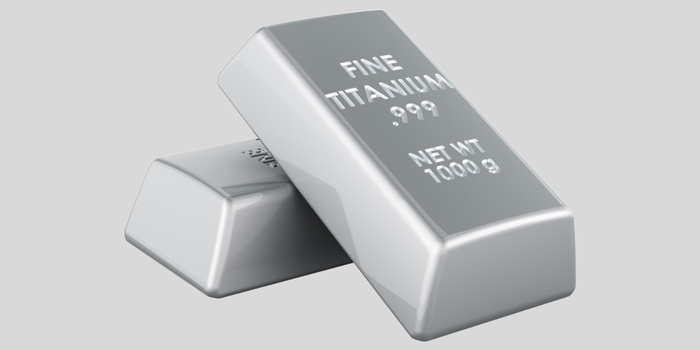
It is the most premium metal used in metal stamping and is the first choice in the aerospace industry, implants and other sensitive products. Different grades of titanium are used in the industry, including Grade 1, Grade 2, Grade 5 and Grade 23. Titanium is 50% lighter than steel; however, it is stronger than steel. It is also corrosion-resistant and has high thermal conductivity.
Metal Stamping dies
Progressive Dies
It is a die in which all the actions are performed under a single die and the metal strip moves forward to the next stage to complete the next task in the metal stamping. In this die, multiple stations are installed in a single die.
The metal strip is fed into the die and then, in the next steps, blanking, bending, embossing and finally cut off. This process is cost-effective and generates metal parts in bulk volume.
Single Stage Die
The single-stage dies can perform only one function at a time, unlike the progressive dies or compound dies. A single-stage die can complete one step in the metal stamping, whether it is cutting, bending, embossing, or any other function.
Different types of dies perform different functions and they are usually operated manually or semi-automatically. These dies are suitable for a low-volume stamping process.
Compound Dies
Compound dies can perform one or two actions simultaneously, like blanking and piercing on a single station. If you compare it with a progressive die, where multiple stations are present to perform different actions, this die can perform 2-3 actions simultaneously in a single stroke.
You can get the finest edge metal parts through compound dies and it is suitable for medium-level volumes.
Types of Stamping Presses
Servo presses
In servo presses, servo motors are used instead of a typical flywheel and other conventional systems. The servo motors provide you with more control over the stroke force, shape, speed of the slide & positioning.
Unlike the mechanical cams, in servo presses, you have precise control over specific parts of the press stroke. You can get more productivity and make more complex shapes in an energy-efficient way.
Mechanical presses
It is a typical press, which is used in the metal stamping process. In this, a motor-driven flywheel, a connecting rod and a crankshaft are used to produce force and perform the metal stamping processes.
The common steps in metal stamping done with mechanical presses are blanking, forming, punching, cutting and bending. Mechanical presses are low-cost machines that provide fast services; however, the precision is not up to the mark.
Hydraulic presses
In this metal stamping machine, the liquid is used to build compressive pressure, which is used to press thick material with precision and accuracy. This press works based on Pascal’s law.
You can control the pressure during the stroke; however, the speed is slow compared to a mechanical press. A hydraulic press is ideal for deep drawing.
Metal Stamping Applications in Different Industries
Automotive Industry
There is a wide use of metal stamping in the automotive industry, where the need is growing day by day. You can manufacture parts in bulk using metal stamping.
In the automotive industry, the strength-to-weight ratio is also important for safety, so you can use lighter metals to form external parts, giving more strength and reducing the weight. Different parts are made using this technique, including body panels, chassis components, engine parts and other important parts.
Aerospace Sector
In the aerospace industry, the use of metal stamping is increasing due to its strength-to-weight ratio and some other factors, like thermal conductivity.
Usually, the most premium metal, like titanium, is used in manufacturing the most sensitive parts, such as turbine blades, housings and engine mounts, which have to face extreme pressure and heat. It is also used to make enclosures and connectors for avionic systems.
Road Safety Products
We are the manufacturers of road and traffic safety products. In our factory, the metal stamping process is used to shape, cut and form metal sheets into various components.
Jackwin traffic signs, guardrails, sign posts (metal posts), spare parts, metal stands, galvanized crowd control barriers and reflector housings are designed by metal pressing technique. You can get all these durable, strong and customized products from our factory.
Electronics Industry
In the electronics industry, there is so much diversity and this field is becoming more advanced with time. The ultimate need for metal-stamped parts is to make accessories, like connectors, PCB components and other electronic devices, such as LED lights, mobile devices and consumer electronics.
Normally, copper is used in electronics items; other than copper, nickel alloys, brass and other important materials are also utilized in this industry.
Transportation Infrastructure Industry
In the transportation infrastructure industry, the use of stamped metal parts is at multiple levels, including highways and buildings, mass transit systems, bridges, tunnels, airports and many other places.
The metal stamping process provides durable, strong, lightweight and corrosion-resistant metal parts in bulk quantities. The materials normally used are galvanized steel, carbon steel, aluminum & copper alloys.
Household Appliances
There is an extensive use of metal parts in household appliances, including the kitchen appliances(refrigerators, microwave ovens), laundry appliances and cleaning appliances.
Using stamped metal parts in household appliances offers more durability, complex shapes, corrosion-resistant material and cost-effective solutions. The metals used in home appliances are copper, aluminum, stainless steel, and alloys.
Healthcare Industry
The role of metal stamping is immense in the healthcare industry. The healthcare sector is a diverse industry in which multiple sub-departments are involved.
You can use metal stamping to manufacture parts for surgical tools, implants(especially orthopedic implants), hospital equipment, diagnostic tools and laboratory equipment. You can easily sterilize the metal parts used in the healthcare industry.
Construction Industry
As you know, the construction industry is quite diverse and has different dimensions. The role of stamped metal parts in different areas of the construction industry is common.
These include structural components, plumbing systems, HVAC ventilation, decorative installations and safety. Different types of metals are used in the construction industry, depending on the specific requirements.
Additional metal stamping techniques
-
Forming
Forming is a process in which the metal sheets are reshaped into the required three-dimensional designs without removing any extra metal. You can achieve advanced complex geometries through this procedure.
-
Coining
As the name indicates, coins are made through this metal stamping process. In this procedure, metal is pressed with high pressure to compress it in a confined die cavity. You can use this process in the final stage of finishing.
-
Lancing
In the lancing procedure, the metal sheet is cut and bent without removing it. There is frequent usage of this technique to make parts that are used in electrical connectors, air flow vents in HVAC systems and other important applications.
-
Piercing
It is a technique in which the metal slugs are obtained through punching the metal sheets against dies. The metal sheets are held between the presser and the die, then the puncher hits the metal sheet with force into the die cavity.
-
Flanging
Flanging is a technique in which the edges of the metal sheet are bent at angles, usually 90 degrees, to provide more strength to the metal. It has different applications, including automotive body frames and electrical box flanges.
Advantages of Metal Stamping
There are a lot of advantages of metal stamping in different industries. The stamped metal parts are usually long-lasting and corrosion-resistant. You can get highly complex metal parts with precision and accuracy.
The process is cost-effective if you need it in bulk. You can get identical parts in bulk, which is beneficial in manufacturing industries. It also provides you stronger parts with low weight.
Final Thoughts
To sum up, metal stamping is an ideal technique that you can use across your multiple industries. With this process, you can maintain the quality and cost of products at the same time. If you need further details about the metal stamping process or traffic products, you can talk to our experts.


