

-80x69.png)
At roads and intersections, you can see a lot of vehicle movement. To control traffic flow, municipal traffic authorities install different devices. These include red light cameras and traffic sensors. But they both work in unique ways.
Therefore, we have explained red light camera vs traffic sensor, their functions plus locations. Let’s understand in this easy guide!
What Are Red Light Cameras?
A red light camera is a device which is used to watch traffic at intersections. These cameras capture your vehicle if you violate a red light. That means, you don’t need police officers to catch the violation at roads. With this camera, you can make the road safe and prevent dangerous driving.

How Red Light Cameras Work?
Red light cameras use sensors (induction loops or radar) for the detection of cars which cross the stop line when the red light is on. However, some systems also capture the driver’s face and car plate. Then, this information is sent to the authorities. You will get a ticket by e-mail if you violate red light rules.
Red Light Camera Types
Below are common types of red light traffic cameras.
Fixed Red Light Cameras: These cameras stay in one place at an intersection. Therefore, they always watch the same area.
Mobile Red Light Camera: You can move these red light cameras to different locations. They use radar technology. You can set it on a tripod or placed inside vans.
Average Speed Camera: This camera combines two functions. It checks your car speed over a distance and also watches if you violate a red light.
Traffic Sensors on Roads
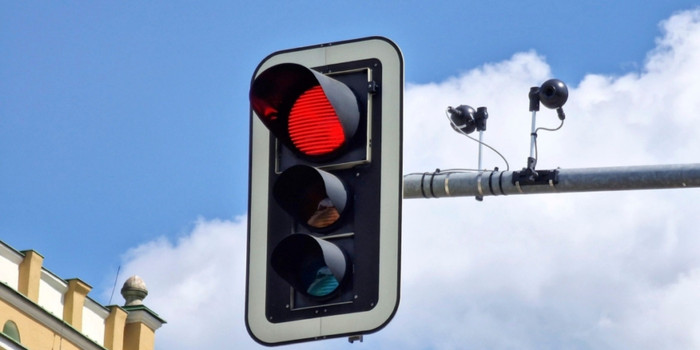
Traffic sensors are tools which you can place on or under the roads to detect vehicles. For example: they count cars on the highway, measure their speed or check traffic flow.
These sensors are also important for traffic lights, so lights can change at the right time to reduce congestion. Some sensors use loops in the road, but others use radar or cameras.
How Do Traffic Sensors Work?
Traffic sensors detect vehicles when you drive on the road. Some sensors set under the road and sense metal when your car passes over them. However, others use radar or cameras to spot movement.
After detection, the sensor sends this data to the traffic system. The system then adjusts traffic lights and signals.
Types of Traffic Sensors
There are several types of traffic sensors used on roads today. Each sensor operates in its own way to manage traffic flow.
Induction Loop Sensors: You can place these sensors under the road. They detect your car when metal passes over them. Generally, you will find induction loop sensors at traffic lights.
Radar Sensors: Radar sensors use radio waves to detect vehicles. They work well in rain/fog and low light.
Camera Sensors: These sensors use cameras to watch traffic. They can also count vehicles and track movement at intersections.
Pneumatic Tube Sensors: Pneumatic tube sensors operate with air-filled tubes placed across the road. They detect cars when you drive over the tubes.
Infrared Sensor: With the help of heat signals, these sensors catch cars movement on routes.
Vision Sensors: These sensors depend on cameras & software to recognize vehicles.
Microwave Sensors: These sensors use microwave signals to detect traffic flow. They perform well in rain and dust.
Video Detection Systems: To track vehicles and their movement, these sensors use video cameras.
Red Light Camera vs Traffic Sensor Comparison
Type of Data Collected
Red light cameras capture photos or videos of cars which go through a red light. These red light cameras mainly focus on violations and car plate data.
On the other hand, traffic sensors collect information such as vehicle speed and traffic flow. They focus on traffic patterns. So, we can say that red light cameras enforce rules and traffic sensors manage traffic efficiently.
Main Function
You can use red light cameras to enforce signal violations. They take photos or videos of cars which ignore red lights. This way, they keep intersections safe.
Traffic sensors used to monitor and manage traffic flow. They collect data, adjust traffic lights as well as improve road efficiency.
Installation Locations
You will usually see red light cameras at intersections where traffic lights control vehicles. They target specific places with a high risk of red light violation and accidents.
In contrast, you can install traffic sensors on roads, highways, junctions or intersections. However, they are placed under the road, on poles, roundabouts, ramps or over the lanes.
Legal Usage
From the perspective of legal usage, red light cameras have a major role in punishing violations. Because, they provide evidence-grade data with audit logs. You can use these photos and videos in court to issue tickets for traffic violations.
But, traffic sensors only support traffic planning and traffic control. You can get statistical data which feeds into traffic management systems. Hence, they are not used for legal enforcement.
Activation Method
Well, red light cameras are activated by signal-red plus detection zone entry. This means, the camera will take a photo or video when your car enters the detection zone after the light turns red.
However, traffic sensors operate differently. They use continuous, threshold-based or event-triggered sensors to detect vehicles. This allows them to easily monitor traffic flow and speed at all times.
AI Capabilities
Red light cameras use AI for license plate recognition (LPR) and plate color detection. As a result, they can identify vehicles and drivers which ignore red light rules.
Traffic sensors use AI to track vehicle paths, object detection or traffic queues management. Further, they analyze traffic patterns to improve flow.
Maintenance Needs
To keep red light cameras functional, you need to check and calibrate them regularly. So, you can make sure photos and videos are clear and accurate. In the case of traffic sensors, you have to maintain them, but the main focus is to keep detection systems functional and data accurate. Some sensors such as road loops or pneumatic tubes may require repairs after heavy use.
Installation Cost
Red light cameras mostly cost you more to install. Because, you will require cameras, sensors, wiring & connection to enforcement systems. Traffic sensors can be less expensive. However, it depends on its type such as induction loops or radar. Also, some advanced sensors with AI systems can be costly too.
What Do Red Light Cameras Look Like?
Red light cameras have a camera box that points at the stop line. Generally, they white, yellow or gray in color. You will see them mounted high on poles or traffic arms at intersections. You will find some cameras small and others large with multiple lenses. Further, you may notice “Photo Enforced” signs near the red light camera.
Red Light Camera Fine/How Much is a Red Light Camera Ticket
The price of a red light camera ticket varies by your city or state. It also depends on your local laws. You mostly receive the ticket by mail which is sent to the car’s registered owner. Some places may add points to your driving record. Below are examples of how ticket cost can change according to state.
| State | Maximum Ticket Cost of Red Light Camera |
| New York | $50 |
| Washington | $250 |
| California | Additional fee+$100 |
| New Mexico | $66 to $100 |
| Lowa | $65 to $100 |
Red Light Camera Price
The cost of a red light camera changes based on its features and set-up. The basic camera for red light costs you around $50000 (for full system) or more.
However, if you want to buy advanced systems with multiple sensors and AI features, you need to pay approx. $80000 for full set-up. Furthermore, installation and connection to enforcement systems can increase expenses.
What is Red Light Camera Violation?
When your car enters an intersection after the traffic turns red, it is called a violation of the red light camera. These violations are recorded to encourage you to obey traffic lights and prevent accidents at intersections.
Road Sensors For Traffic Lights
Road sensors combined with traffic lights make the overall system working more efficiently. They detect vehicles waiting at intersections or moving on the road. The sensors send information to the traffic system, which can change lights based on real-time traffic.
What are the Sensors on Top of Traffic Lights?
On top of traffic signals, you can install devices such as radar, infrared or microwave detectors. They can easily detect cars and pedestrians to make intersections smarter. With these sensors, you can adjust light timing and spot emergency vehicles too.
What Type of Sensor is Used in Traffic Lights?
Traffic lights use different types of sensors to detect vehicles. Common types include inductive loops, infrared sensors, microwave radar and video detection systems (cameras). Among them, inductive loops & overhead infrared/radar sensors are the most commonly used for detection of vehicles.
FAQs
When Red Light Camera Flash?
A red light camera flashes when you enter your car at the intersection after the traffic light turns red. This can lead to a ticket. But not every flash results in a fine, because the images are reviewed first.
When Both Red Light Cameras and Traffic Sensors Are Required?
You will need to install these both traffic control devices at busy intersections for full traffic control. As a result, the red light cameras will catch violations and sensors track congestion and traffic flow.
How Sensitive Are Red Light Cameras?
Red light cameras are very sensitive. Because they use road sensors or radar to detect vehicles. Mostly, they allow a tiny grace period (like 0.2 seconds). Some cameras can also measure speed and take multiple photos as evidence.
Which Sensor is Used in Street Lights?
Streetlights usually use photocells (light sensors) which turn lights on when required. Smart streetlights work with motion sensors (PIR or radar) to dim lights. Additionally, some older traffic lights also use inductive loops in the road to sense vehicles.
Which Sensors are Used in Traffic Signals?
For traffic signals, you can use the following traffic sensors.
- Inductive loops
- Infrared (IR) sensors
- Radar (microwave) sensors
- Geomagnetic sensors
- Ultrasonic sensors
Why Red Light Cameras are Illegal?
Traffic light cameras are not illegal everywhere, but their use is debated. For example: critics say they are more used to make money and can unfairly affect low-income drivers. But, supporters say they reduce fatal crashes and make intersections safer.
Conclusion
Finally, I hope you now know the full comparison between red light cameras and traffic sensors. You can see how their purpose, data, locations and usage are different.
So, we can say that next time when you drive your car at an intersection, you will know working of these systems and safety precautions you must follow.


