

-80x69.png)
Thames Barrier is the world’s second largest movable flood barrier. It is located downstream of central London. Its main purpose is to protect the city from extremely high tides.
This shows how flood barriers protect major cities from serious water threats. In this article, you will learn about different flood barrier types, their best use case plus cost.
What Are Flood Barriers?
What is a flood barrier called? Anti-flood barriers or flood barriers are protective systems that stop water. You can install them where flood risk is high. They block or control water during heavy rain, storms & river overflow.
You will see flood barriers near homes, factories, warehouses and roads. Their main purpose is simple. They protect you, your building, equipment and properties. Some barriers are installed on a permanent basis. Some are temporary and easy to place before a storm.
Flood Barrier System
A flood barrier system is a complete setup that stops water to enter in your home or site. Actually, it is not just one product. It works as a full protection plan for your property. Your system may include panels, gates, seals and support frames. These all parts or equipment connect tightly to block water pressure. You can place this system at doors, gates, loading bays or near boundary walls.
Types of Flood Barriers
As you know, flood barriers are available in many designs to fulfil your needs. Well, each type works in a different way according to your location & water level. Following are some common types of the flood barriers:
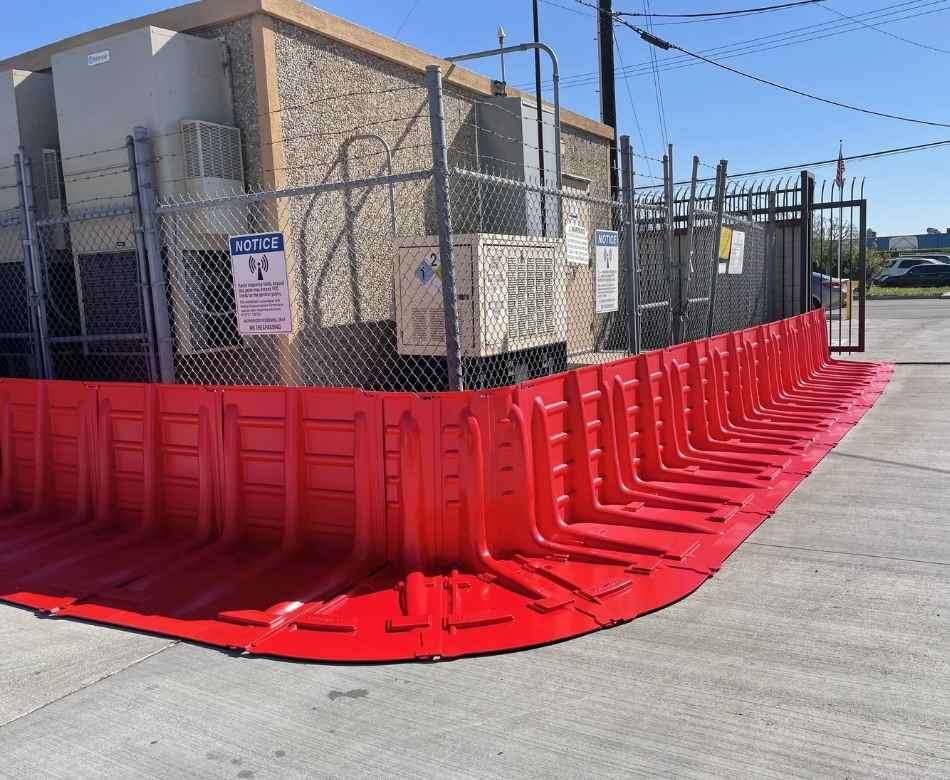
Plastic L Shaped Flood Barrier or Portable Flood Barrier
As its name suggests, this is an “L” shaped barrier. Its shape is designed in such a way that it can fit in every corner. If we talk about its dimensions, its width is 100 cm and height is 75 cm plus diameter is 85 m. This is a portable and lightweight option for you. You can set it easily at any place.
L shaped flood barrier how it works? Actually, when water pushes against the barrier, the L shape holds pressure. After that its unique shape redirects flow away from your property.
Self Closing Flood Barrier
A Self Closing Flood Barrier (SCFB) is an automatic flood defense system. It saves your property automatically. In simple words, you don’t need electricity, human help or early warning for it to work.
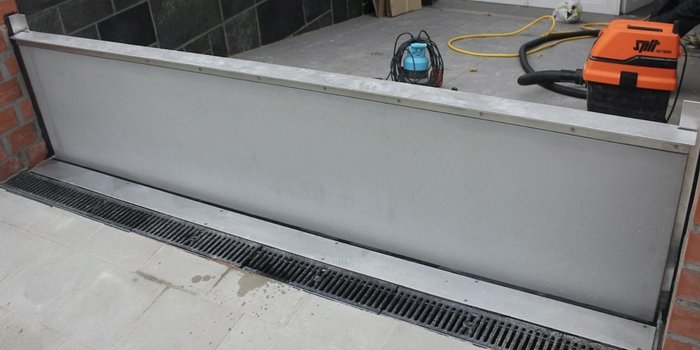
Usually, it is installed underground in a stainless steel chamber. When floodwater enters the chamber, the barrier floats and rises automatically. It locks into a vertical position which forms a strong wall that stops water. When the water level goes down the barrier becomes invisible automatically. Some other names are also used for this barrier;
- Automatically expandable flood barrier
- Permanent flood barrier
- Hydraulic flood barrier
- Automatically Interlocking flood barrier
- Automatic flood barrier
- Пассивные противопаводковые барьеры
Removable Flood Barrier / Demountable Flood Barriers
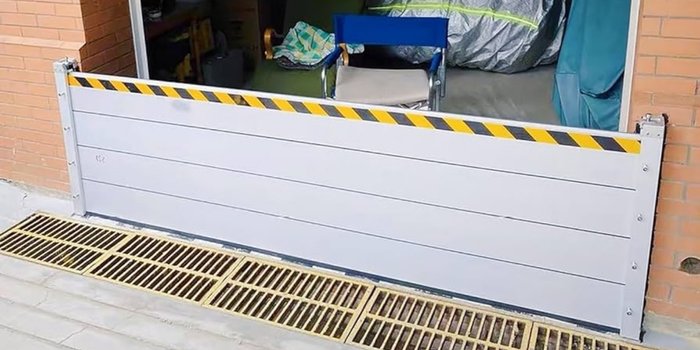
A removable flood barrier is a temporary system that is placed at main doors, near windows and under the doors. You place it to block gaps. It is durable and made of aluminum, plastic or inflatable material. You can remove and store it easily when not in use. This is a more cost-effective option for you.
Stop Log Flood Barrier
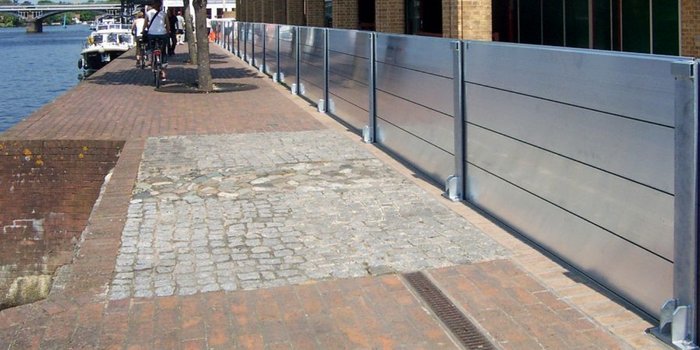
If you want rapid deployment and high-impact resistance then a stop log flood barrier is best. It is a removable, modular system for flood protection. You can stack aluminum planks into vertical channels to seal gaps and openings.
Basically, it creates a watertight barrier that can resist high water pressure. This system can reach heights up to 13 feet for strong protection. It works best at commercial or infrastructure sites.
Flip up Flood Barriers
This barrier is designed in the same way as a SCFB. It is a hidden barrier that remains on the ground when not in use. When you want to activate it you have multiple options. But you need human power or a power button to make it active when it floods. Some advanced flip up barriers have automatic options too. Its height is about 6.5 feet. Moreover, its length is 40 feet.
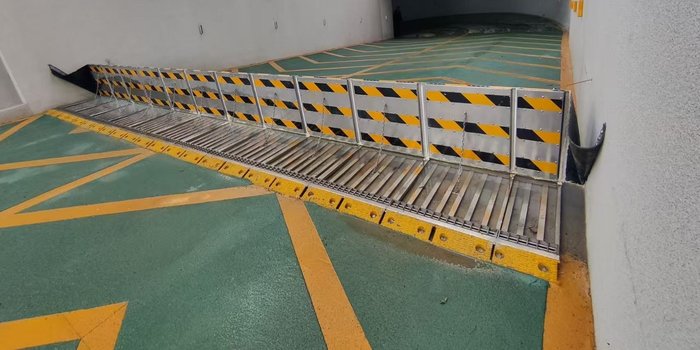
Drop Down Flood Barrier
The Drop Down Flood Barrier is designed to protect areas where traditional barriers are hard to install. You place it above openings instead of in the ground. This makes it ideal for warehouses, loading bays and retail entrances.
An electric motor lowers the panel automatically to block floodwater up to 3 metres high. This barrier works best for commercial sites needing reliable, concealed, and automatic flood protection.
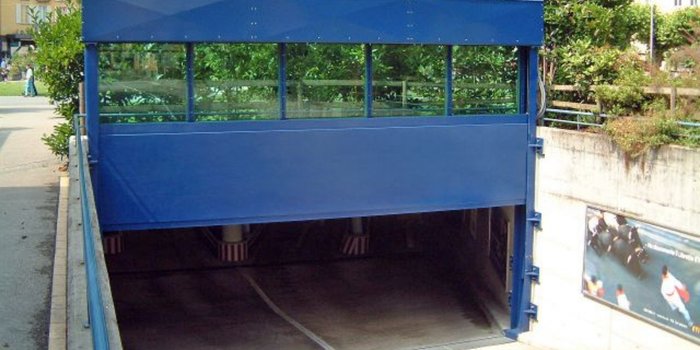
Inflatable Flood Barrier: Water Filled Flood Barrier
Inflatable flood barriers are flexible systems that use air or water to create a temporary wall. You place the barrier along your property. After that, you can inflate it when a flood threat arises. They are made of strong and puncture-resistant materials that hold pressure and block water effectively.
Once the flood passes, you should simply deflate and store the barrier for later use. These barriers work best where quick setup and temporary protection are required.
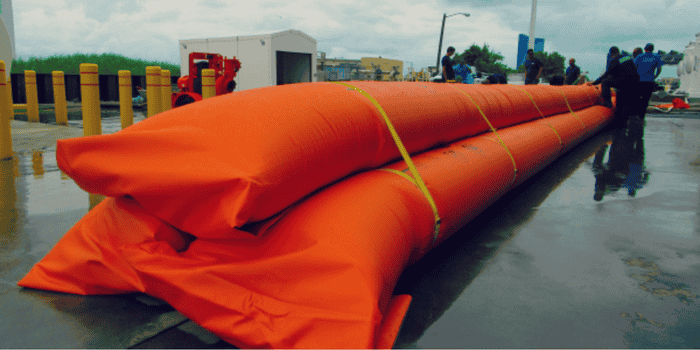
Flood Barrier Types Based on Material
Different materials are used to manufacture flood barriers for safety purposes. In fact, the material you choose affects the strength & durability of the flood barrier system.
Plastic Flood Barriers or PVC Flood Barrier
Plastic barriers are mostly used when the level of flood is low. Actually, these are lightweight, portable, temporary and easy to install barriers. These barriers are used when temporary protection is needed. Means that you can remove them when the water level decreases.
Some common water barriers are L-shaped, watertight, stable, box shaped and plastic sheeting barriers. These barriers are made up of high quality plastic, PVC or ABS plastic.
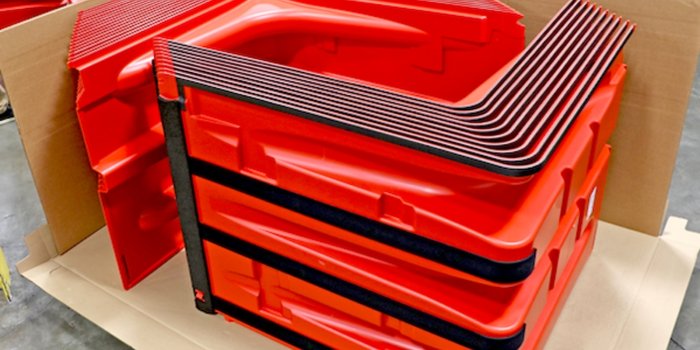
Aluminium Flood Barrier
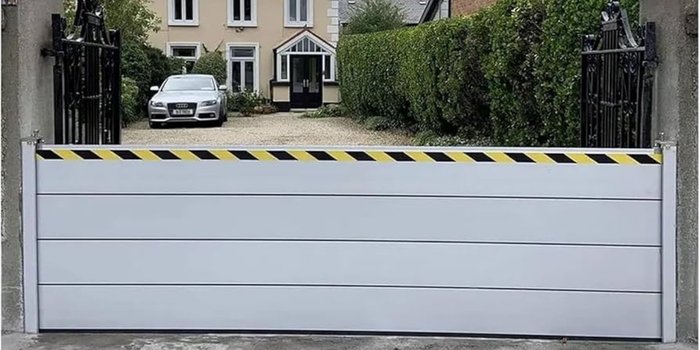
As you are aware, aluminum is a high-strength material and light in weight. Therefore, it is used to make high resistant flood barriers that can bear the pressure of water plus flood debris. You should buy an aluminum flood barrier when you face a flood or rain.
The reason is its corrosion resistance, which makes it best for long-term use for more than 50 years. Furthermore, this material needs very less maintenance and you can clean it up easily after a flood.
Rubber Flood Barrier
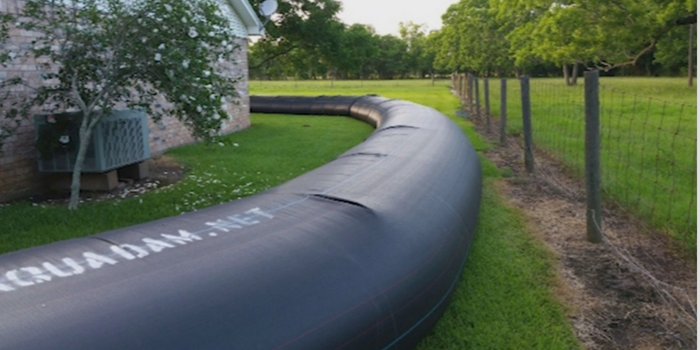
Rubber creates an airtight and water-tight seal. Therefore, you can fill air or water in it to create a barrier. Moreover, this is puncture resistant material and a very flexible choice for you. You can install it in uneven places as well.
When the water level goes down, you can store it for later. Rubber can absorb the high pressure of debris and material that comes with the flood. It is a cost effective barrier that can last for years.
Concrete Flood Barrier
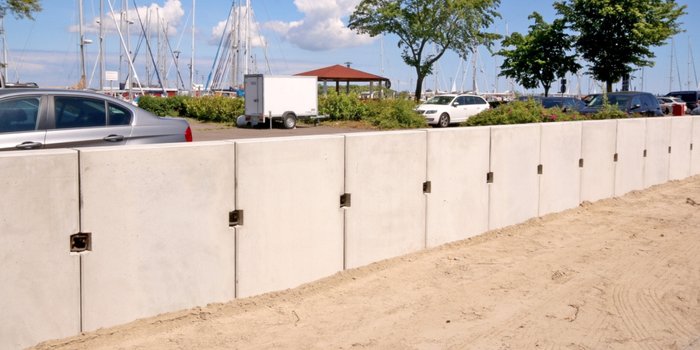
This is a best choice when you need a permanent barrier to prevent you from high-pressure water. In fact, concrete is a high resistant material that can resist extreme weather conditions, rot, structural damage plus floating material. Its cost is higher than that of other barriers, but it is used in places with rapid flooding and rain.
If you want to buy concrete barriers for temporary usage, you should buy concrete blocks. These are stackable interlocking blocks, but they are heavier than other plastic and rubber barriers.
Glass Flood Barrier
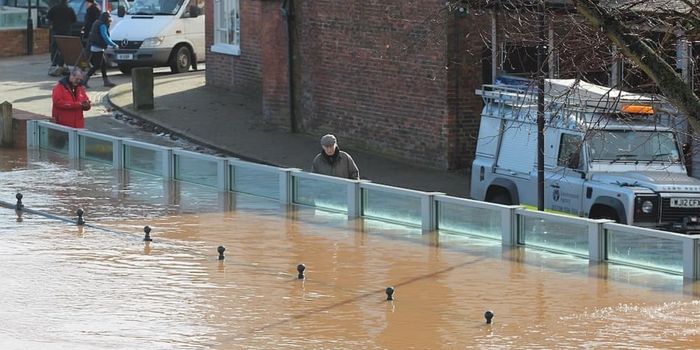
Glass flood barriers are used when you need safety with an aesthetic view. Basically, this is a passive system which comes in multiple heights and in many options. This glass has strength to bear the water pressure and any other damage. Mostly, it is used in government buildings, resorts & commercial areas near any water or flood source.
This type of barrier has tamper-proof and concealed fixing. Which means it also prevents unauthorized access. Generally, you may see a sacrificial layer on the outer surface of the barrier. This outer layer provides extra safety.
Flood Protection Barriers For Homes
When you choose a flood barrier for your home, you need something simple, reliable, and easy to store. Your house does not require heavy industrial systems. You will need protection that fits garages and small entry points.
For most homes, removable flood barriers or stop log barriers work best. You should install them only when a flood warning appears. After the water risk ends you can remove and store them safely.
On the other hand, if your house is in high-risk flood zones then an automatic system like a self closing or drop down barrier gives extra security.
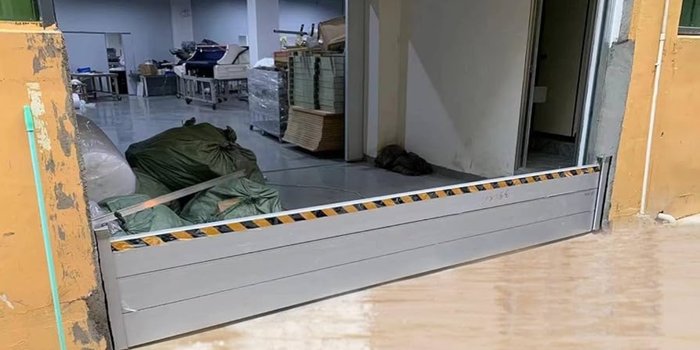
Flood Barriers For Doors
Your door is the most common entry point for floodwater. Even a small gap at the bottom can let water enter your home. So, you will need a barrier that seals tightly and fits your door frame.
For standard house doors, removable rubber or plastic door barriers work well. You may fix them across the frame before water reaches your area. In this way, rubber seals press firmly against the surface and block leakage.
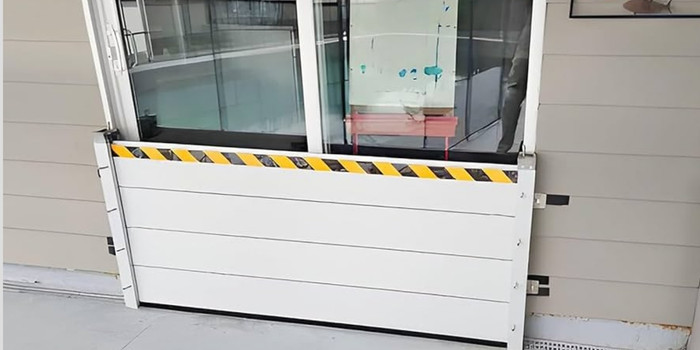
Flood Barriers For Driveways
As you know, your driveway is a wide and open access area. Hence water can enter from this area during heavy rain. So, you need a barrier that covers larger widths securely. In case of residential driveways an expandable or water-filled barrier is best.
You can place them in a straight line across the entrance. Their weight and interlocking design make them stable under water pressure. If your driveway is in a high-risk zone you should buy stop logs or demountable systems that give stronger protection.
Flood Barrier Installation
Prepare the Surface: First of all, you have to clean the area where you want to apply the barrier. There should be no debris & small particles. Because a clean surface provides an air tight seal for you.
Fix the Frame: When the place is ready you have to fix the frame there. Some of these barriers do not need any frame like a rubber or portable one. But some barriers require bolts and nuts to fix in the ground. This thing is needed to provide them extra strength and stability.
Place the Barrier: After that set the barrier in the frame. Align it at the right position. You should fix the barrier that blocks the entire entry way of the water.
Final Checks: After installation, you have to test the barrier with light water flow if possible. Actually, regular inspections ensure that your system is installed in the right way. Plus, it makes your system ready for future flood threats.
Where to Buy Flood Barriers?
Your flood protection system must fulfil safety standards and handle extreme water pressure. Наша компания JACKWIN manufactures different types of flood barriers for homes, commercial buildings, driveways and industrial sites. You can choose from removable, automatic, inflatable and modular systems based on your project needs.
Flood Barrier Cost
How much do flood barriers cost?
| Flood Barrier Type | Flood Barrier Price |
| L-shaped flood barrier cost | $13 to $14 |
| Inflatable flood barrier cost | $10 to $24 |
| Self-closing flood barrier cost | 100 to 120 US dollars |
| Rubber tubes | 3.1 – 3.60 USD |
| Aluminum detachable | $33 to $36 |
| Plastic flood barrier | $36 – $45 |
Заключительные слова
In conclusion we can say, flood barriers are important to protect our properties and lives for decades. For example, the Walker Wall at Pomona College was built in 1956 as a flood barrier. Later, temporary barriers came into market and are used for basic security.
Часто задаваемые вопросы
Why Are Reusable Flood Barriers For Homes?
You should choose reusable flood barriers for your homes. In fact, these systems allow you to use them again after the flood risk ends. You do not need to throw them away like traditional sandbags or rubber tubes.
How to Use a Quick Dam Flood Barrier?
A quick dam flood barrier is simple and fast to use. You place it along the area you want to protect, like doors, driveways or low points. When it comes into contact with water, it expands and forms a solid barrier.
What Are Flood Barrier Socks?
Flood barrier socks are water-activated, self-inflating bags. These bags absorb the water and swell when wet. You can place them at doorways & garages for light protection.
What can I use as a Flood Barrier?
You can use plastic bags, fill them with sand and place them at the entrance of water. If the water level is high, you can place them one under the other. In this way, they can stop high levels of water.
Which is the Largest Flood Barrier in the World?
The Delta Works in the Netherlands is the largest flood protection project in the world. It is 9 kilometres (5.6 miles) long and acts as a massive sea barrier.


