

-80x69.png)
Do you know, on July 7, 2017, Air Canada Flight 759 almost landed on a taxiway at San Francisco International Airport instead of the runway. Basically, four fully loaded planes were waiting there. And the plane came just 14 feet away from a potential disaster. Luckily, pilots noticed in time and did a go-around.
So, this incident shows why runway lights are so important. Today, you will learn about different types of runway lights and what they exactly inform you.
Runway Lights at Night
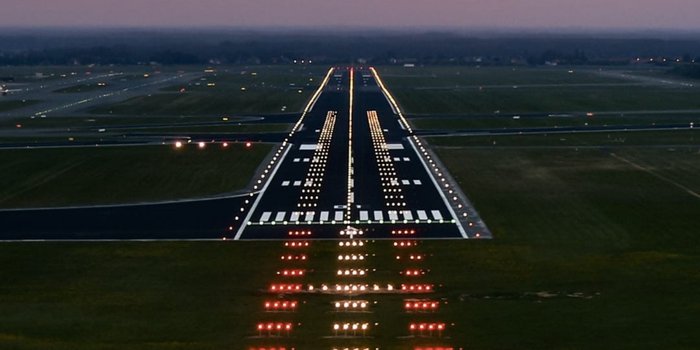
Runway lights make your runway clear and safe. These lights are used to guide every move of a plane. Commonly, you see white lights on the edges. Basically, you may find different colors of the lights. All these lights work as one system. They give you clear signals at night or in fog.
Runway Guide Lights
As you know, these lights give a clear path from the sky to the ground. They mark the safe entry point, the center path & the end point. You follow these signals at night or low visibility. They make every landing safe for you. Therefore, they are named as guide lights as well.
Types of Runway Lights
1. Runway End Identifier Lights
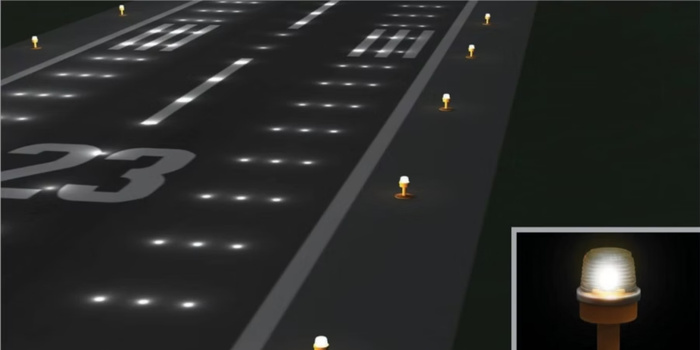
You see REILs as two bright white flashes near the start of a runway. These lights give you a clear signal of the runway. Therefore, you get a bright visual mark at night or in low-visibility hours. The lights stay on both sides, so your view stays balanced. REILs make the runway stand out when other lights create confusion.
In the case of REILs, you get three intensity levels for different conditions and areas. Usually, in daylight their range goes near three miles. At night, it goes nearly twenty miles. These lights are controlled by the tower or pilots. For example; flasher lights are used as an attention signal.
2. Runway Edge Lights
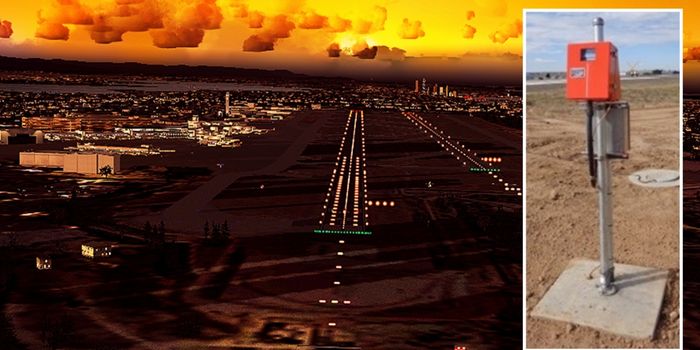
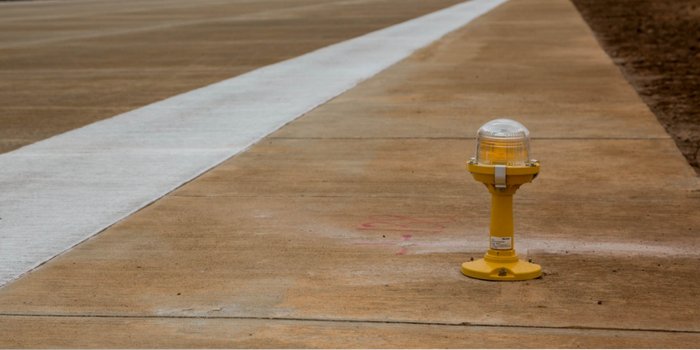
Runway edge lights mark the sides of the runway. You see them in a row along both edges. If we talk about the distance between each light then it is about 60 meters (200 ft). Most of these lights are white but on instrument runways they are placed at 2000 ft or half the runway length.
After that they turn yellow to warn you of the runway end. Well, the edge lights are placed from 2 and 10 ft (0.6 to 3 m) away from the paved edges. But at smaller airports, the lights are often placed at the maximum distance of 10 ft (3 m).
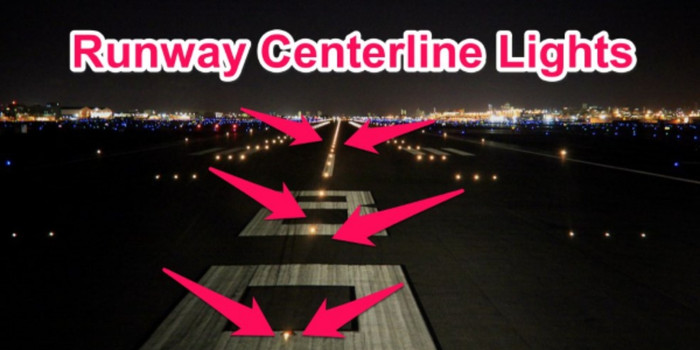
3. Runway Centerline Light
Your runway centerline lights run along the middle of the runway. They provide you guidance when you takeoff, land plus rollout. Most of these lights are white. But in the last 2000–3000 ft, the lights change into red and white.
Actually, these colors are used to warn you that the runway is ending. At last, the final 1000 ft (300 m) lights turn solid red which shows you that the runway is almost over.
4. Runway Status Lights
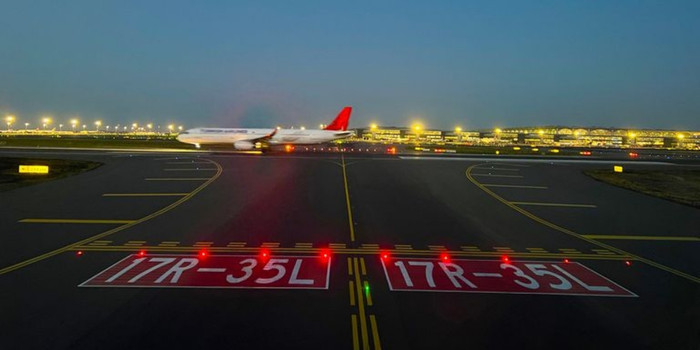
Runway status lights are red LEDs that are built into the runway. They give you instant warnings if it is unsafe to enter or take off the plane. These lights work automatically without instruction from the tower, but still they need ATC clearance. They help prevent accidents and runway incursions.
Runway Entrance Light (REL): These are red lights on taxiways that lead to the runway. They turn on to tell you not to enter or cross if the runway is busy.
Takeoff Hold Light(THL): These red lights are on the runway. They warn you that it is not safe to take off right now.
Runway Intersection Lights (RILs): You notice these red lights are at runway intersections. Actually, they tell you that the runway is in use. So when you see them you should not cross the runway.

5. Threshold Light
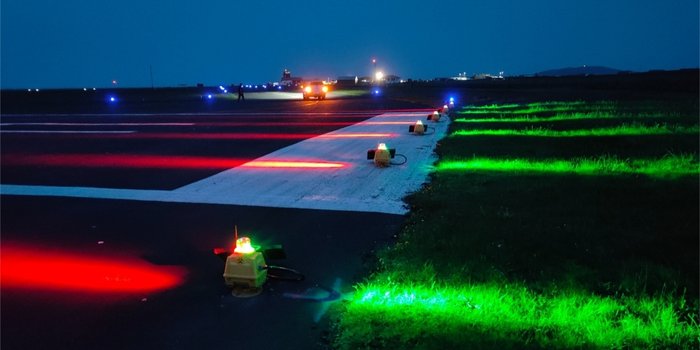
These are green lights at the start of the runway landing zone. You see them only when you approach the runway. Because they are used to show you exactly where to touch down your plane safely.
If you notice the opposite side, there are also threshold end lights which look red from the runway. They show you the end of the usable surface for departure the flight. These lights help you stay on the correct landing path in low visibility.
6. Touchdown Zone Lights
Touchdown zone lights are steady white lights in two rows along the runway. They mark the first 3000 ft (900 m) from the threshold. These lights help you see the exact landing spot in low visibility. These lights also decide if you need a go-around or not. They have patterns of three lights at intervals in a cluster or crossbar pattern to guide you.
7. Approach Lighting System
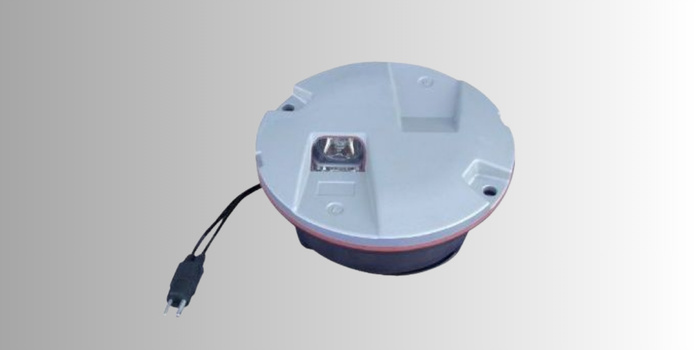
An approach lighting system is a series of lights at the start of the runway. They guide you when your view is not clear. The lights help you see the runway alignment, height & distance, moving you from instrument flight to visual flight. ALS can be simple for small runways. But in the case of very complex precision approaches, ALSF-2 (uses the most powerful lights) is a good choice.
8. Visual Approach Slope Indicator
Well, these indicators are designed to guide your descent angle. They are also placed on the side of the runway. But they use red and white lights to show you the correct landing slope. It guides you to the correct height for a safe touchdown of your plane. This system work in such a way that;
- When you see red lights over white, your path is right. Therefore, you will land safely on the runway at the exact point.
- In case of white lights on white means you are at altitude high. It means that you will come down late and may land far ahead.
- If you see red lights above red tell you that you are at a low elevation. Which indicates that your plane may reach early and touch the runway too soon.
9. Precision Approach Path Indicator
As its name shows, this type of runway lights provides you with more accurate information. Actually, PAPI is a set of four lights in one straight line on the side of the runway. These lights show you the exact slope with more accuracy than VASI. as a pilot you must have knowledge about their combination meanings like;
3 White, 1 Red: Your plane is a bit high. You have to adjust your height a little bit.
2 White, 2 Red: You stay on the right glide path. Simply, this combination means your approach is right on the safe 3-degree path.
4 White: You are too high. You need to go down.
1 White, 3 Red: You are at a bit low elevation. You should raise your height.
4 Red: Your plane is at a low position. This is why you must go up more to avoid crashes.
10. Runway Guard Light
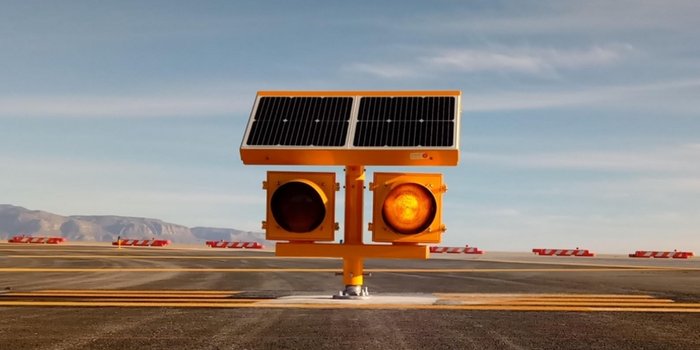
Runway Guard Lights are bright yellow flashing lights at the runway entrances. They warn you that you are approaching an active runway. The lights flash 30–60 times per minute to get your attention. They act as the first line of defense to prevent accidents. RGLs can be solar-powered and come mounted on poles or on the pavement.
11. Stop Bar Lights
As their name suggests, you find them as a clear stop sign for your aircraft or vehicles. Actually, stop bar lights are installed in a straight line on the ground near the runway. Mainly, ATC controls these lights. Therefore, you can only move when they turn green. As a traffic light their red color warns you to stop.
These lights keep you safe in low visibility and stop any wrong entry on the runway. They work with taxiway centerlines and runway guard lights to guide you with clarity.
12. LED Runway Light
LED runway lights are bright & energy-saving lights that provide you guidelines. They turn on instantly and let you adjust the brightness for all weather. These lights last longer and need less maintenance than old bulbs. They also follow ICAO and FAA rules for edge, centerline, approach guidance and stop bars.
You may see different types of LED runway lights like HIRL, MIRL, LIRL and centerline lights that change from white to red near the end. You may also see them as REILs for runway warnings. Some of these lights can even use solar power to work in remote areas.
Types of Runway Lights on the Basis of Intensity
13. High Intensity Runway Lights (HIRL)
High-intensity runway lights are very bright lights. You may often find them brighter than 10,000 candelas. These powerful lights define the runway edges, centerlines plus landing areas with clear white and caution colors near the end. For example; high intensity beacon lights & aviation obstruction lights that help in runway operations.
14. Medium Intensity Runway Light (MIRL)
Medium intensity runway lights give you clear visibility without extreme brightness. You mostly see them at regional or less busy airports. These lights work well in normal night conditions and light fog.
You can adjust their brightness from the tower or cockpit. Because these lights come in 3 levels to set brightness according to different weather conditions.
15. Low Intensity Runway Lights (LIRL)
This type of runway lights give you basic guidance on small airfields. You mostly see them on VFR (visual flight rules) runways. These lights mark runway edges, thresholds & taxiways with steady light.
In case of low intensity lights the edges of the runway remain white. while the end of the runway shows red or yellow warning or caution colors. They use durable designs and cost less than brighter systems.
ICAO Runway Lighting Standards
ICAO makes global rules for airport lighting under Annex 14. These rules decide how bright each light should be so you can see them clearly.
Runway Edge Lights: these lights must use low brightness around 50 candelas for simple runways. But high-intensity systems can reach up to 10000 candelas.
Runway Centerline Lights: Your centerline should be brighter than edges. Therefore, their intensity lies between 5000 and 15000 candela.
Taxiway Edge Lights: Brightness level of taxiway lights use softer light. Usually, you may see 10 to 50 candelas, to guide slow ground movement.
Approach Lighting Systems: These are very strong lights. Their brightness ranges from 1,000 to 20,000 candelas.
Distance Between Runway Lights
| Runway Lights | Approx. Distance |
| Runway Edge Lights | About 200 feet apart (up to 400 ft at intersections) |
| Runway Centerline Lights | 50 feet apart |
| Touchdown Zone Lights | 100 feet apart |
| Approach Lighting System | Varies by system (often around 100 ft) |
Runway Lights Color: What Color are Runway Lights?
See this table for knowing what do airport runway lights mean. It will be helpful for your safety and required actions in case you face any of these lights.
| Common Runway Lights | Meaning of Runway Lights |
| White edge lights | Highlight the runway from other paths |
| Red centerline | Runway ends (danger zone) |
| Blue lights | Shows taxiway |
| Green centerline lights | Starting point of runway (safe zone) |
| Yellow centerline lights | Represents that only 2000 feet of runway is remaining |
How do Airport Runway Lights Work?
Airport runway lights help you see and navigate the runway safely. They use different colors and positions to show edges, centerline, takeoff and landing zones. White lights usually mark the runway and red warns you about the end.
Some lights flash or change brightness to catch your attention. This procedure is basically controlled from the control tower of the airport. Because the control tower has the information about the landed planes and parked as well. Therefore, they change the lights according to the capacity of the runway & taxiway.
What are Airport Lighting Systems?
Well, an airport lighting system includes all the lights that are used to guide pilots. Basically, It includes runway lights, approach lights, strobe lights, threshold, edge lights and other supporting systems.
For example beacon lights that are used to identify airports from a distance. Moreover, aviation obstruction lights that warn you about towers or obstacles near the airport or runway. Flasher lights highlight important areas on the runway or approach paths. Together, these lights make sure you see clearly, stay aligned and land safely, even in darkness or bad weather.
Conclusion
We tried to cover all the types of runway lights and their meanings. You can see each light is placed for a different purpose. Even a steady and flashing same color light delivers you two different messages. You must follow these lights for safe landing and takeoff.
Contact our team if you need all kinds of runway and airport lights for your project. We can manufacture these products for you at factory price.
Frequently Asked Questions
How Often are Runway Lights Maintained?
Runway lights are checked all the time to ensure their safety. Inspections happen several times a day, after bad weather and before busy flight times. These lights are inspected daily, weekly, monthly and yearly to check wiring & controls.
What are Displaced Thresholds?
A displaced threshold moves the landing start point farther down the runway. So, the part before it cannot be used for landing. But you can use it for takeoff, taxiing or landing from the other direction.
It is mainly used to avoid obstacles, reduce noise & protect the runway surface. You see it marked with white arrows and chevrons. Pilots land after these markings to stay safe.


