

Wholesale Self-closing Flood Barrier
As your trusted provider of reliable flood protection solutions, JACKWIN offers various flood barriers, including self-closing flood barriers, L-shaped flood barriers, inflatable flood barriers and demountable flood barriers. Our innovative and carefully-designed automatic flood barriers have been in use in many countries. This self-rising flood barrier, which requires no manual operation or advance warning, is very popular with many overseas customers.
JACKWIN self-closing flood barriers are used in engineering projects and are designed to block sudden floodwaters when no one is available, protecting production equipment and ensuring normal operation of industrial production. We also provide OEM and ODM services, as well as project-related products, to flood control engineering companies. If you require customised self-closing flood barriers, please contact us NOW!

What is Self-closing Flood Barrier
Self-closing flood barrier, also named automatic flood barrier, self-rising flood barrier and flip-up flood barrier, is a passive flood defense system that operates automatically when floodwater reaches a certain level. Under normal circumstances, this flood barrier sits flush with the ground, causing no obstruction to pedestrians or vehicles. When flooding occurs, the buoyancy of the water causes the floodgates to rise, forming a watertight barrier that operates without the need for electricity or manual operation.
Self Closing Automatic Flood Barrier by Features
JACKWIN carefully designed self-rising flood gate barriers are available in various sizes and types. Browse the product list below to find the styles you like.

Resides below ground vertically, 1.5m high and 3m long, rise automatically when floodwater comes, made of GRP and rigid foam core, no manpower required.

Made of mild steel, stainless steel or aluminum, concealed within the ground when not in use, raised by water buoyancy, no electricity or manual intervention is needed.

Activated by rising flood water, no power source, pumps or people required, composed of aluminum beam and sealing rubber gaskets, lifts to 90° angle, customizable sizes.

Hidden flood barriers under the ground allow daily passage of vehicles, durable and rust-proof, with minimal maintenance and long-service life, for doors, gates, garages and factories.
Feature box
Featuring durability and versatility, JACKWIN self-closing flood barrier can operate automatically and no manpower or electricity is required. Continue reading to learn more about the features of the JACKWIN self-closing flood barrier.

It utilizes the buoyancy of water to automatically raise the barrier and lower it once the floodwaters recede, requiring neither electricity nor manual intervention.

Our barriers recess into the ground surface when not in use, so they do not impede the passage of pedestrians and vehicles. When a flood strikes, it can rapidly rise to block the water.

JACKWIN self-closing flood barriers are primarily made of high-strength metal or alloy materials, which are capable of withstanding water pressure and vehicular traffic.

Widely used for urban spaces where there is no storage or traffic is necessary, such as underground parking garages, power plants, subway station openings or loading docks.

We can customize automatic flood barriers according to your requirements or drawings, including size, dimensions, materials (aluminum, stainless steel, or composite materials), and mounting methods.

Unlike sandbags or water-activated flood barriers, our self-rising flood barrier can be reused repeatedly after the initial installation, providing long-term protection.

Designed with durable and long-lasting gaskets(EPDM rubber seals or silicone gaskets), our barriers can resist water pressure and effectively prevent floodwater leakage.

Constructed from high-quality galvanized steel, stainless steel, or aluminum alloy, our flood barriers are resistant to rust and corrosion, even in humid or coastal environments.
JACKWIN Automatic Self-closing Flood Barrier
JACKWIN self-rising flood barrier offers innovative flood defense solutions, suitable for high-risk ramps, garage entrances, subway station openings, loading dock ramps and data centers.
- Passive flood barriers can be quickly deployed and activated during floods, requiring no manual operation or electricity.
- Flush-mount design prevents pedestrians from tripping and does not disrupt daily traffic.
- Various materials are available, including galvanized steel, aluminum alloy, and stainless steel.
- Flood barriers can be customized to fit your opening dimensions.
- Suitable for various unattended scenarios, such as utility stations, subway entrances, and building openings.
- Low maintenance and long-lasting service life, durable and corrosion-resistant.
- Featuring a modular design, the flood barrier’s length can be extended according to actual requirements, allowing it to serve as a permanent flood wall or embankment.


How Does a Self-closing Flood Barrier Work?
This demonstrates the working principle of the flip-up automatic flood barrier. If you wish to understand the working principle of the vertical automatic flood barrier, please refer to the “Drawing” section below.
JACKWIN self-closing passive flood barrier utilizes a hydrodynamic mechanism to sense the water level and raise the barrier, blocking floodwaters.
- Under Normal Condition: When there is no flooding, the panel sits flush with the ground or just on the top of the surface level. Vehicles and pedestrians can pass freely, without any obstructions or risk of tripping.
- Water activation: Following a rise in floodwaters, water flows into the internal water-storage cavities of the flood barriers. The buoyant force of the water drives the panels upward.
- Lifting Panel: When the flood depth reaches a critical value, the flood panels rise to a near-vertical position (90°) and lock in place.
- Watertight Seal: The bottom sealing strip and flexible triangular side seals prevent leakage at the connection between the flood barrier and the wall.
- After Flood: After the floodwaters receded and water drained from the cavities, personnel positioned the flood barrier flush with the ground and inspected the seals and hardware for damage.
Resource


Automatic Flood Barrier v.s. Traditional Flood Barrier


Self-Closing Flood Barrier: Unlike traditional flood barriers that require manual deployment, such as sandbags or inflatable barriers, JACKWIN passive automatic flood barriers utilize the buoyancy of water to operate autonomously, requiring no human intervention. Our barriers can fully deploy within minutes of detecting floodwaters, making them ideal for sudden downpours and nighttime flooding. Once the floodwaters recede, the barrier automatically lowers to ground level, no need for manual dismantling or maintenance. Compared with traditional flood barriers, automatic flood barriers entail higher initial manufacturing and installation costs.
Traditional Flood Barrier: Compared to expensive self-closing flood barriers, traditional flood barriers entail lower upfront costs, suitable for flood control projects with limited budgets. Requiring a significant workforce for installation, our traditional flood barriers offer greater flexibility and versatility. Unlike self-closing barriers, which have limited sizes and restricted locations, traditional flood barriers can be continuously extended, ideal for large-scale flood control projects.
Applications
JACKWIN self-closing flood barrier operates without manual operation, making it ideal for areas prone to sudden flooding, such as industrial estates, underground car parks, infrastructure sites, power stations and commercial districts.

Floodwater often enters buildings through doors or openings. Installing automatic flood barriers at entrance or emergency exits can effectively prevent sudden flooding, even when these areas are unattended. As alternatives to sandbags or flood barriers, self-rising flood barriers can be rapidly deployed and installed when flooding occurs.

JACKWIN automatic flood barrier plays a crucial role when floods strike at night or when no one is home. Our passive flood barrier can be installed at doorways, garages, driveways, or patios to block floodwaters from entering your home, thereby safeguarding both people and property.

Garages situated at lower elevations are vulnerable to sudden downpours and flooding. JACKWIN flip-up flood barrier sits flush with the ground under normal conditions, ensuring it does not interfere with daily vehicle access. Upon detecting floodwaters, our barrier automatically deploys to protect the vehicles inside the garage.

If floodwaters enter a subway station, electrical equipment, track infrastructure, and escalators can all be damaged. Our self-closing flood barriers effectively block floodwaters, ensuring the subway continues to operate normally. They can be installed in various areas, such as entrances and exits, emergency exits, ventilation shafts, and underground equipment rooms.

Entryway serves as the most critical line of defense against floodwaters. Installing the JACKWIN automatic flood barrier at the entrances of commercial and residential buildings effectively protects interior property. Requiring neither electricity nor manual intervention, the system operates automatically, providing protection even when the premises are unattended at night.
JACKWIN Automatic Flood Barrier Real Project Case
With high reliability, JACKWIN automatic flood barrier system has already been put into use at garage entrances, underground parking exits, and residential complex gates in many areas. The following is a real-world case study of JACKWIN self-closing flood barriers being exported to Australia.

At the parking lot entrance, our customer provided photos showing the measured dimensions of the two on-site trenches. Trench 1 overall dimensions: 1000 mm (W) × 1920 mm (L) × 200 mm (H).

Trench 2 overall dimensions: 1000 mm (W) × 1640 mm (L) × 200 mm (H)), we repeatedly verified the dimensions with the customer and provided suggestions for modification until the final version was confirmed.

Based on trench dimensions provided by our customer, JACKWIN prepared preliminary CAD design drawings. Key components include stainless steel hinges, flood panels, sealing strips, collection channels, and drainage pipes.
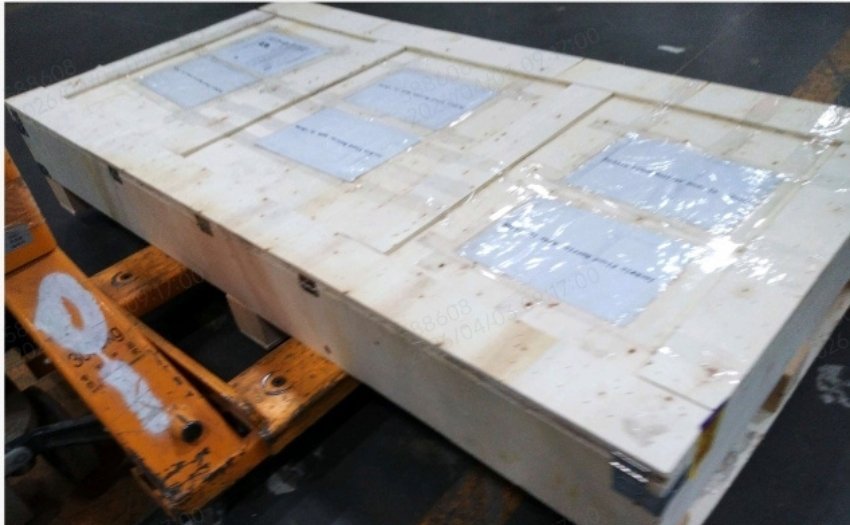
From design to production, JACKWIN completed the custom service for the self-closing flood barrier in just 10 days. The main unit and components of the barrier are packed in wooden crates, which feature forklift slots at the base to facilitate loading and shipping.

In April 2026, JACKWIN passive automatic flood barriers were packed in wooden crates and exported to the Port of Sydney, Australia, for use as a flood protection system.

Customized self-rising flood barriers are typically installed on the ramps at garage entrances to prepare for the upcoming flood season.

Customers have also installed a JACKWIN self-closing flood barrier at residential complex entrances to prevent floodwaters from entering the buildings.

In this video, JACKWIN self-closing flood barrier undergoes a water-blocking test after installation. Our flood barrier effectively prevents floodwaters from entering the garage.

More About Our Company
With more than 18 years of experience in manufacturing and producing flood barriers, JACKWIN flood barriers have been deployed in many flood-prone countries and regions and have gained recognition from authentic international flood control organizations. Our team provides professional flood protection solutions tailored to specific flood defense heights, installation environments, and project requirements. Our services include CAD drawings, mold development, sealing performance optimization, and custom flood barrier manufacturing.
- Drawing
- Video
- Gallery
 The operating principle of this vertical automatic flood barrier is similar to that of the flip-up self-rising flood barrier.
- Under normal conditions, the entire body of the self-closing flood barrier is concealed within an underground storage basin. The top cover plate sits flush with the ground, allowing pedestrians and vehicles to pass over it freely.
- As floodwater flows into the underground basin, the buoyancy of the water causes the flood barrier to rise continuously. Once fully raised, it is caught and locked in place by an angled support block.
- After the floodwaters recede, the water drains from the basin and the flood barrier automatically resets as buoyancy reduces.
Step-by-Step Guide for You: How to Use JACKWIN Self-Closing Flood Barrier?


Testimonials
-
Just give accurate/correct measurement and they will do it. Received and i already installed, no problem at all.
JerecyDirector -
Very high quality flood barrier for a very good price. Service from Sunny was perfect. She had an answer to every question.
DavidPurchase Manager -
Great surface finish on aluminum. Very close match the the ss304 surface finish.
LunaPurchasing Assistant
The primary concern regarding self-closing flood barriers (SCFBs) is the potential for the underground chamber to become clogged with silt and debris. In reality, high-quality SCFBs are engineered with effective drainage systems, sediment pits, and access hatches to facilitate annual maintenance. Once installed, our automatic flood barriers require scheduled testing and maintenance, such as checking the lifting mechanism and clearing out sediment. Unlike standard flood barriers, JACKWIN self-closing flood barrier is ideal for areas with limited warning time; it operates automatically, even at night, without the need for manual supervision.
As the water level rises, floodwaters enter the trigger chamber or base cavity, and buoyancy causes the flood panels to flip upward or the flood walls to lift until they lock into place. Rubber seals on the flood barrier fit tightly against the ground and side guide rails, ensuring a high-performance, watertight seal.
JACKWIN provides flip-up type flood barriers and rising wall type flood barriers for you to choose from. Flip up flood barrier is hinged at its base and normally flush with the ground. The vertical flood barrier moves straight upward from the underground chamber to form a flood wall.
Yes. When the self-closing flood barrier is in its normal state (when there is no flooding), it sits flush with the ground, allowing vehicles and pedestrians to pass over it freely. Our flood barrier is constructed from heavy-duty materials capable of withstanding the weight of large trucks and heavy vehicles.
Self-closing flood barriers require neither electricity nor water pumps. It utilizes the buoyancy of floodwaters to activate automatically, pushing up and locking the gate to form a reliable flood barrier.
Self-closing flood barriers can protect openings of any width, which depends on the specific design and structure of the opening. JACKWIN self-closing flood barrier consists of fixed-length modules that can be interconnected to form a continuous flood barrier. There is no standard maximum opening width and the specific dimensions depend on the requirements of the flood protection project.
JACKWIN self-closing flood barrier is primarily constructed from stainless steel and aluminum alloy, offering impact and corrosion resistance.Its heavy-duty structure withstands immense water pressure, providing reliable flood protection.
The specific volume of water a self-closing flood barrier can block depends on the design height of the barrier panel. Most automatic flood barriers can block floodwaters ranging from 30 centimeters to 2.5 meters in height. If you need to block higher floodwaters, you can visit jackwinsafety.com to order a custom heavy-duty self-rising flood barrier.
Automatic flood barriers require no manual operation or electricity, but they do need regular annual maintenance and inspection. Maintenance tasks include:
- Remove Debris: Regularly clear silt, leaves, trash, and sediment from the underground chamber of the self-closing flood barrier system to ensure unobstructed drainage.
- Inspect Components: Periodically check seals, pivot hinges, locking mechanisms, and guide rails for signs of aging or damage to ensure proper operation during flood defense.
- Functional Testing: Conduct regular water tests to verify that the barrier rises and retracts correctly.