

-80x69.png)
Fencing is an important part of your farms, gardens, worksites and properties. Every post like T post & U post, wire, panel, and attachment has its own role to keep your fence strong & stable. Many people get confused between T posts and U posts?
Therefore, we have explained T post vs U post, their shapes, benefits, properties and installation tips. So, you can easily decide which option is best for your project.
What is a T Post?
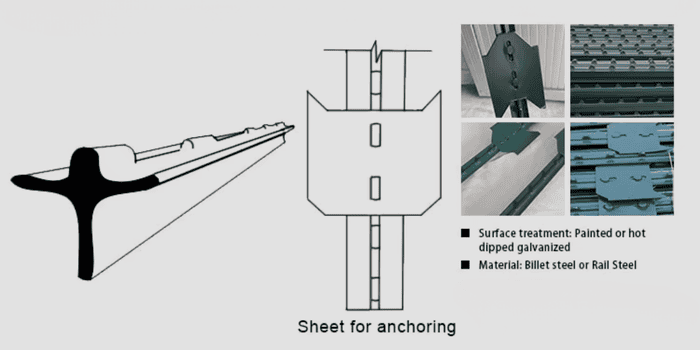
A T post is a strong steel fence post which has a shape like the T letter. It is a widely used safety device due to its strength and easy installation. The post has a flat back and a notched front that holds fencing firmly in place.
It supports wire fences such as barbed wire, garden safety mesh, woven wire, and temporary electric fencing. You can install it into the ground with a post driver.
T Post Types
You can find different types of T posts based on size, coating, material and gauge.
- Light-duty T posts
- Heavy-duty T post
- Galvanized T posts
- Painted T posts
What is a U Post: U Channel Posts
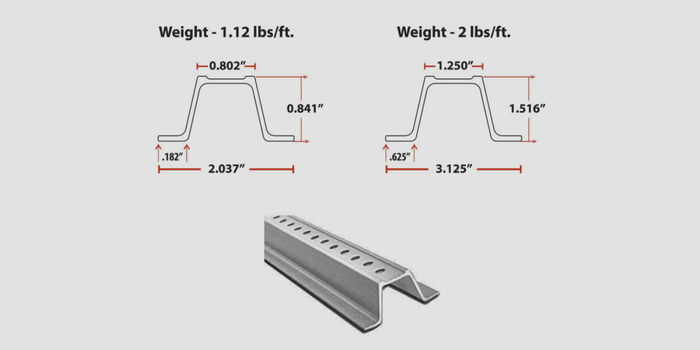
A steel U post is a lightweight metal fence post. It is U-shaped and easy to install in the ground. This is strong and stays upright without concrete. Generally, you will see holes along the sides of this post.
You use these holes to attach wire/mesh or panels. Further, you can use them for both temporary and permanent projects in construction or public areas.
U Post vs T Post
Below is the major difference between T post and U post. Both have unique shape, materials, purposes and durability.
Fence Usage/Fencing Attachment
One main difference between T post and U post is how you can use them for fencing. Because they work well for specific types of fences and attachments.
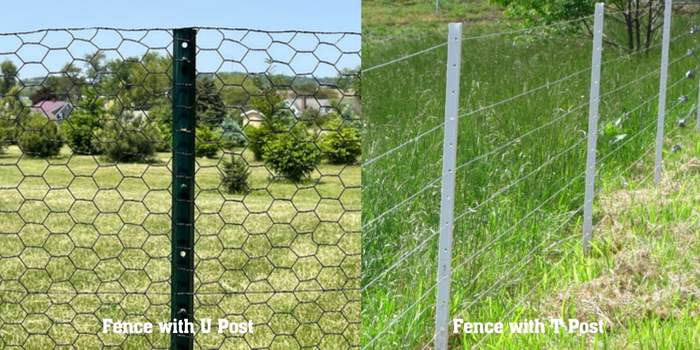
T Post Fence: You can use T posts mainly for wire fences such as mesh or barbed wire. Hence, it works best on farms and large open areas. You can attach wires directly to T posts with small studs or nubs.
U Post Fence: A U post has pre-punched holes along the sides for the attachments of wires or fence panels. You only need to use bolts or clips. That means, you can mount both fencing materials and safety signage without extra tools.
Shape and Height
The T post is mostly taller and thicker. Hence, they provide high security for your livestock areas and heavy fences. Their shape keeps them stable under pressure and also prevents bending when wires are tight.
On the other hand, U posts are generally shorter and lighter. That’s why they are easy for you to handle and install these posts. You can use them for smaller fences, gardens, playgrounds or signs.
Installation
There is a minor difference between T post and U post from the perspective of their installation.
How To Install T Post? With a T post, you need to insert the post into the ground. Then you can attach wire or mesh to the studs along the post.
How To Install U Post? To install a U post, you also push the post into the soil. But, the pre punched holes make it easier for you to attach mesh or panels.
Function
Well, T posts are designed to provide strong support for long stretches of fencing. Their strength makes them ideal for your areas where fences face heavy pressure such as from animals or strong winds.
But, U posts focus on flexibility and multi purpose use. This means you can use them not only for fences, but you can also use them to mount signs & temporary barriers. They are best for projects where you need to move or modify the setup.
Initial Purchase Cost
The T posts are mostly cheaper for long stretches of fence. So, you will get strong support at a lower cost, which makes them ideal for large farms. On average, a T post costs you around $1 to $8 per post.
From the perspective of U post initial expenses, they are costly because of their modern design and pre-built holes. The price of a U post is approximately $3.50 to $10+ for one post. You have to pay more for flexibility and ease of use.
Material & Manufacturing Standards
T posts are generally made from strong steel and follow flexible standards. They also have a painted or galvanized coating to resist rust. Engineers designed them to handle heavy loads and last for many years.
U posts are also made from steel with galvanized or recycled rail steel. But they follow strict manufacturing standards. The reason is to make sure the spacing between pre-punched holes, so the post can stay straight.
Placement Rules
Due to different post design and stability needs, you will also need to follow unique placement rules for each.
T Post Spacing: Generally, you can space T post around 8 to 12 feet apart. This is a very good distance which gives your fence more strength due to closer spacing. So, it can resist animals or heavy wire. Well, wider spacing (15-20 ft) works for light fences and open areas.
U Post Spacing: You can set U post based on fence type plus conditions. For example: you can place them 4 to 6 ft apart for garden and light fences. However, for a mesh fence or heavy wind zone, you must use 6 to 8 feet space. High-tensile wire may require wider spacing approx. 15 to 25 feet.
Load Bearing Capacity
The maximum weight or force a post can safely support without bend is called its load bearing capacity. T posts are basically built to handle high load and tension. Hence, you can use them for long fence lines and areas with animal pressure or strong winds.
In contrast, U posts can support lighter to moderate loads. So, they work well for mesh, panels or signs. But, U posts are not ideal for high tension fencing.
Weather Resistance
Mostly, you will find T posts with painted or galvanized coating. Due to this coating, you can prevent posts from rust, which extends their outdoor life. They perform well in open fields and harsh conditions.
U posts are commonly galvanized, which gives strong protection against rust. They are a good choice for wet, coastal, or high-humidity areas where corrosion is a major issue.
How Deep Should Post Be in the Ground?
Post depth is important for strength and stability. The right depth supports your fence to stay straight and resists wind, pressure as well as ground movement. Due to their unique shapes, T post and U post require different depth.
T Post Depth
You have to bury T posts until the anchor plate is completely covered. Usually, you need to push the post into the ground around 18 to 24 inches deep. In loose soil or for heavy fences, you may need to install a deeper like one-third of the post underground. This range is enough to manage the pressure of wind and animals.
U Post Depth
For the U post, the common standard for depth is “one third rule”. It means you must place one-third of the post underground for stability. For example, if you have a 6 foot fence and it uses an 8 foot post, you need to bury it 2 feet deep.
Professionals mostly dig 2 to 3 feet or more in windy areas or loose soil. In this case, you can also use concrete or gravel to anchor the post securely.
When To Use U Posts?
- You can use U posts when you need versatile fencing for your gardens, sports fields or public areas.
- U posts work best for fences where you want to attach panels or signs.
- You can also pace them in areas with moderate loads and variable terrain.
- These posts are an ideal option when you want a lighter and flexible post that is easy to handle/adjust.
- For temporary or multi-purpose fencing projects, you can go for U posts.
When To Use T Post?
- If you need strong support for wire fences like barbed wire or mesh, you can use T-posts.
- For your farms, ranches, or livestock areas with heavy pressure, T posts are the best choice due to their load-bearing capacity.
- You will find T posts in areas with strong winds or uneven terrain.
- You can install these posts when you need to install long fence lines, which also require rigidity and stability.
- For your temporary or permanent fencing projects, you can use T posts because they provide high-tension for wires in such conditions.
Can U Posts and T Posts Be Used Together?
Yes, you can install U posts alongside T posts in a fence line. This approach works best for mixed duty needs and where you need to change the fence’s location (temporary setup). However, you have to install posts together smartly.
For example: you should put stronger U or wood posts at corners and gates. Then, you use T posts in the lighter sections in between. As we mentioned, U posts are strong enough for moderate use and T posts are strong for livestock. So, we suggest you use only one type of post to make your fence more even and strong.
Commonly Asked Questions
When Are U Posts a Better Choice Than T Posts?
U posts are better when you need versatility and easy attachment. Its design makes the U post suitable for temporary installation and small-scale fencing. But T posts are ideal for long span wire fencing, where you need maximal rigidity and safety.
How Many T Posts For a 100 ft Fence?
For a hundred-foot fence, you may require 11 to 14 T posts. However, the exact number depends on how far apart you install them. For strong support, you can place them closer. In such a case, you will need more T posts than wider spacing.
Why Can’t I Build a Straight Fence with T Posts or U Posts?
It is safe to build a straight fence with T post & U post, but it is a risky approach and needs the right technique. Because fences look crooked because of improper alignment with a string line, uneven post depth, inconsistent spacing or when you do not use the same level.
What T Post Weight Should I Use?
The mostly used T post has standard weight which is around 1.25 lbs/ft. If you want to install a T post for high pressure livestock, you can use a heavy duty post weighing 1.33 lbs/ft or 12-gauge. But, you should always choose a post long enough to bury.
Do T post Clips Work on U posts?
Yes, many standard T post clips (wire ties or hog rings) can work well for U post. They wrap around the post’s profile, which can fit both T shaped and U shaped posts. Well, U posts have built in hooks, so clips are optional.
To Conclude
So, are you planning to build a strong and reliable fence? JACKWIN is your best choice. We offer high quality T posts, U posts, Y posts and all types of fences (snow fence) & safety meshes.
Our range includes posts for livestock, gardens, sports fields, and custom fencing solutions. Contact us today to get a quick quote and the right fencing products for your project.


