

-80x69.png)
Overhead wires are everywhere, but they cause big problems. They are damaged easily and make your streets look messy. It’s also dangerous for you to fix them. To solve this issue, the underground cable installation method is used worldwide.
Today, you will learn how cables are installed underground and which tools you will require. We have also discussed official standards you must follow for safe underground wire installation.
Why and How Underground Cables are Laid?
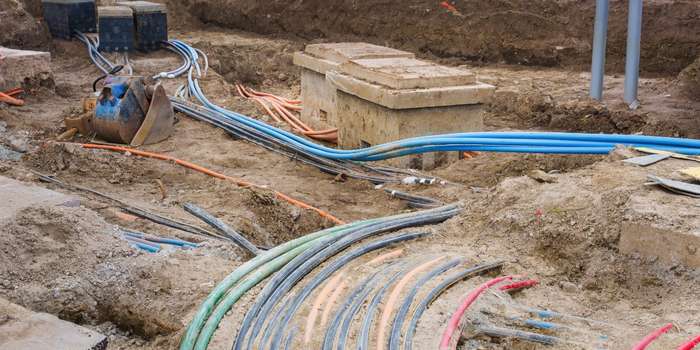
Underground cable installation means the process in which you put cables below the surface. You can do this to keep cables safe from weather and damage. It also makes the area clean and safe.
Also, you should plan the route carefully to avoid obstacles. But, you must choose the right type of cable for soil and weather. This way, electricity or data is transmitted to homes and offices safely.
Underground Cable Installation Standards
IEC and IEEE create international underground cable installation standards which are followed by most countries. However, the International Organization for Standardization (ISO) sets quality, testing & material standards used internationally.
- You must install cables at a safe depth to protect them from damage. Also use sand bedding and protection tiles.
- You should keep the cable bends wide enough so that the insulation does not crack.
- Do not exceed the allowed pulling tension during installation.
- It’s important to keep a proper gap between cables to prevent overheating.
- Must use a documented and approved installation procedure to maintain quality.
- You have to make sure workers follow safety rules and wear proper PPE while digging and handling cables.
Underground Cable Laying Procedure – How To Install Underground Cable
Following procedure will make sure cables are safe and last for a long time.
Planning and Design
First of all, you should prepare a good plan for underground cable installation. For example: you must decide the route and check for obstacles such as pipes or trees. You also need to select the cable according to soil conditions and ground temperature. A clear plan will be helpful for you to work without problems.
Trenching and Conduit Placement
After planning, you can dig trenches along the route you marked with digging machines. You can use tools like backhoe or trenching machine. The trench must be deep and wide enough for the cables. In most cases, the depth is around 750 mm. But, this depth can change based on the area and soil conditions.
If the trench is deeper than 1500 mm, you must use a ladder to enter it safely. You can place a protective conduit in the trench to hold the cables. This conduit keeps cables safe from moisture, pressure, plus damage. It’s important for you to check that the conduit is straight and secure.
Cable Installation (How To Put Cable Underground)
The installation will start after you finish digging. You need to place the conduit in the trench. Then, electrical wires fit inside this pipe to keep them safe and in the right path. Must make sure the cable is not twisted or bent sharply.
You can use a cable puller for installation. For wires and pipe protection, you can use cable cover plates, underground detectable warning meshes, underground warning tapes, and cable safety covers/tiles. Check the cable along the route to avoid damage or obstacles. After pulling the cables, you should join them and make all the required electrical connections.




Backfilling and Restoration
Now, you can start filling the trench with soil. You should perform it carefully to avoid any damage to wires or conduit. To mark the cable location, you can use warning mesh and utility warning tape. However, you need to make sure they stay in place. After that, fill the trench in layers and compact the soil with hands which are right above cables.
For the top layer and surrounding soil, you can use a compactor machine. Finally, restore the ground and replace any removed pavement or landscaping. This makes the area safe and ready for normal use.
Testing and Commissioning
After the cables are installed and backfilled, you need to test them carefully. In this step, you have to make sure the cables work correctly and are safe. For example: you can measure voltage, current and insulation to find any problems.
When all tests are successful, you can connect and use the system. In this way, your underground cables work properly and can last for a long time.
7 Types of Underground Cables You Should Know
| Cable Type | Ideal Underground Place | How To Protect? |
| Underground Fiber Optic Cable | Utility corridors, sidewalk edges, rural fields, tunnel paths, roadside trenches | Install warning tape above cable, dig deep, add ducts and seal joints |
| Underground Electric Cable | Parks, open land, under plant grounds, along roads, junction boxes | Proper burial depth, install steel covers, keep distance from other utilities, use cable protection covers and meshes. |
| Armoured Cable | Along streets & highways, under pavements, factories, warehouses | Install steel pipe shield, warning tape, surface markers, proper burial depth, and regular inspection |
| Low-Voltage Cable | Residential areas, commercial buildings, parks, and sidewalks | Use PVC/HDPE ducts, correct trench depth, warning tape, sand bedding |
| Medium-Voltage Cable | Industrial zones, streets, utility corridors, substations | Use double-jacketed cable, steel/concrete covers, proper burial depth, warning markers, install cable protection tiles near industrial areas |
| High-Voltage Cable | Power distribution corridors, substations, long rural routes | Concrete/steel protection, deep burial, warning tape & mesh, regular inspection |
| XLPE Cable | Shared paths with water & gas, inside factories, along city streets and sidewalks | Use protective ducts, sand bedding, enough burial depth, and armored in high-risk areas |
Underground Cable Installation Methods
Following are the common methods you can use to install underground cables.
Open Cut Method
In the open cut approach, you need to dig a trench along the planned route. Then, you can place the cable or conduit inside the trench. After that, you should backfill the trench carefully to secure the cable.
- Concrete-encased duct bank: In this method, the ducts with cables are covered with concrete on all sides. This way, you can strongly protect cables and stop damage to nearby wires during a short circuit. But, it costs you more and the concrete makes it harder for heat to escape.
- Direct burial: In this method, you can lay the cable directly in the trench without using a conduit. But you should cover it with protective layers such as sand or warning mesh. Then, you can backfill the trench carefully. This method keeps the cable in place and protected underground.
- Semi-direct burial: This technique uses flexible HDPE conduits for the cables. They protect the cables from physical damage and make it easier for you to replace or add cables. However, this method increases both construction and cable costs.
No Dig Methods
With no dig methods, you can install cables without digging large trenches. Instead, you use techniques like pipe jacking or horizontal directional drilling to place the cables underground. These procedures reduce ground disturbance. This method is useful in areas where digging is difficult or not allowed.
- Pipe jacking: In pipe jacking, you can push a steel pipe underground with a hydraulic machine. Next, you need to put the conduits inside the pipe. Then, you can fill the gaps with mortar and pass the cables through it. This method protects cables well and allows easy maintenance.
- Horizontal directional drilling: You need to drill a small underground path along the planned route with a drill machine. Now, you can pull a conduit or pipe through the hole. Finally, you can install the cables into the pipe. This method lets you install cables without digging trenches, and its performance is like a semi-burial installation.
Underground Cable Laying Machine
You can use underground cable laying machines to install cables quickly and safely. Because they reduce manual work and make it easier for you to install wires over long distances or in difficult areas.
- Ride-On trencher
- Skid steer loader
- Telecommunications cable winch
- Cable rollers
Underground Cable Installation Tools
Along with machines, you also need special tools to handle, install, align and secure the cables while you work.
- Plowing Tools: With plowing equipment such as static plows or vibratory plows, you cut a narrow path in the ground. They push soil aside which makes it easier to lay the cable in a straight line. These tools save your time and reduce manual digging work.
- Trenching Tools: Trenching equipment is used to dig trenches for underground cables. They assist you work faster and prepare the trench properly for cable installation.
- Boring Tools: These tools are used to create underground holes for cables without digging large trenches. They let you install cables under roads, buildings or other obstacles safely. Boring tools include directional boring tools (DBT) and horizontal directional drilling (HDD).
- Cable Pulling Equipment: These types of tools are perfect to move cables through conduits or ducts safely. You can use pulling grips, support grips or strain-relief devices.
- Reel Trailers, Rigging & Accessories: Cable drum trailers and handling tools help you move, lift and position cable drums during installation. They make it easier for you to unroll and guide cables safely and efficiently.
Summary
In the end, you should keep in mind that underground cable laying is a complex process and need careful planning. That’s why it’s very important for you to strictly follow rules and steps of cable installation. We wish your project to be successful.
Further, you can talk to our team if you have any questions or need safety products for your workplace.
FAQs
How Deep Are Underground Cables Installed?
The depth of cables depends on the type of wire and location. Mostly, underground cables are buried 1.5 feet to over 4 feet (450 mm-1.2 mm) deep.
What is the Lifespan of Underground Cables?
Underground cables generally last 30 to 50 years. However, this time can be changed according to cable type and installation method. You can use fire hose ramps during installation and cable protector ramps to extend their life and keep them working safely for many years.
How To Locate Underground Utilities Yourself?
You can detect underground utilities by using a cable locator or utility detector. These tools guide you to find cables, pipes or other buried lines safely. Always mark the area before digging and you can call 811 for professional help.
Is Underground Cable Installation Expensive?
Yes, underground cable installation can be more expensive than overhead cables. Costs increase due to trenching, protective conduits, specialized equipment & labor. But, it is a worthwhile investment in the long run.


