

-80x69.png)
At warehouses, you need to manage parking in the right way. Because trucks, cars, cargo vans and staff vehicles move every day. So, your parking must follow proper size and layout rules.
We have made this guide to clear all your doubts about warehouse parking. You will learn types of warehouse parking, basic design, safety tips and frequently asked questions.
Warehouse Parking Lot
A warehouse parking lot is a space near warehouses. This is the place where you can park your vehicle safely. It is mostly used by workers, delivery drivers or visitors.
The lot has marked spaces for cars, bikes, delivery vans and sometimes trucks. Basically, warehouse parking is different from regular parking. It must handle heavy vehicles and frequent loading or unloading. This is why you see clear signs and lanes here.
Role of Parking in Warehouse Operations
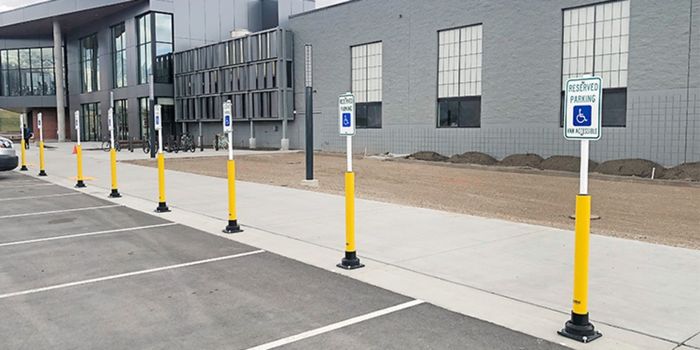
Parking plays an important role in warehouse operations. You find vehicles always organized. This prevents congestion near loading docks. Furthermore, proper parking makes it easy for trucks and delivery vehicles to load and unload goods fastly.
Staff and visitors can find spots without wasting time. A well-marked parking zone reduces accidents and maintains traffic flow inside the warehouse area.
Warehouse Parking Design and Layout
Traffic Flow and Lane Planning
When you plan for the marking of parking in the warehouse be careful. Lanes should be wide enough for trucks and cars to move safely. You have to place one-way lanes to avoid jams.
Try to mark separate lanes for trucks and other vehicles. You must add clear arrows and signs for easy direction. Design pedestrian paths separate from vehicle lanes for the security of workers.
Dock Access and Maneuvering Space
The loading dock should fit both the dock leveler and trailers safely. You may know, a standard trailer is about 8½ feet wide. So, the dock leveler should be at least 7 feet in width.
Most levelers are 8 feet long, designed to fit the recessed pit under the dock. For special trailers or overseas containers, use a 10 to12 feet long leveler to reduce slope. This makes it safer for forklifts and easier for trucks to maneuver.
Entry, Exit and Gate Placement
You should install gates that are wide enough so trucks and cars can move easily. In the case of truck gates you can make gates 14 to 16 feet wide. On the other hand, car gates are 10 to 12 feet for workers and visitors.
You have to assure the height is enough for (14 to 16 ft) for trucks and (8 to 10 ft) for cars. It’s better for you to have separate entry and exit gates to avoid jams. You have to add clear signs & barriers at the entry gates so everyone knows where to go safely.
Turning Radius For Heavy Vehicles
When trucks and forklifts move in a warehouse, they need enough space to turn safely. Usually, a turning radius of 50 to 60 feet works well for large trucks. But you should mark wide curves and corners. This is necessary, so vehicles don’t hit barriers or other parked cars. Furthermore, you must install clear lines and signs that will provide a path to drivers.
Different Warehouse Parking Areas
Truck Parking Area
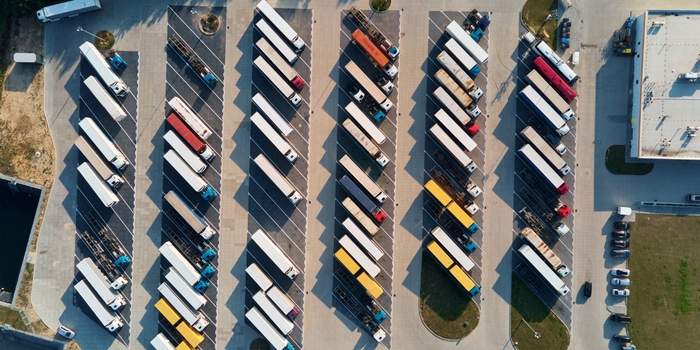
Truck parking needs strong planning and enough space. A standard spot should be around 3.6 meters wide and 18 meters long for large trucks. You often see concrete or heavy-duty asphalt floors to handle heavy loads.
Extra apron space is always present so truck drivers can turn and reverse easily. You may also find guide lines here that show you where to park. Fences, cameras, aluminum bollards and bright lights are installed for secure operations.
Employee Parking Area
This parking is designed for staff vehicles only. Each parking space is around 2.5 to 2.7 meters wide and 5 to 5.5 meters long for cars & bikes. Mostly, this area is close to the main entrance for easy access. There you always see signboards of “Staff Parking” or “Authorized Parking”.
Trailer Storage Parking
Well, this parking area is designed to park empty trailers here. You may see open outdoor lots with gates for basic security. Furthermore, covered spaces protect trailers from sun and rain.
Indoor units offer maximum security for your high-value trailers. Its storage size ranges from 20 to 50+ feet. In the case of small trailers, they can fit well in 10×15 or 10×20 spaces. But some large trailers will need 12×30 to 12×60 size.
Visitor Parking Area
This is a limited space that is reserved for visitors, clients, higher authority persons and guests. You often find a signboard like “Visitors Only” at such a place. Mostly, it is present near the office or management area.
Loading and Unloading Zones
Loading and unloading zones are also present in warehouse parking areas. This area is commonly present near loading docks and storage areas. Basically, this thing reduces travel time for forklifts and workers. You get wide, open space here for trucks to stop and reverse easily after loading and unloading.
Warehouse Parking Requirements
Warehouse parking needs depend on the size of your warehouse and usage. These common requirements are:
- If you have a large and open warehouse space of 10000 sq. ft. or more. Then you have to arrange 1 parking stall per 2000 square feet.
- In case when the warehouse has smaller divided units. You should provide 1 parking stall per 1000 sq ft.
- Standard industrial warehouses need 1 to 2 parking spaces per 1,000 sq. ft.
- Distribution warehouses or can have 1 space per 2000 sq. ft. of warehouse area or 1 space per 5000 sq. ft. of yard area.
- If you designed office areas inside warehouses. It will require more parking, around 1 space per 350 square feet.
- Generally, a standard parking space size is about 2.4 m × 4.8 m. But some sites use 3 m × 5.5 m spaces for better comfort.
Our Advice To Park Safely in Warehouses
Wheel Stops & Chocks: You should use wheel stops to stop your car in place. Actually, trucks need chocks so they don’t roll.
Speed Bumps: Make sure to add speed bumps. Because this small device slows down your vehicle.
Pavement Markers: If you mark your parking spots and walking paths with reflective paint. Then drivers will know where to go to load and unload cargo..
Bollards & Posts: You can place these bollards or posts to stop vehicles from restricted areas and protect your equipment.
Safety Barriers & Cones: These are good options to guide your drivers and block unsafe areas.
Parking Signs: You have to install signs so you and your team know the rules and proper parking spots.
Ramps: You should buy curb ramps and place them where the level changes for safe movement in the parking lot.
Good Lighting: Bright lights help you see clearly, especially at night or inside the warehouse.
Emergency Call Points: Install alarms. So, you can act fast if something goes wrong in the parking storage area.
Conclusion
Hence, warehouse parking is very effective if you want to manage your operations in an easy way. We recommend you design a proper layout for trucks, cars and staff. Then you will notice smooth movement of vehicles without any problems. In addition, you must mark clear spaces, add signs, barriers and good lighting.
FAQs
Does Warehouse Parking Affect Supply Chain Efficiency?
Yes, Actually, a good warehouse parking ensures the organized movement of trucks, staff and visitors. If your parking is small or messy, it can cause traffic jams and slow loading or unloading. Therefore, delays and congestion can hold up deliveries and affect your whole supply chain.
Can Poor Parking Design of Warehouses Increase Accident Risks?
If parking is cramped or lanes are unclear then vehicles can collide into each other. Trucks, cars & forklift drivers can get confused and may cause collisions. Poor lighting, missing signs plus narrow aisles make it more risky.
Is Warehouse Parking Different From Yard Management?
Warehouse parking and yard management is different. Because warehouse parking is only a small part of yard management. But yard management is a bigger system that tracks and controls trucks, trailers & containers outside of your warehouse.
Which Industries Need Large Warehouse Parking Areas?
According to our experience, all industries with big trucks and frequent deliveries need large parking areas. This includes logistics, distribution centers, food processing & beverage units or manufacturing plants. Moreover, e-commerce and wholesale businesses also require extra parking for staff and delivery vehicles.
More Resources:
Top Warehouse Guard Rails Manufacturer in China


