

-80x69.png)
In today’s simple guide, you will learn about bunting flags, its different types & shapes available. I have also explained how and where you can use bunting flags. Further, you will know their safety standards and where to get high quality flags. After reading, you can easily select a suitable flag for your project.
What Are Bunting Flags?
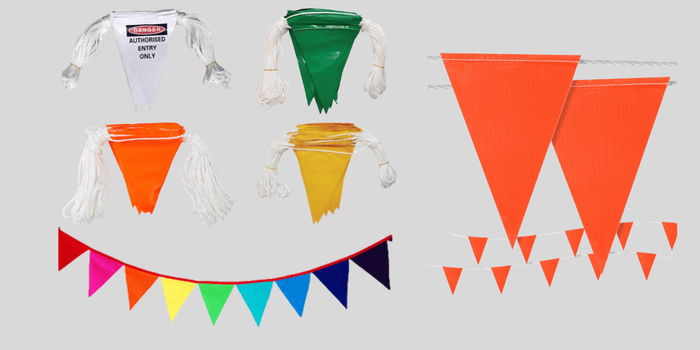
Bunting flag meaning are the triangular flags made from fabric or paper. You can use safety bunting flags for decoration purpose, celebrations, events plus mark hazards workplace zone.
They are also used to warn drivers or pedestrians about danger and guide traffic as well. These flags are highly visible and made from reflective materials. Hence, you can see them easily from a far distance.
Bunting Flag History
Basically, bunting flags started as a light wool fabric called tammy or bunting. You first saw them in the early 17th century. The Royal Navy used these flags on ships to send signals at sea.
Later, towns used bunting flags during public events. In the 18th and 19th centuries, bunting flags were commonly used for national holidays decoration. Governments used them to show pride.
What Size Should Bunting Flags Be?
If we talk about the dimensions of bunting flags, you can choose any size based on where you use them. For example: you should use small size bunting flags for indoor use but bunting flags outdoor applications need large size (30 cm by 20 cm).
You can use flags around 14 cm wide and 17 cm long. Another popular size is 18 cm wide and 23 cm high. Further, you have to place each flag 5 to 6 cm apart on the tape. In this way, you will get 5 to 6 flags per meter.
Types of Bunting Flags or What is Bunting Material?
There are different types of bunting flags available in the market. They are categorized on the basis of materials used to design these flags. Each material looks and feels unique.
-
PVC Bunting Flags
PVC is widely used to make bunting flags because it is a strong type of plastic. These flags do not tear or damage easily. That’s why you can use them outdoors such as on construction sites or roads.
Engineers also use reflective coating on PVC flags. Polyvinyl chloride flags keep their bright colors for a long time. They are easy to clean and last longer than cloth flags.

-
Paper Bunting Flags/Synthetic Paper Bunting
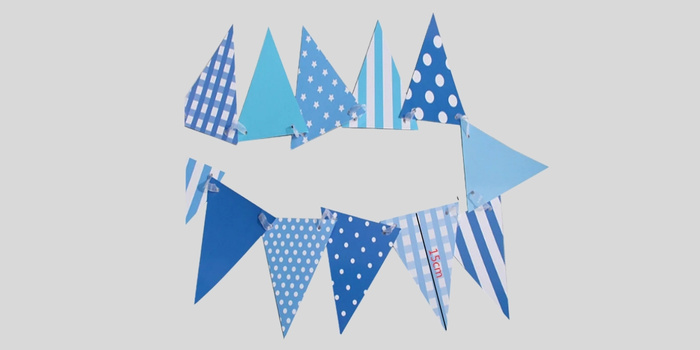
You can find bunting flags made of paper or synthetic paper. These bunting flags are light and cheap. So, they are perfect for your indoor parties or short term events.
Synthetic paper flags also have excellent strength and last longer if they get a little wet. Moreover, you can use them for festivals and celebrations.
-
Cotton Bunting Flags
These types of bunting flags are actually made from cotton fabric. They are soft and lightweight. You should mostly use them for your indoor events, weddings, parties or cozy decorations. Additionally, cotton flags look natural and give a classic and handmade feel.

-
Nylon Bunting Flags
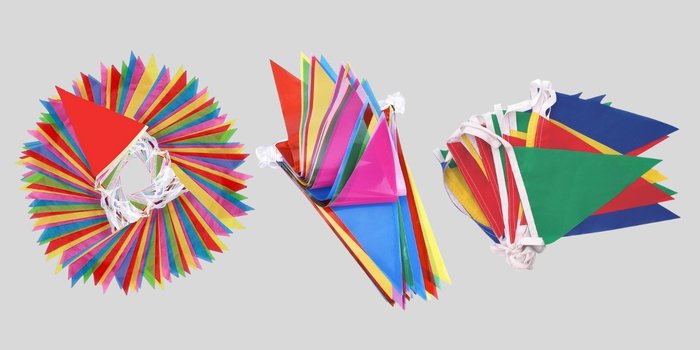
Nylon bunting flags are strong and light. They can handle wind and rain very well, which makes them perfect for your outdoor events. These flags also stay bright after long use. You will generally see them decorating streets, gardens, party areas and safety zones.
-
Polyester Bunting Flags
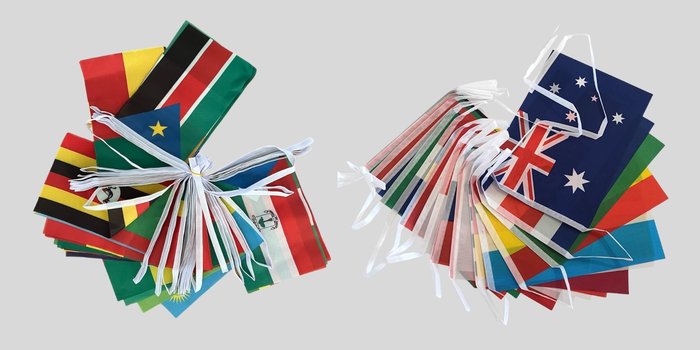
Polyester flags are tough and flexible bunting. They do not tear easily and hold their shape well. You can use them both indoors and outdoors. Polyester bunting is bright and works well for festivals/events and celebrations.
-
Linen Bunting Flags
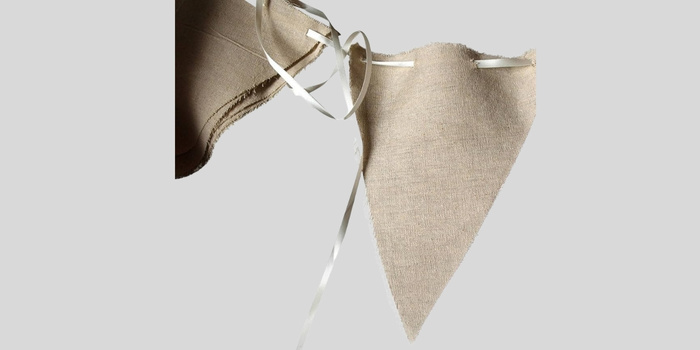
Linen bunting flags are decorative banners made from natural or fake linen. You can place them to add a festive look to your parties or gardens. They are available in colorful ready made designs or blank versions for various decorations. These bunting flags are durable and reusable as well.
Bunting Flag Shapes/Bunting Flag Design
Bunting flags designed in many shapes. Each shape gives a different look. Below are the most common shapes of bunting flags.
Triangle: This is a classic and popular shape of bunting flags. You can majorly use them for festivals and street decorations.
Rectangle: You will see this simple bunting flag shape used in schools and promotions.
Pennant (pointed end): It looks elegant and traditional. This design works well for weddings and ceremonies.
Circle or scalloped: You can use it to add a fun and playful touch. It is commonly used for kids’ parties and garden applications.
Bunting Flag Template
A bunting flag template refers to a ready made shape or pattern which you can use to make flags. You can print it, cut it or trace it on any material. With these templates, you can keep all flags the same size and shape. Furthermore, they are ideal to plan colors, designs, patterns or messages before you make your bunting.
How To Make Bunting Flags?
In your factory or at home, you can make bunting flags with the use of different methods.
Sewing: You can use industrial sewing machines to join fabric pieces. This makes strong and neat flags.
Heat Sealing: Also, you use heat to stick synthetic fabrics together. It is the perfect method when you need fast and clean results.
Glue: You can use fabric glue instead of sewing. This works well for light fabrics.
Print Bunting Flags: You can add designs with screen printing, digital printing or sublimation.
Cutting Methods: These include cut flags with scissors, die cutting or laser cutting for precise shapes.
Are Bunting Flags Offensive?
Bunting flags are generally not offensive (disrespectful) because they are decorative or patriotic. However, the context still contributes. For example: they can be offensive if someone uses them disrespectfully such as damaging a real flag.
Some flags like Confederate flags or flags linked to extremist groups can also upset people. This is true outside the US, where flags can have different meanings and histories.
How To Put Up Bunting Flags?
First, you need to choose a place where the flags will be visible. You can hang them on walls, ceilings, safety fences or across your room. To attach the flags, you can use string, tape, hooks or clips.
You must make sure the flags are evenly spaced. Further, the adjustment of the length is also important to fit your area. For outdoor spaces, you need a strong string or rope, so the flags do not fall in wind or rain.
Applications of Bunting Flags
You can use these safety flags in many different ways to keep people safe as well as for decoration. They make any place look bright and festive. Following are major uses of buntings.
- Road safety
- Emergency areas/crowd control
- Birthday parties
- Street decorations
- Sports events
- Garden or backyard parties
- National/patriotic celebrations
- Shops and markets
- Trade shows or exhibitions
- Construction zones
What is Bunting Tape?
Bunting tape is the strip or ribbon which you can use to hold your bunting flags together. You have to attach the top edge of each flag to the tape. With this method, you can hang many flags quickly. You can use bunting tape indoors or exterior use. Also, this tape is available in different colors and lengths to match your decorations and set ups.
American Bunting Flags
American bunting flags are red, white & blue banners which are placed to show patriotism and national pride. You commonly see them on holidays such as memorial day and veterans day.
Moreover, they can be used indoors or outdoors to decorate homes, streets as well as public places. With these flags, you can brighten any space and celebrate American traditions.
Bunting Flag Safety Standards
Bunting flags must meet safety standards to keep people safe. These rules make sure flags are strong, fire resistant, durable and easy to see for you. In addition, these standards set the right bunting colors & reflectivity of flags.
Hence, you should always check your local laws before you start. When you use approved bunting flags, you can avoid fines and keep your site safe.
| Country Name | Safety Standards | Main Features/Focus |
| Australia/NZ | AS/NZS 1906.1 | You have to use retroreflective materials, correct colors, reflectivity and strong buntings |
| United Kingdom (UK) | EN 20471 | Use high visibility fabric & easy to notice colors |
| North America | ANSI 107 | You need to focus on high visibility, standard colors, reflectivity and strength |
Flags Bunting Suppliers
Well, you can buy these flags from many suppliers and manufacturers. However, If you want high quality bunting flags, JACKWIN is the best choice. We offer durable and colorful flags for your various applications. In our warehouse, we have a wide range of bunting flags sizes, shapes, colors and materials such as PVC, polyester, cotton and more.
Our products meet all safety standards, which makes them perfect for workplaces and festivals. You can place small orders for home and also in bulk for businesses. All our range of bunting flags are available at factory prices.
Custom Bunting Flags
Our engineers are also ready to provide customization for bunting flags. For example: you can get bunting flags with your brand logo, name, design or printable bunting flag. Send us a message and tell our team your requirements. We will deliver your order directly at your locations in a fast way and at affordable rates.
Final Note
Bunting flags are a great tool to decorate and organize different spaces. As they are available in various materials and designs, you can easily match them to your needs.
When you plan to buy bunting flags, you should always think about where and how you will use them. We advise you to purchase PVC or polyester flags for outdoor application. For your indoor events, you can choose fabric or paper made bunting flags.
FAQs
Can You Wash Bunting Flags?
Yes, you can wash bunting flags. We recommend handwashing in cold water with mild detergent is best for most materials including nylon, polyester or cotton. You can also use a gentle machine cycle if needed. Always air dry completely to prevent mildew.
How Far Apart Should Bunting Flags Be?
You can leave a 2 to 6 inches gap (5-15 cm) between flags for a classic style. However, the best space depends on your flag size and the look you want. Larger flags need more space (5-6 inches), but smaller flags look good with 2 inches space (5 cm) between them.
Can You Reuse Bunting Flags?
Yes, bunting flags are made to be reused for many applications. This makes them an eco friendly and cost effective option. Fabric flags are strong and can be used year after year for birthdays, holidays, events and parties.


