

-80x69.png)
Today, we will discuss what is a loading dock and how it works. You will see loading dock safety features you can add, design tips and common problems plus solutions. After reading, you can easily perform smooth loading and unloading operations at loading docks in warehouses.
Loading Dock Meaning – Warehouse Loading Dock
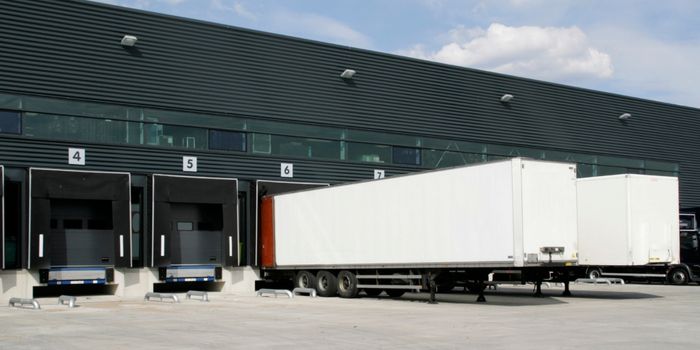
A loading dock is a place where you can load and unload goods from trucks into a building. You mostly see it at the back of a warehouse and big stores. Due to loading docks, trucks can stop close to the building so you can move items fast. You can use it to keep work safe and organized. It also saves your time during daily operations.
What is the Purpose of a Loading Dock?
The loading dock system gives you a direct path to the storage area, so you can move items quickly. With this setup, you can transfer products smoothly and keep things organized. A good loading dock design also makes your daily work faster and easier.
Loading Dock Types
Industrial engineers designed different types of loading docks to fit your needs. You can choose a dock based on the kind of products and warehouse space you have.
1. Enclosed Loading Dock
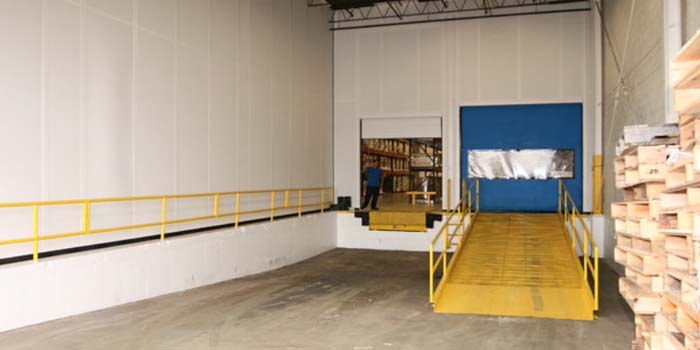
An enclosed loading dock is fully covered and protected from outdoor conditions. You can load and unload goods safely in rain or snow. Hence, it keeps your products dry and secure during transfer.
It is an ideal option for you to handle sensitive or valuable items in your warehouses. In some enclosed loading dock, you will see extra doors and walls for maximum security and protection.
2. Flush Loading Dock
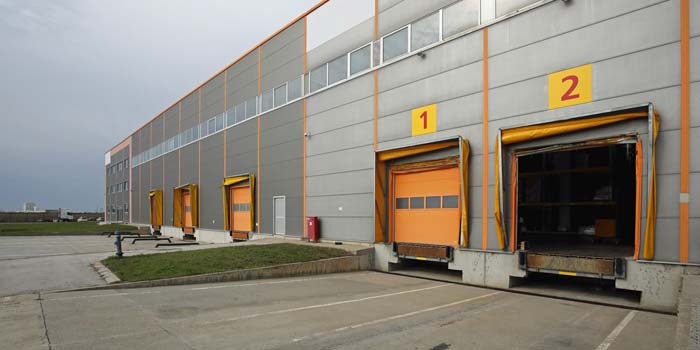
A flush loading dock is the commonly used dock in warehouses. You can move goods straight in and out without steps or ramps. That means, you will find no step or gap between the truck and the building.
Moreover, this dock offers you a facility of flat platform and a door for forklift and other tools. This makes the loading and unloading process risk free. It works well for small trucks and regular deliveries.

3. Open Loading Dock
An open loading dock has no walls or roof. Hence, you can load and unload products directly from the truck to the dock. It will be easy for you to use and allows quick access for forklifts and carts.
You can use open docks when you want to move goods for large shipments and busy warehouses. But, these docks are less secure due to the risk of goods falling. They also can’t protect workers or products from weather.
4. Cantilever Docks
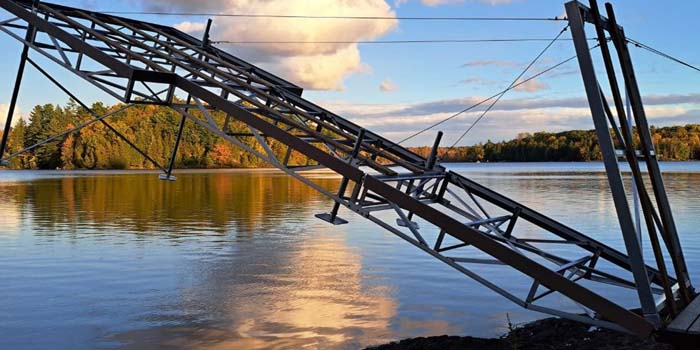
Cantilever docks extend from the warehouse building without any support under. So, you can drive trucks close and load goods easily. You can design these docks for large or heavy items which need extra space.
Cantilever docks are strong and ideal for busy warehouses. They can work faster as compared to flush or open docks. However, they can cost you more to build.
5. Sawtooth Loading Dock
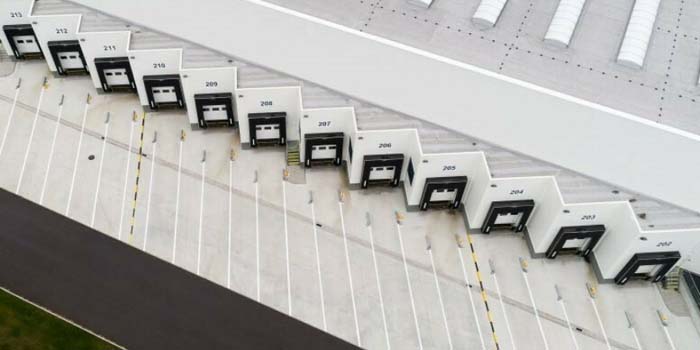
The great thing about sawtooth loading docks is its platforms which are set at an angle like a zigzag. This design lets you park and unload multiple trucks at the same time. You can move goods in a fast way with its ramps, because forklifts have more space to work. Sawtooth docks are ideal for busy warehouses with many deliveries.
6. Drive-In Dock
Drive-in docks have doors large enough for trucks to enter. They are generally built with strong walls and floors to support heavy vehicles. The dock space is covered to protect your equipment and workers.
You will also see ramps or level floors for easy movement inside. They are designed to handle high traffic and multiple trucks at the same time in large centers.
7. Depressed Loading Dock
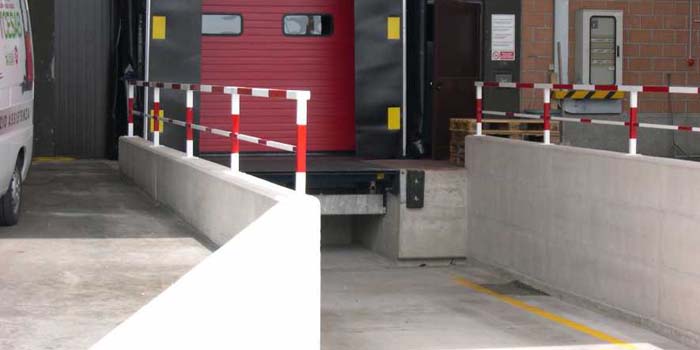
You can build depressed loading docks lower than the warehouse floor. This design lets trucks back up to the dock easily. Because it creates a level surface between the truck and the dock.
However, you should design the driveway slope gently and it must be less than 10% for smooth movement. These docks are also good for areas with limited space.
Main Components of a Loading Dock & Their Working
Behind a basic set-up of a loading dock, there are many parts that work together. Below are the main components of a loading dock and how they perform.
Dock Levelers
Dock levelers are the ramps which used to fill the height gap between the truck and the dock. You can move goods smoothly because they create a safe and even path. You can adjust these levelers up or down based on the truck’s height. With its help, you can also protect your workers and products from sudden drops.
In this way, dock levelers make loading and unloading easy and safe for you. Many styles of dock levelers are used in warehouses. These include mechanical, air-powered models and hydraulic levelers.
Dock Bumpers
You can use dock bumpers to protect your dock and trucks from damage. Because, they absorb the impact when you back up the truck to the dock. These barriers keep your building, equipment, workers and cargo safe.
Dock bumpers also reduce repair costs. Mostly, these bumpers are made of rubber. They are available in many shapes and sizes to match your requirements.
Dock Seals or Dock Shelters
Dock seals or shelter covers are installed at the outside of the dock door. They create a tight seal when you back in the vehicle. You can also use these sealers to block dust and heat to enter your warehouse. They also save energy as well as reduce air loss. Hence, dock seals and shelters make loading and unloading cleaner and safer.
Dock Light & Dock Fan
Dock lights are placed for drivers, so they can see clearly while loading and unloading, (especially in dark areas). They improve safety and reduce mistakes. Dock fans keep the air moving in the dock area which makes it cooler and more comfortable.
Fans also remove dust and fumes. Together, dock lights and fans make your workspace safer and easier to work in.
Trailer Restraints/Truck Locks
Trailer restraints or truck locks are working together and stop trucks from moving when you are loading or unloading it. They completely hold the truck securely at the dock and prevent accidents.
With these tools, you can protect workers, equipment and goods from sudden movements. Trailer restraints are easy to use and improve safety. They are an important part of a safe loading dock.
Overhead Doors
Overhead doors are large doors which you can open upward to let trucks access the dock. Further, you can save space because they roll up instead of swinging out. These doors protect your warehouse from weather and keep cargo secure.
Overhead doors are easy for you to operate. You can use any type of shape and size of overhead doors, For example: rolling steel, sectional designs or high speed overhead door models.
Loading Dock Design
In warehouses, retail spaces, large centers or factories, you can design loading docks to speed up work and control costs. Keep in mind the following points while designing a loading dock.
| Main Aspects | Loading Dock Design Requirements |
| Property gates |
|
| Yard approach |
|
| Landing strip | Place a concrete landing under the asphalt to stop the truck’s sinking into the ground |
| Pavement surfaces & Draw markings | The ground must support heavy trucks. Also add clear markings to guide vehicles & show paths. |
| Apron area | This is the space where trucks move. A 65-foot truck needs at least 135 ft to turn and park safely |
| Truck path | You can use angled & straight or “Y” routes for truck entry and make sure pedestrians stay safe |
Loading Dock Safety
Loading docks can be risky areas if you do not manage it properly. They are involved in 25 of every 100 warehouse accidents. Following safety rules and the right equipment use can keep vehicles and goods protected.
Loading Dock Signage
Clear signage installation at the loading dock guides your workers and drivers to understand rules and directions. For example: warning signs can show speed limits, truck positions, dangerous tools or safety reminders.
You can also place flashing boards for maximum visibility. A proper signage system will prevent accidents and keep overall operations organized.
Dock Equipment Safety
You should always use dock equipment correctly to prevent accidents. Below are main safety measures for dock tools protection.
- Dock seals and shelters: Dock seals and shelters not only protect from weather but also show the dock edges and truck openings clearly.
-
- Guardrails & bollards: You must use guardrails to block people and forklifts from falling. Plus, bollards are used to stop vehicles, so they don’t hit walls or doors.
- Dock levelers: Modern levelers have safety features such as toe guards and automatic return functions which prevent falls.
- Proper lighting: Good lighting at the dock helpful for workers to see clearly. You must install signal lights to guide drivers when vehicles will stop or move. Also add proper illumination to make hazards and cargo visible.
- Dock plates: You can place dock plates to fill the gap between the truck/forklifts and dock. This tool is ideal when levelers are not enough.
- Safety barriers: You should install safety barriers to protect workers and vehicles from falling off the dock edge. Expandable barriers or cones can be used temporarily to guide people.
Automated Warning Systems
Automated warning systems used to alert workers and drivers to potential dangers at the dock. You can use lights, alarms or sensors to signal when a truck will move or a door is open. Common automated system include:
- Proximity sensors will notice when a trailer starts to move away.
- Motion detectors placed to alert workers about unexpected activity.
- With interlocked restraints, you can stop dock levelers from working until the truck is secured.
- Automated doors only open when safety checks are complete.
Communication Systems
When you maintain a good communication system between dock workers, truck drivers & forklift operators, it minimizes the chances of accidents. You can use the following tools to meet the communications standards at dock.
- Safety signs
- Flashing indicators
- Intercoms
- Audible alarms
- Traffic lights
- Radios
Vehicle Restraint Systems in Loading Dock
Vehicle restraint systems are safety devices which are used to lock a truck or trailer in place at the loading dock. They can stop the vehicle from moving or rolling away while you load or unload cargo. This keeps workers safe and prevents accidents. You can also avoid damage and sudden gaps between the dock and the truck.
Types of Vehicle Restraint Systems
Below are the main types of vehicle restraint system of loading dock.
- Rotating Hook Restraints: These restraints use a strong steel hook which rotates up and locks onto the trailer’s back impact guard. They hold the trailer in place and prevent it from moving.
- Vehicle Chock System: A chock system uses wedge-shaped blocks placed at the back wheels of a truck to stop its rolling movement. You must use wheel chock because this is a basic and low-cost way to keep the vehicle stable.
- Integrated Truck Restraint Systems: This system is built into the dock. It automatically locks the truck in place with sensors and control panels. As a result, the dock equipment and restraints work together as one system.
You can also explore reddit post real discussions where people share practical loading dock safety tips and ideas.
OSHA Requirements For Loading Docks
OSHA sets rules for loading docks to protect workers from accidents and injuries. You have to follow these standards at any cost.
Loading Dock Rules
- Provide workers safe workplace and training
- The walking and working surfaces must be free from risks.
- You should maintain loading dock equipment and replace them when needed.
- It’s compulsory to provide proper PPE to your workers such as safety vests at no cost.
- Must use signs, signals & lights to alert everyone to potential dangers.
Loading Dock Area
The loading dock zone is where you operate and handle trucks, workers and equipment together to move goods. With a well-organized dock area, you can improve safety and smooth operations.
Loading Dock Dimensions in Meters
Standard loading dock doors are generally 2.4 to 3 meters wide. They are designed to fit trailers up to 2.6 meters wide. The platform can be as narrow as 1.5 meters or as wide as 2.1 meters. You should set the doors around 3.7 to 4 meters apart to give trucks enough room to move safely.
Loading Dock Height Requirements
You can build docks 1.2 to 1.3 meters high, so they line up with truck beds. Because, semis mostly have beds 1.22 and 1.32 meters and vans range between 1.14 and 1.22 meters.
Furthermore, you can use levelers to raise or lower the dock by up to 0.3 meters to match the height of the vehicle. In America, the common dock height is 1.22 meters (48 inches).
Ramp slope Requirements
You can design dock ramps or levelers with a maximum slope of 6% to 8% to let forklifts move safely over gaps. Drive-in ramps can slope down 8% to match dock heights to the ground at 1 meter. You should keep apron depths at 35 to 50 meters, so trucks have enough space to turn safely (turning radius around 32 meters).
Weight Requirements
You must design levelers to support 25000 to 50000 pounds (11-23 metric tons) for normal use. Dock platforms and pits are recessed spaces below the dock level. You can make them strong enough to handle forklifts in dock 7 to 8 meters wide with reinforced concrete.
Loading Bay vs Loading Dock
Both loading docks and loading bays are mostly used interchangeably, but they have slight differences.
| Loading Bay | Loading Dock |
| Usually designed at ground level or with ramps | It is a raised platform to match truck height |
| It can handle different vehicle types | Mainly designed for trucks and trailers |
| Loading bay has more space for sorting and staging | You will have direct truck access for faster loading |
| Good for low to medium volume operations | Best for high-volume loading & unloading |
| Less loading bay safety features and more manual work | It has safety features such as restraints and bumpers |
Common Loading Dock Problems
The loading dock area is the most busy place in the warehouse. Hence, you may face many types of challenges and safety risks.
- The unprotected dock edges cause the hazard of fall for workers. You can use high visibility markings and safety fences for protection.
-
- Poor surface conditions at loading docks can make moving heavy loads hard. It can increase the chances of back injuries for workers.
- Burns risk are created due to hot equipment, chemicals or electrical hazards at the dock. You can install fire safety signs to warn workers.
- Unsecured loads can fall during loading and unloading which lead to injuries or damage. You can use straps or barriers to keep goods stable and safe.
- Forklift-pedestrian accidents occur when people and forklifts share the same space. You can use marked walkways & warning signs for safety.
- Motor or opener failure can stop dock doors from working properly. You can use wire protection tools and regular maintenance to prevent problems.
Frequently Asked Questions
How much does it cost to build a loading dock?
Basic docks may cost less around $10000 to $25000. But, if you want to build docks with levelers and safety systems, price will be $25000 to $50000+. The building price can increase to ($50000 – $100000+) for a more advanced loading dock.
How Long Can You Park in a Loading Bay UK?
In the UK, you can only park in the loading bay when you are loading or unloading cargo. But, the maximum limit is 20 minutes. Otherwise, If you park or wait without actively operating during this time, you may receive a fine.
Do Apartment Buildings Have Loading Docks?
Many modern and larger apartment buildings in cities include loading docks for moves and large deliveries. However, small or old buildings may not have them. So in that case, you might need to arrange a parking spot for a truck movement.
How Often Should Loading Dock Parts Be Inspected?
You must inspect the loading dock components after every month. Daily cleaning for dirt and debris is recommended. A professional should inspect the dock at least once a year. You can plan an exact inspection schedule on the basis of traffic levels at loading dock.
Wrapping It Up
If you have inquiries about loading docks, our experts are ready to guide you. Further, we provide warehouse safety products and customized solutions. All our products are available at affordable prices compared to the market. Talk to JACKWIN’s team now and get a quick quote.


