

-80x69.png)
According to research, heighted falls in USA cause about half of all worksite accidents every year. Moreover, these falls also cause injuries. In America, more than 21000 construction workers get hurt in slip and fall accidents each year.
This is why it is important to install safety nets on workplaces. In this article, you will understand what is a safety net and its types.
Safety Net Meaning
Safety nets are also known as safety mesh netting or security netting. Safety nets are designed to protect you from injuries, if you fall from heighted places (buildings, balconies, staircases). You may often see safety nets near construction sites, film sets, maintenance places and heighted residential buildings.

Examples of Safety Nets
For example you place a safety net around a scaffold. This net will provide protection for workers and tools as well. In case, if a worker slips from scaffold the net will catch him and save his life.
Safety Net Design
The design of a safety net mainly focuses on strength & support. Therefore, you see a mesh pattern of ropes that spreads load evenly. This specific design stops falls and absorbs the impact.
If we observe the edges, they stay reinforced for extra safety. You may also notice strong border ropes and secure anchor points. These all parts hold the net in place. But the size and shape can change according to the requirements of your area. This way, the net fits your site and keeps people safe.
Types of Safety Nets
Vertical Netting or Fall Protection Safety Net
Vertical netting represents a safety net that stands straight up instead of flat structure. You can fix it with edges like building sides & balconies. Its main job is to stop people or objects from falling on the ground.

Driveway Safety Net
A driveway safety net is a temporary and highly visible safety barrier. Basically, it is a simple net with two retractable posts at the sides. You often see it in bright orange or black color.
You can install this safety barrier when your children play in a driveway or at a place where vehicles might come suddenly. In this way, it keeps them away from streets and high speed vehicles. And warn drivers about the presence of kids.

Debris Net / Anti Fall Net
A debris net is a durable mesh safety net. It is made from high density polyethylene (HDPE). You often find it on construction sites, especially around scaffolding. It is placed there to catch falling tools and small debris. For instance, if bolts or small tools slip, the net holds them inside.
It protects workers, pedestrians plus valuable objects present on the ground. Most debris nets are UV stabilized and often fire-retardant. Which means that they can resist heavy sunlight plus spark or fire.
Scaffold Nets
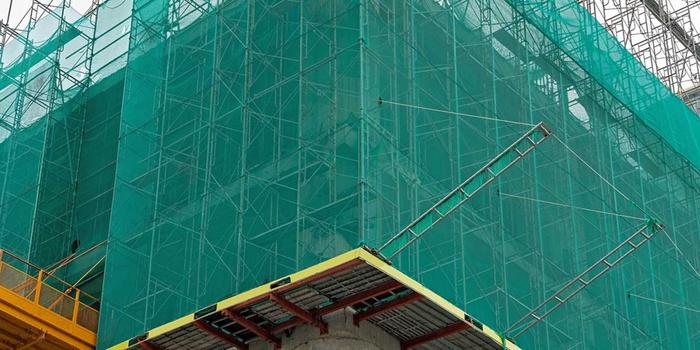
Scaffold nets are safety nets made for scaffolding systems. You can attach them directly to scaffold frames. In this way, they secure the entire working platform. This step prevents materials from slipping through open sides.
Well, these nets also support worker safety at height. Always remember, they do not suit balconies or open edges. Because they are designed only for scaffold use.
Perimeter Netting
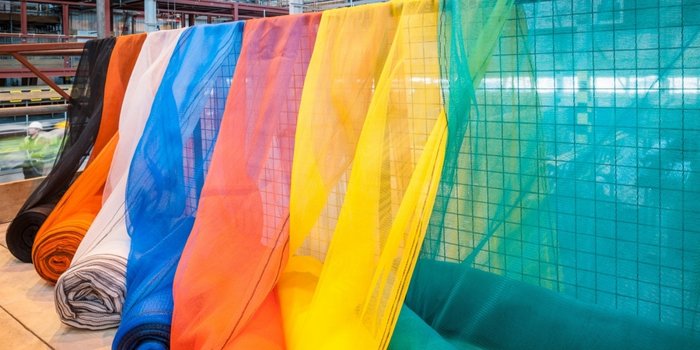
If you want to cover the outer boundary of your construction site you should buy a perimeter net. Because it is placed along the outer boundary of a site. Basically, you install it around open edges and building perimeters.
In this way, it marks the work zone clearly. It stops falls and blocks objects from leaving the area. This net often uses a knitted lock-stitch mesh fabric, which can stop very tiny objects.
Green Safety Net
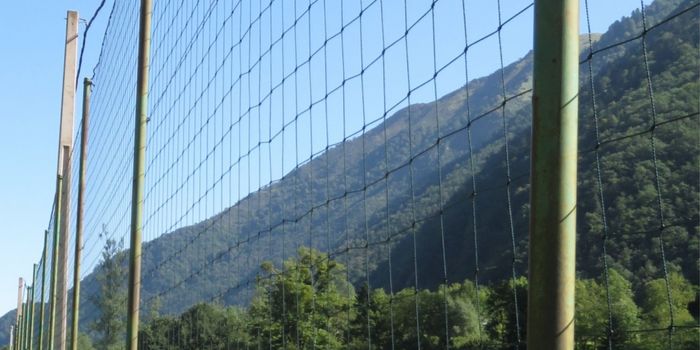
It is clear from its name that it is a green safety net. Basically, it is more preferred than other safety nets due to its high visibility from a distance. Green color warns others about the presence of construction sites.
In agriculture, green safety nets control how much sunlight and heat should reach your plants. They also protect your crop from bugs and pests. In this way, your crops grow better and give you more produce.
Tunnel Nets (Shade Nets)
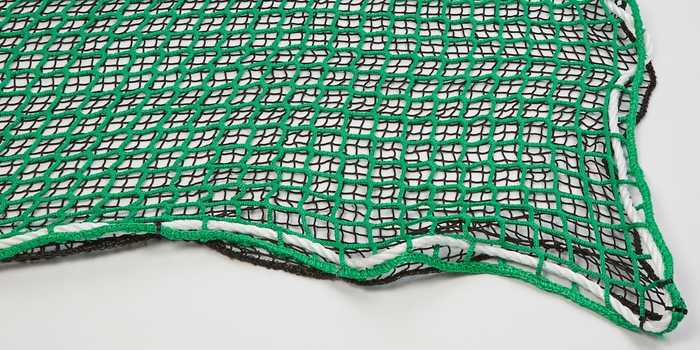
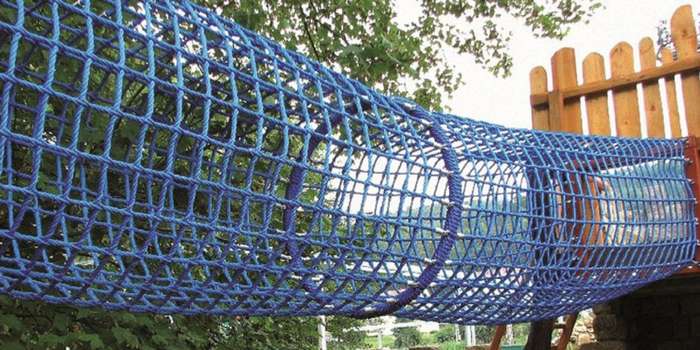
This name was given for its unique tunnel-like shape. You may often find this type of safety net in parks & playgrounds. Basically, it has a closed circular shape. Their main purpose is to set boundaries for children and players. So, they get protection in case of balance out or slips.
You may see these tunnel shaped nets in farms or nurseries too. Well, these “U” shaped safety shades are installed for the protection of crops from extreme sunlight. But their mesh design allows wind and water to pass through them. This is why they are best for the protection of crops as well.
Custom Nets
Custom nets are safety nets that are designed according to your specific requirements. You choose the size, shape, material and color according to the needs of your site or project.
For example, if your construction area has unusual edges or an irregular shape then a custom net is perfect for you. That’s why these nets provide targeted protection for workers & tools.
Industrial Safety Net
As you know there are workers and heavy-machines working at one place. So, industrial safety nets are designed to create barriers or fall protection systems that clearly mark work zones and equipment.
You must install them in busy industrial areas to make workers and equipment safe. For example, in warehouses and storage facilities, these nets secure dangerous goods and materials stored on racks. This reduces risks and helps maintain a safer work environment.
Other Types of Safety Nets
Staircase Safety Net or Railing Safety Net: Staircase safety nets are strong protective nets fixed with the sides of stairs and railings. Basically, these barriers stop people or pets from falling down through the gaps of the railings.
Pool Safety Net / Swimming Pool Safety Net: Safety nets are also applied on the pools. For this, a safety net is stretched tightly over the surface of the pool. Their aim is to stop you, your children, pets or anyone from accidentally falling into deep water.
Helideck Nets: If you want a safe landing of your helicopter, helideck safety nets are for you. Especially on vessels at sea. You use them to provide friction that prevents helicopters from skidding during landings. Moreover, the net stops objects that might fall or get blown off by the rotor wind of a helicopter.
Football Perimeter Netting: This is a strong sports net placed around the edge of a football field or training area. You install it to stop stray balls from flying into crowds or streets. These nets protect the audience and players.
Orange Safety Net Fence: Orange safety net fences are highly visible barriers used to warn and guide people about nearby hazards. Usually, they are used to mark construction sites, open trenches, roadwork zones or other dangerous areas. These fences control the entry access of the site and protect the workers.
Kids Safety Net or Safety Net For Trampoline: This type of protective net is used around play areas like trampolines. Actually, the net is installed in an upward direction that covers the trampoline. In this way, it stops kids inside the net without any worries.
Safety Net Installation Procedure
It is very easy to install a safety net at your construction sites and other places. You have to follow these 4 steps only;
- First of all, check the area where you will install the net. Make sure it is clear and stable.
- Next, fix strong anchors or hooks at the required points.
- Then, spread the net carefully and attach it securely to the anchors with Approx. 6 kN load bearing capacity.
- You have to maintain a distance of 6 meters (20 ft) between safety net and working platform.
- After that, check the distance from the edge corner of the working place to the end point of the safety net. It should lie between 2 meters to 3.5 meters.
- Finally, inspect the net to ensure there are no gaps, loose edges, or damages before allowing work to start.
Safety Net Specification
| Net Type | Safety Net Material | Safety Net Mesh Size |
| Fall Arrest Net | High‑tenacity polypropylene | 100mm x 100mm |
| Scaffolding Net | Woven polypropylene filament, HDPE, PP | 1.5x10mm, 2x8mm or smaller |
| Staircase Net | Nylon / Polypropylene | 45mm to 100mm |
| Pool Net | HDPE mesh, lightweight | Approx. 45mm |
| Helideck Net | Galvanized iron or steel wire coated in PVC | 200mm x 200mm |
OSHA Safety Net Requirements
- You have to place the net as close as possible under your work area, but never install them more than 30 ft below.
- If you want to extend the net in a horizontal manner then remember that it depends on height: for instance for up to 5 ft edge, 8 ft is the minimum height for extension.
- Keep in mind, the mesh size is 6×6 inches or smaller, not bigger than it.
- After that, you have to check the strength of edge ropes that should be at least 5,000 lbs.
- In case when you want to install new nets, it must handle a 17,500 ft-lbs impact or force.
- Always make sure to take a drop-test of the net after installation and before first use. Moreover, a drop-test is needed again after moving the net or doing major repairs.
- If the net stays for a long time at one place then test it after every 6 months.
- You should ensure there is empty space under your net. Because if there is any object the victim can get injured.
- Inspect your net weekly for safety purposes and to check for damage or wear.
Construction Safety Net Specifications
If you want to install a standard safety net for construction at your worksite then you should follow these safety rules.
- Safety nets should be made up of HDPE or polypropylene for strong and durable protection.
- The border of the ropes must handle the load of at least 30 kN. In addition, the mesh should support around 5000 N.
- If we talk about the mesh size it must be less than or equal to 100 mm.
- Nets must have the ability to absorb energy when someone falls.
- When you install it you have to follow EN 1263-1 standards. Plus, make sure your net is certified by them.
Safety Net Inspection Checklist
| Item for Inspection | Safety Net Requirements |
| Visual Damage | The ropes & mesh should not be deformed or teared |
| Covered Area | All working areas should be covered with the net |
| Rigged Level | The net should be connected to the highest flange of the beam |
| Tie Spacing | Must not exceed 2.5 meters |
| Tie Gaps | Should not be more than 100mm |
| Overhangs | It extends outward without direct support underneath. |
| Fall Distance | Must be less than 2 meters from the working area |
| Anchored Points | Not be fitted to purlin, sag rod, sheeting rails, service supports, cold formed sections, gutter supports |
| Distance under the Net | Approx. 3 meters |
Safety Net Manufacturer / Safety Netting Suppliers
There are many companies that manufacture safety nets. You can contact them to buy a safety net of your choice.
- Jackwinsafety
- Newton Mesh
- Huck Nets
- G&M Safety Netting
- Diamond Nets
Safety Net Price
| Safety Net Type | Safety Net Cost Per Meter |
| Support Field Net | $0.70 to 1.50 |
| Outdoor Kids Net | $0.45 to 0.85 |
| Knotless Safety Net | $3.59 to 4.35 |
| Scaffolding Net | $0.20 |
| Construction Safety Net | $3 to 5 |
| Trampoline Safety | $4 to 5 |
| Debris Net | $0.09 to 0.39 |
People Also Ask
How Often Should Safety Nets be Inspected?
You should check your safety net before each use. For this, a qualified person should inspect it every week while it is in use. Furthermore, you have to inspect it right after bad weather or any fall to make sure it is safe.
What is Safety Net Standard Size?
Well, safety nets don’t have one standard size. So, they come in different sizes, but common option for construction net is 5×10 m or 6×10 m. Additionally, the mesh size is 100 mm or 60 mm).
What is a Safety Net Barrier?
This barrier net refers to safety net that is used temporarily on construction sites and industrial areas even on roads. These nets come with expandable barriers on the sides of the net. Advanced barriers also have wheels under the posts which make them more suitable for temporary work.
Final Words
We hope you completely understood the meaning of a safety net and its different types & uses. So, if you want to protect your workers and worksite, you should install the right safety nets in the right places. Contact our team now for getting high quality safety nets at affordable factory prices.
See also
Ultimate Guide to Orange Safety Fence
Temporary Fence Panels: Types, Uses, and Cost Comparison Guide


