

-80x69.png)
As a worker or company, it is important for you to know what is fall protection and when it is required. That’s why we have written this article for you. We have explained how you can reduce fall accidents at your site. You will also know, types of fall protection systems, its hierarchy, equipment and general safety tips.
Fall Protection Meaning
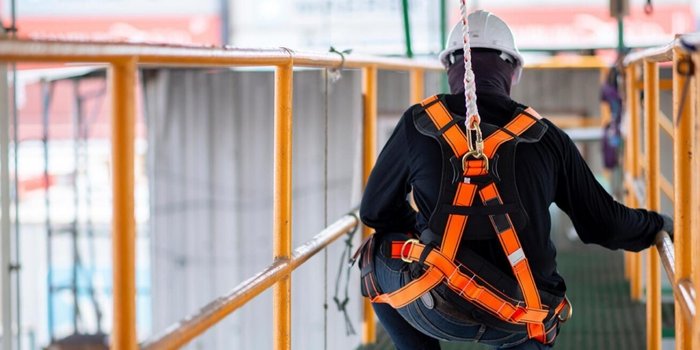
Fall protection means steps and tools that keep you safe from falls at work. It protects you when you work at height or near open edges. You see it on roofs, scaffolds, ladders and construction sites. Actually, this system stops serious injury or loss of life.
Fall Protection Signage
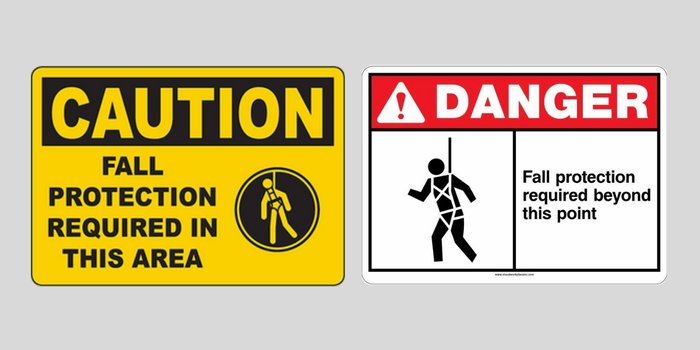
Site owners or safety managers place work safety signs on the sites. Basically, a fall protection sign shows a clear message about fall risk areas. Most of the time, you notice bright colors like yellow, red and white. A bold warning like “Fall Hazard” or “Fall Protection Required” is written on it. You find these signs near roof edges, open floors, scaffolds and heighted platforms.
When is Fall Protection Required?
Well, fall protection is required every time you work at height. For instance, open edges and unprotected sides always demand protection.
You will require fall protection near mezzanines (a raised platform inside a building) or loading docks. Furthermore, floor openings and uncovered pits also create falling risk for you. Therefore, you must use fall protection in warehouses, factories & construction sites.
When is Fall Protection Required in the Construction Industry
You have to use fall protection on scaffolds and formwork (temporary mold). If you work on ladders that are used for long tasks it also requires safety steps. When you lift steel beams or frames at high rise buildings, you should wear proper fall protective equipment. Moreover, when you make holes in the ground or trenches with depth, you need fall safety.
Importance of Fall Protection
Actually, fall protection is very important to save your life at work. In 2020, 4764 workers died from work-related injuries in USA. Even though this was 10.7% less than 2019, this data shows how dangerous workplaces can be. Surprisingly, falls from heights make up a large part of these fatal injuries. So, when you use fall protection it reduces the risk of serious injury or death.
4 Types of Fall Protection OSHA
Fall Prevention System
As you know, prevention means you stop something before it happens. This thing is applied for the protection of all hazards. In case of fall prevention you can do two types of protection systems.
- Active Fall Protection System: This system says you to use PPE correctly for safety from fall. For instance, harnesses, lanyards & lifelines. If you attach them properly, they stop you from falling.
- Passive Fall Protection System: On the other hand, a passive system protects you automatically without extra effort. Like when you use guardrails, safety nets plus safety barriers. Actually, you don’t need to wear or operate them. Simply, they reduce the risk of accidents.
Fall Positioning System
This system helps you when you work on a vertical position like on a wall, tower, pole or heighted posts. It holds you securely so you can use both hands to work. So, you have to attach it by a strong anchor point with a harness and lanyard. In this way, it stops you from falling down. But it allows you a safe movement to do your job.
Fall Arrest System
Fall arrest system is required when work over 4 feet of height from the ground. Basically, this system includes full body harness & shock absorbing lanyards. This lanyard will distribute the force in case you fall. In addition it includes, anchorages, lifelines rope/wire grabs, snap hooks/carabiners & rescue equipment.
Fall Rescue System / Fall Retrieval System
In case when you fall, a fall rescue system helps you get out safely. Because it lifts or lowers a worker trapped at height. Basically, this system uses ropes, pulleys, rescue tripods, self-retracting lifelines or winches to bring you to safety. You often see it on construction sites, towers and narrow spaces.
Fall Protection Hierarchy of Controls
The fall protection hierarchy of controls shows you the best ways of fall protection. In simple words, it ranks safety measures from most effective way to least effective method. So, when you follow this hierarchy, you reduce risk and protect workers at height. The main levels are described below;
- Elimination: As its name suggests, in this level you eliminate or remove the fall hazard completely. For example, you work from the ground instead of climbing a ladder. Hence, if there is no height risk, there is no chance of falling. This is the safest method in the hierarchy.
- Substitution: Substitution means you replace a dangerous task with a safer one. For instance, you prefer a mobile platform instead of scaffolding. This thing will reduce the risk of falls without changing the work.
- Engineering Controls: It is similar to a passive control system. Which means you use tools or equipment to prevent falls. These equipment include guardrails, safety nets, bollards and pedestrian guardrails.
- Administrative Control: In this level you have to follow some rules and procedures to reduce fall risk. These rules are made by administration or experts to ensure your safety. Like you are trained, warning signs are installed plus a safe work environment is created.
- PPE / Fall Protection Gear: PPE means personal protective equipment. In this case, these are specifically protective gears that are used to protect you at heights. For instance, harnesses, active airbag vests or lanyards. That’s why you must wear them properly every time you work at height.
OSHA Fall Protection Standards/OSHA Requirements For Fall Protection
OSHA (Occupational Safety and Health Administration) sets rules for workers safety from falls in all industries. These standards tell you when and how to use fall protection equipment. Such as, 5 feet height in shipyards or 8 feet in longshoring operations requires fall protection.
OSHA Fall Protection Standards For Construction
OSHA requires fall protection when you work 6 feet or higher on construction sites. This can include roofs, scaffolds, ladders and open floors. So, in that case;
- You must use guardrails, safety nets, fall protection gates or personal fall arrest systems.
- Your floor openings and edges need railings or covers to prevent falls.
- Even near machinery, fall protection is required regardless of height.
- You have to provide proper equipment and training to employees.
- As an employee, you must use gear like a safety vest or safety helmet. And follow safety rules for the protection.
OSHA Fall Protection Standard For General Industry
In general industry, OSHA requires fall protection at 4 feet or higher. Although you are on elevated work platforms, walkways and open edges. The requirements of the OSHA remain the same here, only the height is different. Like your site should be covered with barriers, warning signs, guardrails, and warning lights.
What is Fall Protection Training?
Fall protection training teaches you how to detect fall hazards at your workplace. And when you encounter them how you can protect yourself. Simply, you will come to know how to work safely at height.
It shows you how to use harnesses, lanyards, lifelines, anchor points and other safety tools. In this training, you teach rules and regulations set by safety authorities like OSHA.
Fall Protection Equipment List
Types of fall protection equipment involve the devices or tools that are helpful when you work at elevation. Some major fall equipment are;
- Safety Harness (Holds you securely)
- Lanyard (Connects your harness to an anchor point)
- Lifeline (Strong rope or cable)
- Safety Net (Catches you if you fall from height)
- Guardrails (Blocks edges and open sides to prevent falls)
- Toe Boards (Stops tools or workers from slipping off the edges)
- Anchorage Point (Strong point to attach with your harness or lifeline)
- Fall Arrest Device (Stops a fall safely)
- Rope Grab (Moves with you on a vertical lifeline)
- Helmet / Hard Hat (Protects your head from impact)
- Shock Absorber (Reduce force if you fall)
- Self-Retracting Lifeline (SRL) (Automatically shortens or locks to stop a fall)
- Climbing Rope (Used for going up and down on towers or poles)
- Fall Restraint System (Prevents you from reaching an edge or hazard)
Fall Protection Equipment Checklist
Safety Harness Inspection Checklist
| You have To Check For | Perfect Condition |
| Is the body harness fully intact? | It should be well-tightened |
| Does the harness have any holes? | There should not be a single hole |
| Are any Tel-Tails showing? | Tel tail should not be visible |
| Are any straps on the harness discolored? | The color of the strap must be in good condition (visible from a distance) |
| Are any clips or buckles cracked or bent? | The clips should not be cracked |
| Is there any fraying on the harness components? | There should not be any fabric or rope coming apart from the harness |
Lanyard Inspection Checklist
As you know, a lanyard is a safety rope or strap used in fall protection. Therefore, you have to check all the things that you checked in the safety harness. Some other points that you have to check are: whether the lanyard is retractable or not & all the clips or attachments are in good condition.
Fall Protection Certification
Fall protection certification proves that you have learned how to work safely at height. Simply, it shows that you know how to use harnesses, lanyards, lifelines and other safety equipment correctly. You can get this certification after a training course. This course is approved by OSHA or recognized safety organizations.
Fall Protection Certification Expiration
Does fall protection expire? Fall protection certification or training does not last forever. It expires after approx. 2 years. This depends on the training provider or OSHA rules. Hence, you must renew it to remain qualified and keep working safely at height. Its renewal includes refresher training. And they can check that you still know proper procedures.
Tips For Preventing Falls By JACKWIN
- You should always wear your harness, lanyard, safety vest and lifeline in the correct way.
- Check all equipment for damage or wear before starting work.
- Stay away from edges, trenches plus open spaces.
- Follow all safety rules and procedures that are made to reduce fall ratio.
- Make all floors and platforms clean from tools, debris, water or liquids. In case when there is a possibility of such a material place warning sign board like “Wet Floor” or “Slippery Surface”.
- Make sure ladders and scaffolds are stable and on level ground when you have to work on them.
- Do not work alone. Therefore, work with a partner when possible.
- Move slowly and carefully at height.
- Ensure proper lighting to see edges and obstacles.
- Refresh your fall protection training or certificate regularly.
- Use guardrails, barriers or fall restraint systems whenever possible.
- Do not overload platforms or scaffolds; this thing can cause accidents.
- You should not carry heavy tools with you when you climb up on a tower or pole.
- Report any unsafe conditions immediately to the higher authorities.
- Always secure loose clothing or equipment that can get caught in hooks or something.
- As a safety manager, keep emergency contact or rescue plan ready in case of a fall.
Final Words
We can say, you clearly understood what fall protection is & how you can protect your workers by applying our suggested methods. Most important thing is, you have to keep in mind all the legal requirements which are mandatory according to OSHA. You should plan your work at height carefully and always follow these rules.
Send us a message now in case you want to get any kind of safety products for your worksite.
People Also Ask
What is the Fall Protection Warning Line System?
A fall protection warning line system is a physical barrier that uses flagged ropes, wires, reflective tapes or chains on stanchions. It is used to mark a safe work area on rooftops and construction sites. Unlike guardrails, it does not physically stop a fall. In fact, the system just visually warns workers about unprotected edges and fall hazards.
Fall Protection Equipment Shall be Protected From?
You should keep fall protection equipment away from anything that can damage them. This may include sharp edges, heat, chemicals, direct sunlight, oil, paint, water and dirt.
What is a Fall Protection Program?
Basically, the fall protection program is a set of rules and procedures that are made to ensure safety at height. It explains how to use harnesses, lanyards, guardrails and other safety equipment. The program includes training, inspections and emergency plans.
What are Fall Protection Gates?
Fall protection gates are safety barriers that are used at openings, edges & elevated platforms. Actually, these gates can automatically close or stay in place to prevent accidental falls.
What are Fall Protection Kits?
These kits are all-in-one safety packages. They contain essential equipment for working at heights. They include items like harnesses, lanyards, connectors, shock absorbers and anchor points. These kits are designed to prevent serious injury or death from falls.
What is OSHA Fall Protection Standard 1910?
Specifically, OSHA fall protection standard 1910 is a safety regulation for general industry workplaces. It makes rules to protect workers from falls that are present at 4 feet or higher.
More Helpful Posts:
Workplace Safety Signs and Meanings: 50+ Types & Symbols
Workplace Safety Tips: Create a Secure Environment


