

-80x69.png)
First noise barrier in United States was installed in 1968. Later, in the 1990s, countries like Denmark started creating noise barriers with transparent materials. Almost all countries use these barriers to reduce noise pollution.
Today you will learn what a noise barrier is. We have also explained major types of noise barriers, its specification, installation and cost.
Noise Barrier Meaning
Some common names for this barrier are noise cancelling barriers, noise attenuation barriers or acoustic noise barriers. Actually, a noise barrier is a strong outdoor structure. It can be a wall, an earth berm, a barrier or a raised mound.
You often see it near highways, expressways, rail tracks or factories. Its job is clear. It blocks traffic, railway or industrial noise before it reaches your home or school. In most cases, it reduces noise by 5 to 10 decibels.
How Do Noise Barriers Work?
Noise barriers follow two main ideas. One is mass and the other is decoupling. First, the mass of barrier block sound. Like, thick and heavy materials stop sound waves from passing to the other side.
Second, decoupling breaks the path of vibration. For this,air gaps or separated layers stop vibrational energy to move forward. When vibration stops, sound cannot travel easily. Both methods increase Transmission Loss (TL).
Types According to Noise Barrier Material
There are different types of noise barriers. These barriers are classified on the basis of different materials that are used to make them.
Wooden Noise Barrier
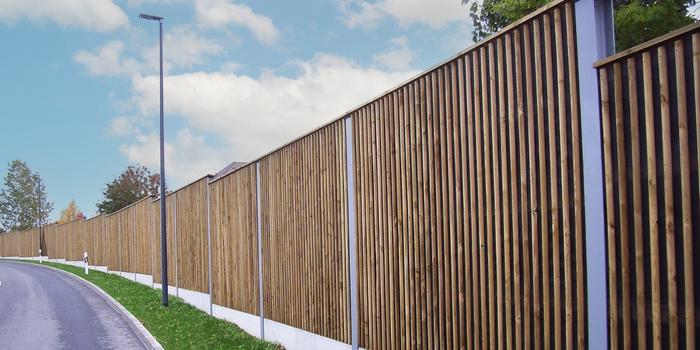
Wood is used to make noise barriers. Well, different types of wood are used for this purpose like larch, pine, spruce and sweet chestnut. These woods create a strong and stable noise barrier for you.
If we talk about larch, it stands out for many reasons. It has a light & natural color that fits well with green spaces. It also resists chemicals and lasts for a long time.
Metal Noise Barrier
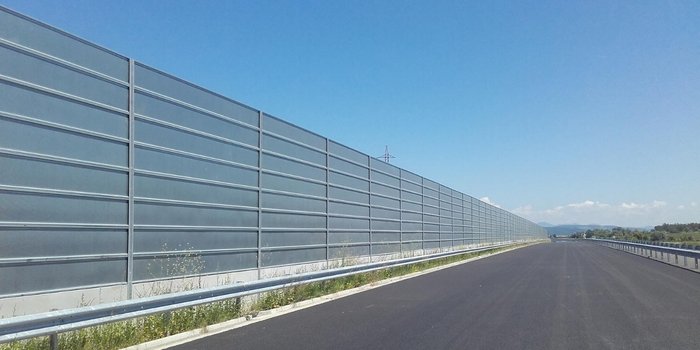
A metal noise barrier is a strong sound-blocking wall made from special acoustic metal panels. You see it where heavy noise needs strict control. These panels use high mass steel or aluminum for outer layers.
Inside these metal structures, they contain insulation or sound-absorbing cores. This design disrupts, reflects plus absorbs sound energy. As a result, less noise comes to your area.
Concrete Noise Barrier / Precast Concrete Noise Barrier
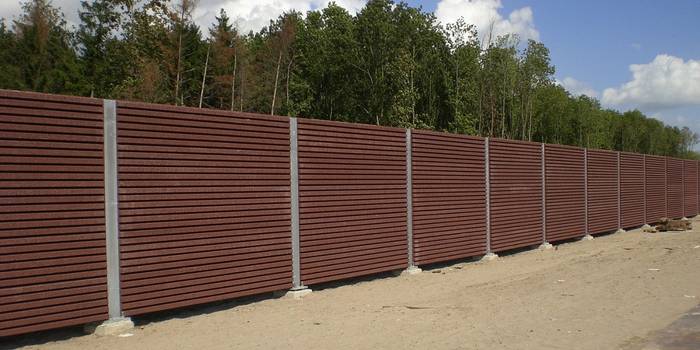
A concrete noise barrier is a solid wall made from precast concrete or masonry units. You often see it along highways, rail lines, residential areas and bridges. This design can last for at least 40 years. There are mainly three types of concrete noise barriers.
Absorptive Concrete Barrier: As its name shows, it absorbs the sound. Basically, it uses porous concrete with materials like wood fibers or lightweight cement spheres. The front layer absorbs noise.
Reflective Concrete Barrier: This type reflects sound back toward the source. Which means it sends road or rail noise away from your side. Sometimes, noise may rise on the opposite side. To control this, the barrier can slope upward so sound moves above nearby homes.
Reactive Concrete Barrier: This is a special absorptive design. It contains cavities or small resonators inside the blocks. Sound enters through small holes. The cavity size targets certain noise frequencies and reduces them. Moreover, when you fill them with absorptive material, they control a wider range of sound.
Brick Noise Barrier
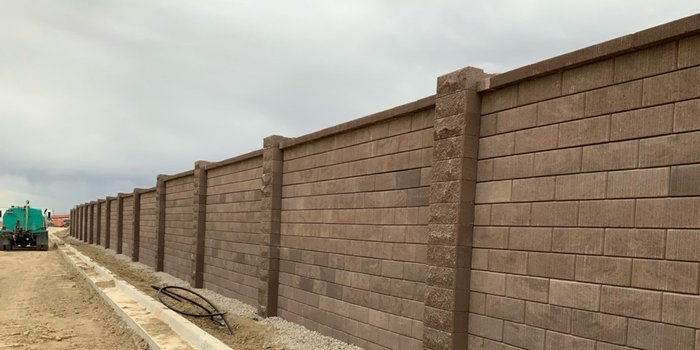
A brick sound barrier uses bricks to block unwanted noise. You can build it as an external wall or an internal partition. When you place a brick wall the sound can’t enter or exit from your space. Engineering bricks offer higher density and strength.
Noise Barrier Sheet
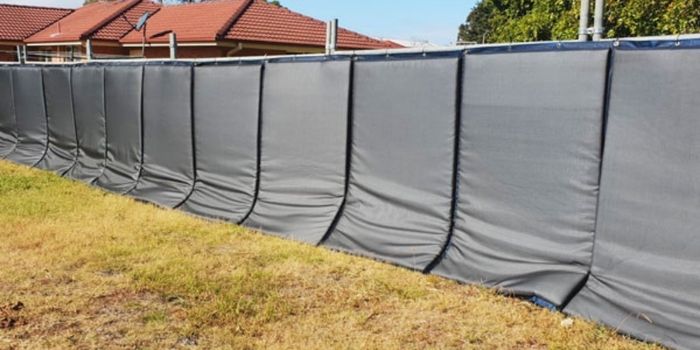
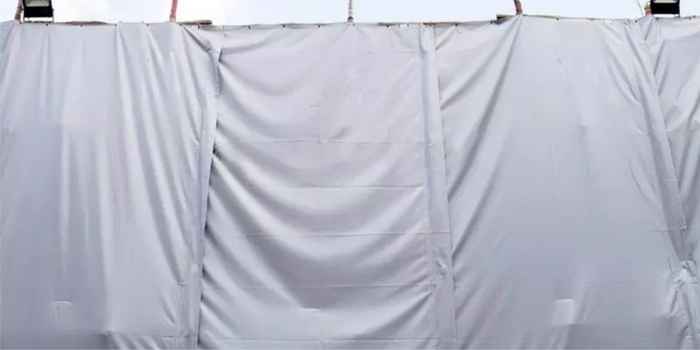
These sheets are made from PVC, vinyl, rubber or composite materials with high mass. Some designs include an inner absorptive layer. Its heavy surface blocks sound, while the soft layer absorbs part of the noise energy.
You can easily hang or fix the sheet onto frames or fencing panels. This gives you a quick solution when permanent barriers are not possible.
Photovoltaic Noise Barriers
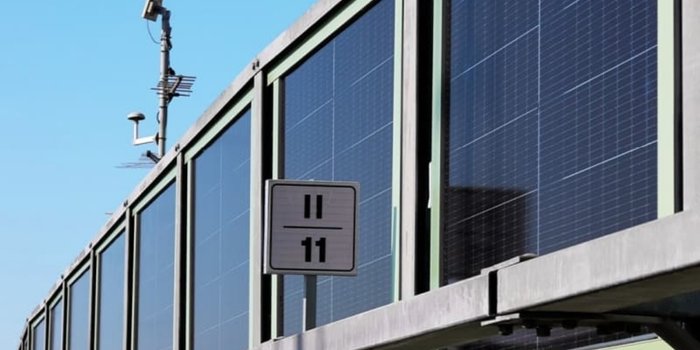
If you want two benefits in one system, then photovoltaic barriers are best for you. They block unwanted sound and also produce electricity. Solar panels are built directly into the acoustic wall.
This design makes better use of your land. You do not need a separate space for a solar farm. The barrier already stands along highways or rail tracks. So, while the wall reduces traffic noise, it also generates clean energy for you.
Acrylic Noise Barrier
This is the most cost-effective way to soundproof your room or home. Because you can build it by yourself and customize it for your space.
For this type of work, you can use acrylic sheets as the main panel & felt strips to reduce vibrations. Furthermore, you will need foam stripping to seal edges and strong brackets to place it securely.
Earth Berm Noise Barrier or Green Noise Barrier
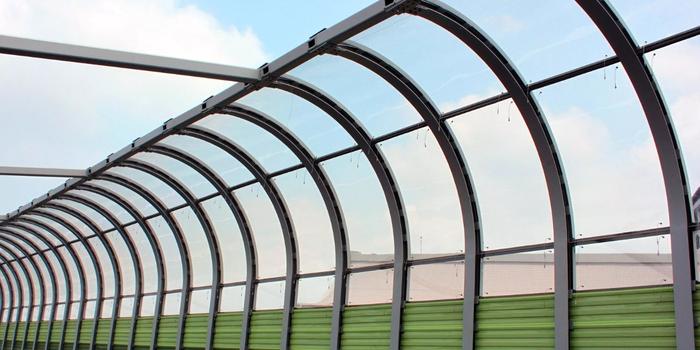
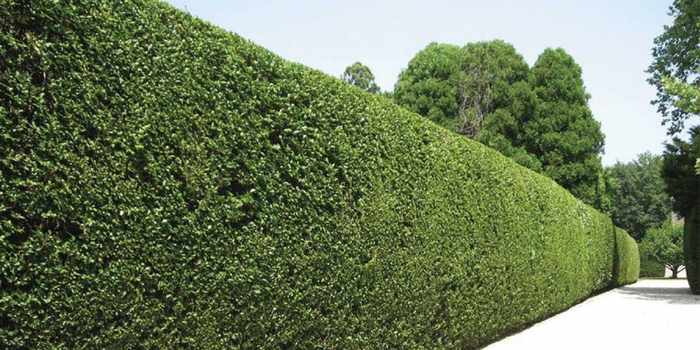
An earth berm noise barrier uses raised soil or grass-covered mounds to block sound. You often see it along highways or near railways. Its natural shape and vegetation help to reduce traffic noise.
The height and width of the berm determine how much noise it can block. For example, taller and wider mounds stop more sound to reach your area. Moreover, grass or plants on top can add extra absorption and prevent soil erosion.
Types of Noise Barriers According To Locations
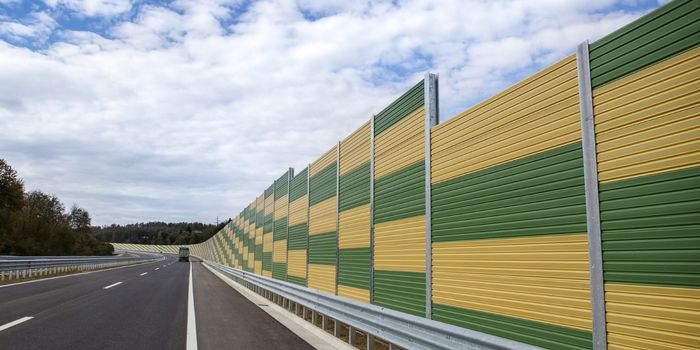
Noise Barrier Walls Highway
If you measure the sound from 15 meters away from the road it can be 70 to 80 dB. This noise level is harmful for you and nearby people. Like it can cause headache, sleeplessness & many more health issues.
Therefore, authorities place noise barriers on highways to absorb or reflect extra sound. For highways, concrete, aluminum, wood and plastic noise barriers are preferred.
Sound Barrier Walls Residential
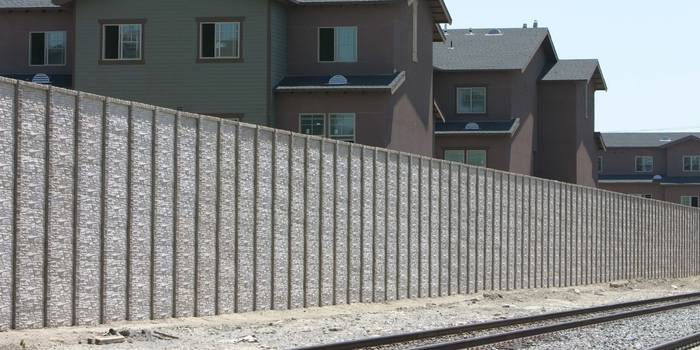
If your residential area is near an industry then noise barriers become very essential for you. The reason, industries produce approximately 80 to 85 dB noise levels. This level of noise can damage hearing or cause sleeping disorders as well. Roadside noise barriers are big concrete or brick walls that cover residential areas from highways and industries.
Railway Noise Barriers
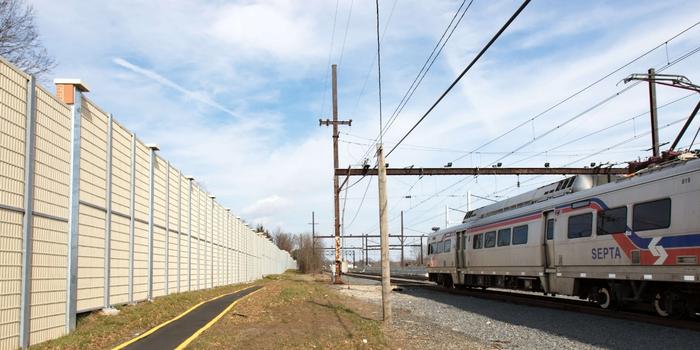
Well, traditional trains produce extreme levels of noise from 70 to more than 100 dB. And if you measure it with horns it can be 110 dB. To handle this noise, you can install concrete walls and absorptive panels near the tracks.
You may often see low-level barriers that are placed 1.7 meters away from the tracks. These barriers are specifically designed to absorb sound from tracks.
Noise Barriers For Homes
Your home can face noise from many sources. Like, traffic on nearby roads, construction work, factories and loud neighbors. Even generators and HVAC units create constant sound. Over time, this noise can affect your comfort.
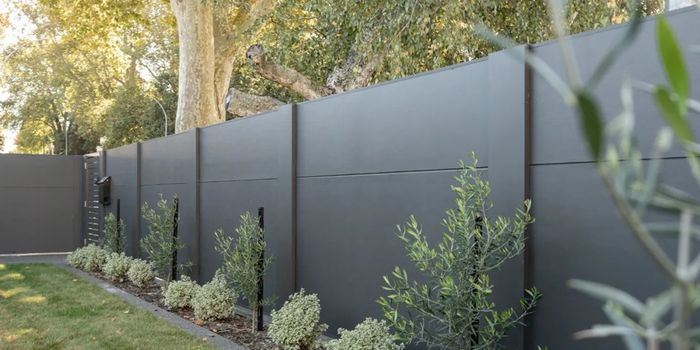
For outdoor concrete, brick, wooden or earth berm barriers work well. On the other hand, for indoor control, you can use acrylic panels, double-glazed windows & insulated walls.
Noise Barrier Specification
If you want to make your road & residential areas clean from the noise pollution you should install a noise barrier. But you should follow some specification to place. These specifications are;
Barrier Location: Your barrier should be installed as close to the noise source as possible such as near the road.
Height & Length: The height and total length of your barrier decide how much noise it can block. That is why you should construct a barrier of 14 to 20 feet in height.
Noise Barrier Design: Its design must break the sound path between the source, the receiver & the transmitted path.
Minimum Required Height: The height of the noise barrier should be 1 meter above the road surface to 1.5 meters above the floor level of a nearby house.
Multi-Lane Road: Noise from far traffic lanes reduces less due to different sound angles. In some cases, a second barrier in the median strip may improve performance.
No Gaps Requirement: Your barrier must be solid and continuous with no vertical or horizontal gaps. Because small openings reduce the impact of the barriers.
Access Openings: When access or open hole is required, overlapping walls can solve the gap issue. But the overlap should be at least three to four times thicker than the width of the opening.
Barrier Angle: The wall should extend to cover about 160 degrees from ground level.
Material Acoustic Rating: The Weighted Sound Reduction Index or STC rating of the material should be at least 15 to 35 dB.
Noise Barrier Installation
Each barrier has its own installation method. But if you want to install steel or concrete barriers you can follow these 5 steps.
Step 1:
First, you have to clear the site and remove the topsoil where the wall will stand. Check the ground level and confirm the required height of your barrier according to your local rules.
Step 2:
Now, construct a foundation that can be deep or shallow according to your barrier. Then lay the gravel base in layers over the existing soil. You have to adjust thickness on the basis of terrain level and structural load.
Step 3:
After that, fix an A-shaped steel frame with base plates in position. Actually, it connects both sides of the wall and makes it strong. But if you want to create a concrete noise barrier, then use reinforced concrete in the base.
Step 4:
Add absorptive panels if reflection is a concern. Furthermore, decorative textures or coatings can improve aesthetics and blend with surroundings. For precast walls, you should set anchor bolts in the foundation to hold panels.
Step 5:
At last you should inspect alignment, structural stability, strength of the frame and continuity. Ensure there are no gaps for sound leaks. And all panels are properly anchored.
Noise Barrier Cost
| Types of Noise Barrier | Noise Barrier Price |
| Noise Barrier Wall Cost (Steel) | $2.67 |
| Noise Barrier Fence Cost | $7.24 to 10.30 |
| Highway Sound Barrier Walls Cost (PVC) | 999 US dollars |
| Temporary Noise Barrier | $20.90 – $39.90 |
| Acrylic Noise Barrier | $3 to $5 |
| Acoustic Noise Barrier | $24 to $26 |
| Double Layer Metal Noise Barrier | From $1500 to 1600 |
Summary
Now you have understood noise barrier & its working. Our advice is, you should use modern noise barriers that absorb more noise with lightweight features. For example, sound absorbing curtains or acoustic sheets.
If you want to buy an acoustic barrier, JACKWIN is the reliable option. Our acoustic barriers are suitable for commercial, industrial & roadside needs. You can contact our team to place an order.
FAQs
What Are Highway Sound Barriers Made of?
Noise barriers are mainly made with sound absorbing or reflecting material. Common materials which are used to make them are concrete, wood, transparent plastic, acrylic, steel, metal and polycarbonate.
What is an Absorptive Noise Barrier?
An absorptive noise barrier reduces sound by absorbing it instead of reflecting it. It has a porous or insulated surface that traps sound energy. In this way it lowers noise levels of nearby areas.
Define Transparent Noise Barrier?
This is the type of noise barrier which is made with transparent material. Basically, this is used where sunlight is needed for both drivers and residents. These barriers are created with acrylic glass (PMMA) or polycarbonate.
What is a Temporary Noise Barrier?
As its name shows, this is a temporary barrier which is used to stop noise pollution for short time work zones. This can be a portable sheet or acoustic curtain that is lightweight. But still it can reduce noise from 30 dB to more than 60 dB.


