

-80x69.png)
Traffic congestion rate and road safety risks increase due to new building projects. To tackle these challenges and plan solutions, developers & authorities trust on careful traffic studies such as traffic impact assessment.
In today’s guide, we will talk about the meaning of traffic assessment and its steps. So, you can keep roads safe and maintain the growth of your community as well.
Traffic Impact Assessment Definition
Traffic impact assessment (TIA) is a study which shows you how your new project affects local traffic. With the help of this assessment, you can see how many more vehicles and pedestrians will join the area.
It also checks if existing routes or intersections can handle extra traffic. The report also suggests ways you can improve traffic flow and safety. With a TIA, you can plan your small or big level project without causing road congestion.
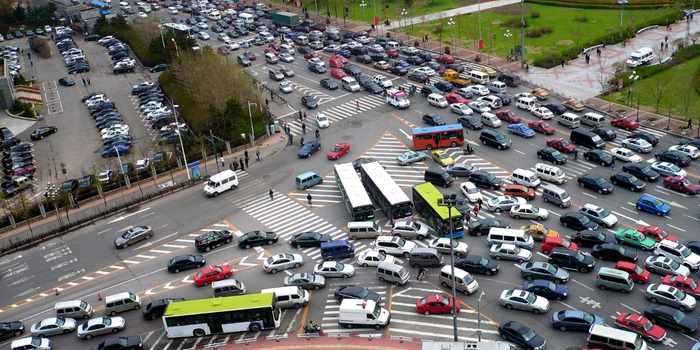
Traffic Impact Assessment Example
For example, if you plan a new shopping mall, a traffic assessment checks how extra cars will affect nearby roads. You can also assess how intersections will get crowded during busy hours. To minimize congestion, TIA study will provide you suggestions like addition of a turning lane, traffic signal installation or building of new access road.
Traffic Impact Assessment Sample
The template of a TIA report for a new office building may include following details.
-
- Project Details: You need to add information about your project purpose, type, size, location and expected traffic generation.
- Existing Traffic Conditions: This section requires information on current road traffic such as vehicle movement, congestion and accident-prone spots.
- Traffic Forecast: You can put predictions of future vehicle movement and congestion based on the new development.
- Impact Evaluation: This part includes an assessment of how your new development work will affect roads, intersections and overall traffic safety.
- Mitigation Measures: You have to provide solutions to solve traffic issues such as improving road layout, changing signal timings or providing alternate routes.
- Summary of Report: In this part, you will give a quick overview of the study. You must include major findings and how suggested actions will maintain traffic flow safe and smooth.
Why Traffic Impact Assessment is Important?
TIA is very helpful for contractors and authorities to know how a new project will affect the transportation network. Below are major benefits of impact assessment in traffic.
- Traffic management
- Road safety improvement
- Infrastructure planning
- Informed decision-making
- Positive community impact
Who Conducts Traffic Assessment?
It is generally done by qualified professionals such as transportation planners, traffic engineers or urban planning consultants. These experts work closely with government transport departments and municipal authorities.
As a result, you will see the overall study meets regulatory standards. In some cases, environmental and infrastructure specialists are also involved. They assess broader impacts on the community and environment.
Traffic Impact Assessment Consultant
A traffic assessment consultant is an expert who actually checks how a new project will affect road traffic. They analyse travel patterns and also design smart solutions to prevent traffic jams. Furthermore, their goal is to balance growth with safety and efficient road use for everyone.
When is a Traffic Impact Assessment Required
-
Large-Scale Residential Developments
This assessment is required when you plan big housing projects. Because it can result in bringing many new vehicles to the area. With the help of study, you can check that the additional traffic can be managed by roads and parking space easily.
-
Commercial Complexes/Malls
Commercial centers attract heavy customers and delivery traffic. That’s why you have to conduct a traffic assessment to identify the possible congestion points. So, you can design entry and exit points.
-
Industrial & Manufacturing Facilities
In industrial or factory sites, you see regular movement of trucks and goods vehicles. TIA is useful to know the impact of this traffic on local transport flow.
-
New Roads/Highway Projects
Assessment for traffic is needed when you want to develop new roads or highways. You must study how new routes will affect existing paths and traffic flow. In this way, you can design safe connections and can reduce future congestion.
-
Transport Hubs (Airports, Bus or Train Stations)
Building or expanding a transport hub results in a large number of vehicles and passengers to the area. The TIA can predict these changes. So, you can make sure nearby roads, parking and access routes can handle the extra movement.
Traffic Impact Assessment Guidelines
You have to follow specific standards and steps to get accurate and consistent results. Below we mentioned the major phases involved in impact assessment process.
1. Project Scoping
In this stage, you need to define what your traffic impact assessment will cover. You identify your project’s purpose, size and the area which may be affected by traffic changes.
You should set clear goals, so you can make sure your assessment focuses on the right data and provides you useful results for further planning.
2. Data Collection
This step involves collection of all information which is required to understand current traffic conditions. You have to gather data on vehicle movement, road capacity, pedestrian activity and public transport use.
For this purpose, you can use manual counts, cameras or automated sensors. Additionally, you should collect past data such as accident records and details about bike paths.
3. Trip Generation Analysis
Next, you have to calculate the extra number of road users (trips) which your project will cause. For example: you can consider things like the type of development and how many people or vehicles will use it.
4. Trip Distribution & Assignment
After the additional vehicle movement analysis, you now need to determine which routes will be used by these road users. It includes analysis of traffic distribution across nearby roads and intersections. As a result, you can see which areas may get congested.
5. Traffic Impact Analysis
This is the main step in the whole assessment process in which you study the effect of your development project on surrounding traffic. You must examine how the extra vehicle journeys will impact highways and junctions. The aim of this assessment is to check overall traffic impact and identify areas which might need improvements.
6. Safety Assessment
Traffic engineers and road safety specialists evaluate the negative impact of a specific project on road safety. You have to check for possible accident points, conflicts between vehicles & pedestrians plus other hazards. The goal of this step is to identify risks early.
7. Mitigation Measures
Now, you have to suggest ways or actions to solve the problem based on your traffic assessment. Example: you can improve pedestrian crossing, install traffic signals or add new road lanes to reduce congestion.
8. Reporting and Recommendations
Finally, you can put together all your research and suggestions into a clear TIA report. This must include traffic data, safety assessments as well as mitigation measures. Your report will provide actionable steps for developers and authorities, so they can better manage traffic flow and road safety.
Terms Used in Traffic Impact Assessment
ECS (Equivalent Car Space): ECS shows you how much space a vehicle takes on the road than a regular car. For example, a truck may take up the same space as 4 cars, so it counts as 4 ECS.
Volume Demand To Capacity Ratio (V/C): V/C informs how much traffic is on a road compared to the road’s maximum capacity. A higher volume to capacity ratio means the road is more crowded and may have congestion.
LoS (Level of Service): LoS tells you if it is easy or hard for you to drive on a road. For instance: high level of service indicates traffic moves smoothly and a low LoS means the road is crowded or slow.
Peak Hours and Day For Traffic Assessments
Traffic assessment usually focuses on studying traffic flow during the busiest times of the day and week. These are known as peak hours. At this time, you will notice most people travel to or from work, school or commercial areas.
Generally, peak hours are between 7-9 AM and 4-6 PM on weekdays in many places. But you should remember that this time can change on the basis of area and type of project.
Issues With Traffic Impact Assessments
Well, assessment of traffic is an important planning tool, but it’s not always perfect. In some cases, you may face certain issues or limitations. These problems also affect how accurate or useful the results are.
- Inaccurate traffic data: Sometimes the data used in a traffic impact study is old or may be collected at the wrong time. This leads to wrong results which don’t reflect actual traffic conditions.
- Forecasting future traffic: It’s challenging for you to predict future traffic. Travel patterns can vary due to new roads, population growth or unexpected developments. This may make your estimates less reliable.
- Coordination with stakeholders: Poor communication between developers, government departments & local communities can create problems. It leads to delays, confusion as well as missing important feedback.
To Conclude
So, traffic impact assessment identifies traffic congestion problems and safety risks. It also provides you practical solutions. However, you should engage local authorities early to access accurate traffic data. You can also talk to JACKWIN experts to clear your further questions about traffic assessments.
People Also Ask
Is a Traffic Impact Assessment the Same as a Traffic Impact Study?
Yes, traffic impact assessment (TIA) and a traffic impact study (TIS) mean the same thing. With both methods, you will look at how a new project may change traffic in the area and suggest improvements to keep roads safe.
Do We Need a Traffic Assessment Before Closing off The Road?
Yes, a TIA is needed before you close any road. It evaluates how the closure will affect traffic flow, nearby routes and public access. So, you can make sure proper planning of detours and minimizes interruption for road users.
Is Traffic Impact Assessment Mandatory?
This assessment method is not always required. But many local authorities demand it whenever you start big development projects.


