


If you supervise any construction site, then obviously you think: who is responsible for designing a scaffold? Actually, scaffold is a protective structure which you often notice on the sides of under construction facilities, where workers move around to work.
This article is written to guide you about the designing of the scaffold system. After reading you will be able to understand who designs scaffold, issues in scaffold architecture, OSHA requirements & inspection checklist.
Who Should Design a Scaffold?
Well, there is not a single person who designs a scaffold. Basically, it depends on the type of scaffold you want to use at your site. Gradually, the scaffold changed into many varieties. Some scaffolds are suitable for smaller workplaces & some others are used for larger sites.
Frame and Brace Scaffolding
You may see frame scaffolding near straight and low to medium-height buildings. Its frame is made up of square and rectangular steel tubes which are very heavy & reliable. These tubes are supported with cross braces. Its strong structure makes it perfect for sites where you require heavy equipment and tools. Always remember, in case of curved or oddly built frameworks it is not a good option.
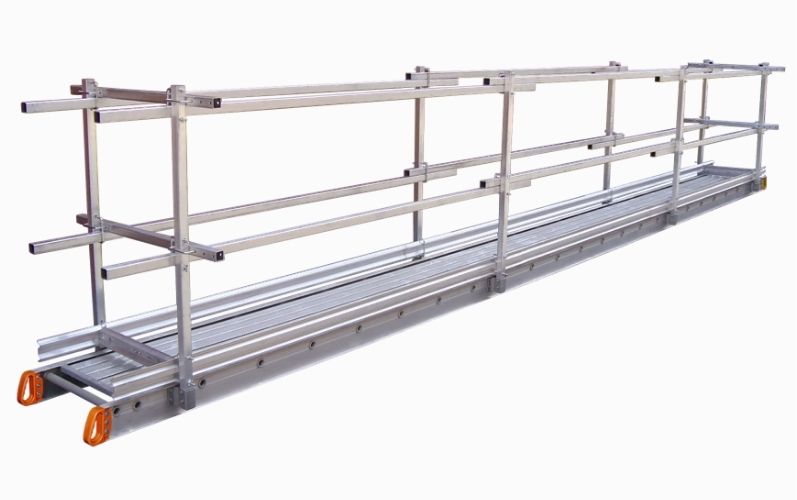
Designer: In case of a small job site an experienced scaffold contractor or qualified foreman can do this for you. On the other side, a complex or bigger structure needs to be checked and approved by a certified engineer.
Swing Stage Scaffolding
This is a suspended platform that is used to clean the windows of taller buildings. Workers also use them for the installation of non structural outer skin of modern facilities. You can lower or raise this platform according to your specific work. This swing scaffolding also demands strict safety rules.

Designated Professional: Here, the authorities select an experienced engineer who knows about the suspension system and dynamics of the building. If you are designing this type of scaffold collect information about the building dimensions, workers’ weight, material load & wind pressure.
Modular Scaffolding System
You can call it system scaffold design or “A” frame scaffolding. This system has predesigned vertical and horizontal parts. They have the ability to bear high loads so you work safely on them. Mostly, you use this type of scaffold system for your short-term projects. Its installation is very easy because you get ready-made parts, and then you fix them together and the structure is prepared.
Responsible Person: An experienced scaffold designer or engineer can place this modular scaffolding system. Remember, the hired person should have knowledge about local safety rules.
Competent Person Scaffolding Vs Qualified Person Responsibilities
As you know, construction work becomes more complicated because of the complex structural design of new frameworks. Therefore, it is not easy for workers to identify safety rules. But OSHA has clearly defined the role of qualified and competent people in scaffolding.
| Responsibilities | Competent Person | Qualified Person |
| Main Role | Daily safety, inspection, hazard correction | System design, structural analysis |
| Experience | Totally based on hands-on experience and training | Recognized degree or certification holder |
| Authority | Must have full authority to stop work immediately | Provides technical solution but cant stop the work |
| Inspection | Daily inspection & before every shift | Do not inspect the frame on daily bases |
| Supervision | Directly supervises erection, movement, dismantling & alteration of the scaffold | Not involved in daily supervision |
| Calculations | Not responsible for calculations | Calculate load-bearing capacity & other aspects |
| Site Condition | Decides the site is suitable or not to build structure | Not responsible for selecting a specific place |
Scaffolding Design Guidelines or OSHA Requirements for Scaffolding
As a qualified or competent person, you have to go through some basic guidelines if you want to design a scaffold. First of all, you should inspect the ground conditions. For example, uneven places, muddy ground & holes in the surface should be avoided. Because at these sites the scaffold can sink and collapse.
In addition, you must collect all the related information, work duration, work type, height, length, dimensions, maximum workload and number of workers. You should review this table if you are designing a scaffold.
| Factors | Specification |
| Load capacity | Must support its own weight plus 4x maximum then expected load |
| Suspension rope | Tolerate at least 6 times more than maximum intended load |
| Platform width | Minimum width of the platform is 36 inches |
| Deflection limit | The platform should not deflect more than 1/60 of the span in load |
| Platform gap | Gap between platform and upright should be 1 inch wide |
| Rest platforms | Scaffold taller than 35 ft, place rest platform every 35 ft vertically |
| Ladder Rung | Maximum space between ladder rung is 16¾ inches |
| Height base ratio | If height exceeds, increase the width of the base by 4 time |
| Access points | Safe entry/exit required if platform is more than 2 feet |
| Timber strength | timber component must be at least 1500 lb f/in² |
| Daily Inspection | Must inspect every time the workers use it |
Important Note: These are some exceptions for you if you design a scaffold. You can keep the gap of 9.5 inches between each platform if you use brackets. Moreover, if the wider platform is not available you are allowed to use a narrower platform. But in this case you install guardrails or fall arrest systems.
Issues With Scaffold Design System
Poor Site Assessment: You did not inspect the site in the right way. Like you left these points; uneven ground, poor soil strength, nearby structure (electrical cables), weather impact or access points.
Error in Calculations: This is another reason, many scaffold designers did not calculate the weight of extra material & equipment which are used at different stages. Therefore, the scaffold may collapse at some point.
Wrong Scaffold Assembly: You ignore this problem, but later it can cause serious injury. When you assemble the components of scaffold you skip these things; placement of guardrails, strong base support, proper bracing & correct connections.
Selection of Wrong Scaffold: As you know, each type of scaffold is built according to specific project needs. Hence, you must evaluate which kind of scaffold you require; a ringlock, A frame, suspended or heavy duty scaffold.
Low Quality Material: Sometimes, employees use low quality scaffolds which wear out and get damaged soon.
Poor Communication: If there is no communication between the contractor, scaffold designer, workers and project manager, then the result is delay and bad structure.
Ignorance of Safety Compliance: This happens when authorities do not inspect the sites on time and you do not install your scaffold according to the authorities rules & regulations.
Importance of Scaffolding in Construction
According to US Bureau of Labor Statistics, in 2022 about 37% of all construction deaths were caused by falls. So, there is always a need for a good fall protection system like scaffold at worksites.
Because it protects the workers from sudden fall downs and the ground team from falling objects. Some tasks are not possible without a scaffold such as painting, plastering, welding, cleaning, maintaining and repairing the bigger outer structures. Some more benefits which a scaffold provide you are listed below:
- Increase the efficiency
- Create a safe environment
- Protect workers
- Allow employees to work at any type, height and shape of building
- Easy access toward difficult points of uniquely shaped frameworks
- Reduce time consumption
OSHA Scaffolding Inspection Requirements
As you know, an OSHA team will inspect your construction site to approve your site as a secure workplace. You must make sure the written requirements are fulfilled on time before they identify any issue and fine you for it.
| Requirements | Guidelines You Should Follow |
| Scaffold designer | A qualified person should design the scaffold |
| Inspections | A competent worker must make sure to inspect scaffold everyday |
| Special inspection | Make sure to check the scaffold after structural integrity like storm |
| Checking points | Visible defects, structural damage, planking, guardrails, base |
| Load | Should not more than maximum intended load or rated capacity |
Final Remarks
My final advice: it is very important to create a safe scaffold structure by a qualified person & inspected by a competent professional. It builds up the trust of your employees and higher regulatory bodies.
Also, it represents that you care for your workers. You should implement other fall protection tools as well to increase safety. For instance, a personal fall arrest system, guardrails & safety net.
Commonly Asked Questions
At What Height is Scaffolding Required in the UK?
If you are in the United Kingdom, then in most cases you install scaffolding if the working height is more than 2 meters. But if the work is risky like if you carry some heavy tools or work for hours, then height does not matter; you could place a scaffold under 2 meters.
Does Scaffolding Should Be Certified?
Yes, in most cases, if your scaffold is over 125 feet, it must be designed by a registered professional engineer. Moreover, OSHA requires all scaffolds to be inspected by a competent person on a daily basis. In UK, you need TG20 certification to ensure the safe operation of scaffolds.
At What Height is Scaffolding Required?
According to OSHA you need fall protection like guardrails or scaffolding at 6 feet in construction work. But the general industry demands these safety devices at 4 feet.
At What Height Does a Scaffold Need to be Engineered?
A supported scaffold must be designed by a registered professional engineer if it is taller than 125 feet. If the height is minimum than this a qualified person can do this if he meets the safety criteria of OSHA.
Further Helping References:
What is a Bollard in Construction? Design, Types & Material
Construction Safety Items List: 20+ Things You Should Know
Workplace Safety Signs and Meanings: 50+ Types & Symbols


