


Excavation work is one of the most dangerous activities. Single trench collapse or failure to follow safety rules can result in severe injuries. According to OSHA, trench cave-ins are the primary cause of excavation-related fatalities.
In today’s guide, we will discuss OSHA excavation barricade requirements. If you follow them properly, you can prevent incidents at your site and protect your workers.
OSHA Excavation Barricades Standards
If you work near an excavation site, you need to keep people away from open holes and trenches. That is why Occupational Safety and Health Administration requires you to use barricades in case workers or the public have the risk of falling into an excavation. These are sections of the Code of Federal Regulations which outline OSHA’s barricade regulations.
OSHA 29 CFR 1926.651
This standard covers the general safety rules for excavations. It requires employers to protect workers from hazards around excavation sites. According to this section, you must use a warning system if mobile equipment operates near an excavation and the operator cannot clearly see the edge. You can use A-frame barricades, stop logs, hand signals & mechanical signals.
1926.501(b)(7)
1926.501(b)(7)(i): If you are working near the edge of an excavation which is 6 feet (1.8 m) or deeper, you have to use barricades & safety fences for fall protection. It will keep you safe in case you cannot see the excavation edge due to debris, plants or other visual barriers.
1926.501(b)(7)(ii): This standard strictly requires fall protection in case you need to excavate near a shaft, well, pit or similar excavation which is 6 feet (1.8 m) deep. Occupational Safety and Health Administration allows guardrails, fences, barricades or covers.
1926.501(c)(3): If objects can fall from a higher area, then you must barricade that area. Always keep workers away and place tools or materials far from the edge. So they do not accidentally fall.
OSHA Barricade Requirements
With the installation of barricades, you can clearly mark dangerous areas and prevent accidental falls into open trenches, pits or holes. OSHA requires you to use proper barricades to make excavation sites safe. It’s mandatory to follow these barricade standards to prevent accidental falls at your jobsite.
Proper Hazard Identification
Before you install any barricades, you should identify all possible hazards around the excavation area. For example: you must check risks such as open edges, deep trenches, falling hazards, moving equipment and nearby foot traffic.
With a proper inspection, you can understand where you need barricades, warning signs or other safety controls. Professionals also recommend considering excavation depth, location, soil conditions and the number of people working nearby.
Visibility and Warning Markings
You need to make sure the barricade is easy for everyone to see. For this purpose, you should use bright colors, reflective materials or danger signs. So that people can identify hazards or restricted areas. You can use signs like danger, keep out or excavation area.
Barricade Height Requirements
For excavation areas, you should choose barricades that provide enough height to warn people about potential hazards. So, workers can clearly see it from far away. Occupational Safety and Health Administration requires the top edge of the barricade to stay 42 inches (plus or minus 3 inches) above the walking or working surface.
Strength and Stability
You must use strong barricades that stay in place and provide protection in different conditions. Ideally, you can use safety barriers that are made of durable materials like HDPE. So they can handle wind and accidental impacts. A weak or unstable barricade can fall or fail to block the danger area properly.
Safe Access and Egress
It’s important to limit access to hazardous areas with the placement of barricades. But you should also provide safe ways to enter & leave an excavation area during emergencies.
You can also create alternative routes for safe evacuation. Also keep access routes clear of tools, materials, mud and other obstacles. With proper access and egress, you can reduce the risk of slips, falls & injuries around your workplace.
Protection Around Open Trenches
Open trenches create serious fall hazards for workers & visitors. Hence, you need to use proper barricades and warning systems. You should install clear safety barriers around open trenches. Also use highly visible barricades and lights to make the risky zone visible. It is mandatory to install guardrails or fences around trench edges if the excavation is six feet deep.
Nighttime Visibility Requirements
Excavation areas can become more dangerous at night because workers and pedestrians can not see hazards clearly. Therefore, you should use proper lighting to make barricades and excavation boundaries visible. For instance: you can use warning lights, reflective tapes, flashing beacons or high-visibility markings on barricades.
Inspection and Maintenance
Employers must regularly check and maintain barricades to keep them effective and compliant with OSHA standards. In case you notice any damaged or weak barricades you have to repair or replace them immediately. If you keep these safety barriers clean and properly, you can provide better protection throughout your project.
Note: Keep in mind, requirements for barricades can vary based on the type of job and workplace conditions. You can read the complete OSHA barricade requirements on the official OSHA website.
Types of Barricades By OSHA and MUTCD
It is important to understand that OSHA does not require one specific type of barricade for every excavation project. You have to follow 3 MUTCD barricade classifications given below along with OSHA excavation safety requirements.
| Barricade Type | Features | Common Uses |
| Type 1 Barricades | These barricades have one reflective rail , provide a basic warning and offer limited visibility | Small excavation areas or low risk zones |
| Type 2 Barricades | Two reflective rails and provides higher visibility | Excavation projects near roads, walkways or areas with more pedestrian/vehicle activity |
| Type 3 Barricades | Larger barricade with three reflective rails, which provides highest visibility | Major excavation projects in high traffic areas |
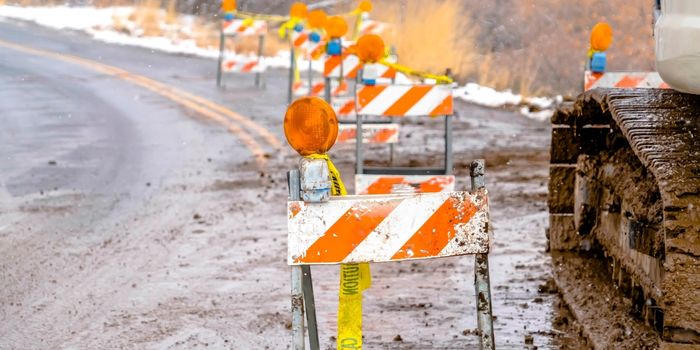
Rail barricade markings must be orange and white with retro reflective material. So they can reflect light back toward their source. These are height requirements for excavation barricades.
- Type 1 and Type 2 rail barricades: They must be at least 2 feet tall.
- Type 3 rail barricades: Must be at least 4 feet tall.
Where Barricades Are Required?
Around trenches: Trenches create serious fall hazards if they are located near walkways or busy work areas. Hence, you should place visible barricades around its edges and use warning signs to alert people about the danger.
Excavation pits: Excavation pits can create deep openings which require proper protection. You need barricades to control access and keep unauthorized people away from hazardous areas.
Utility work areas: Utility projects mostly have open excavations for installation of underground systems such as water lines and electrical cables. If you install barricades around these areas, you can protect workers & pedestrians.
Road construction zones: You need proper barricades in road construction zones to separate workers from moving vehicles. In this way, drivers and pedestrians can notice danger and follow safe paths.
Building foundation excavations: At these sites, you need to excavate large and deep openings which require strong safety controls. You should install barricades around the excavation perimeter to block unsafe zones.
Sidewalk excavations: Sidewalk excavations can create serious risks for pedestrians because they are mostly present in public areas. It’s mandatory to place barricades to block access and clearly mark the excavation area.
To Conclude
You should always obey OSHA excavation barricade requirements to create a safe and more organized work environment. Proper barricades, warning signs, lights and regular inspections, you can reduce the risk of falls and unauthorized access.
If you are a site manager or road safety professional, you need high-quality barricades for your excavation project. JACKWIN provides effective barricade systems to improve site safety and hazard control. Contact us today for a quick quote.
FAQs
Can We Use Caution Tape Instead of a Barricade?
Caution tape is generally not a suitable replacement for a physical barricade around an excavation site. Because it only provides a visual warning and cannot prevent workers. You must use proper barricades or guardrails to comply with OSHA.
What Color Should Excavation Barricades Be?
Excavation barricades mostly use orange and white colors for traffic control and general site safety. To indicate serious hazards or restricted zones, you should prefer red. But for caution areas, you can use yellow barricades.
For more help:
Top 18 Hazards in Construction Sites & How to Avoid Them
Trench Covers Manufacturer in China
Construction Site Management: Your Detailed Guide 2026


