


More than 50% of the global population (4 billion+ people) now lives in urban areas. So, safety is a serious challenge for urban planners because the number of vehicles on the road is increasing. Speed bumps, also called speed ramps, are one of the most effective tools to slow down traffic and make roads safe.
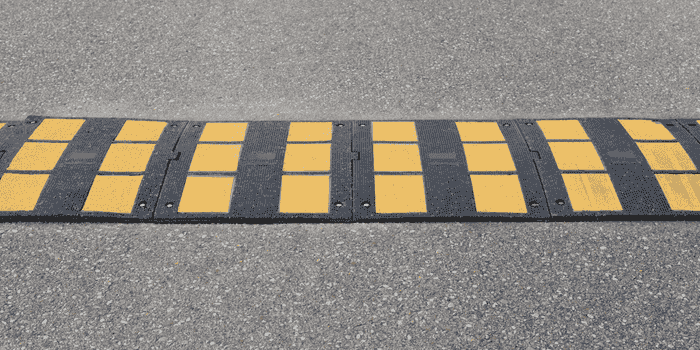
Since speed bumps were invented in the 1906, they are common in many countries around the world. To improve safety and avoid poor installation, you must be aware of speed bump standards like dimensions and placement requirements etc. Let’s explore all the details in this simple article!
Speed Bump Specifications
Different areas require unique designs of traffic calming devices like speed bumps. Only in this way will you get effective speed control without safety issues to vehicles. The dimensions of speed humps is one the most important factors. In the section below, we will discuss the main specifications of speed bumps.

Speed Bump Size Regulations
In most regions, the rules for speed bump size are defined by transport authorities and local road agencies. But these are common speed hump size requirements for effective traffic calming.
Speed Bump Height: Most agencies use 3 to 4 inches (75-100 mm or 7.6 to 10.2 cm) tall speed bumps. Because this height is enough to slow down vehicles around 15 to 20 mph (24-32 km/h). You can also find some low-profile models (2 inches) and heavy-duty versions (6 inches). But they are not recommended for safe speed reduction.
Speed Bump Length: A standard speed bump is generally 1 to 3 feet (30-91 cm / 0.3 to 1 m) long in the direction of travel. It is the total distance you will cover when you are moving over a bump.
Width of Speed Hump: You can use a 12 ft (3.66 m) wide speed bump to cover a single traffic lane. On the other side, a 23 feet (7 m) wide bump is perfect for a wider road or both lanes.
Speed Bump Slope Ratio: The slope of speed hump (steepness) must be in the range of 1:10 to 1:25. This is the safest and most recommended ratio for a safe driving experience.
Speed Bump Material Standards
You can use a variety of materials to design speed bumps. But the most common are asphalt, concrete, recycled rubber and recycled plastic. Municipal organizations such as FHWA and National Association of City Transportation Officials recommend asphalt/concrete bumps for public roads.
Suppose you want to install speed reduction bumps in your parking lot or low speed zone. Then you should always prefer prefabricated rubber speed bumps or plastic speed humps. These are some factors that you should never ignore in a matter of material selection.
| Aspects | Material Performance Requirements |
| Load Capacity | 10000 to 20000+ lbs per axle |
| Weather Resistance | Select UV-resistant materials to prevent cracking and fading |
| Visibility | Yellow/black markings with reflective materials |
| Slip Resistance | Textured surfaces to improve vehicle grip |
| Durability | Material must be able to handle repeated vehicle impacts |
ADA Compliant Speed Bumps
You should place speed bumps in a way that they control traffic speed but do not create problems for accessible pedestrian routes. Therefore, you must avoid them across a sidewalk, wheelchair ramp or walking path.
Standard 3 to 4 inches tall bumps can create a higher slope than the ADA maximum allowed 5% running slope. Because of this, you must keep at least a 36-inch-wide space free. So everyone can move safely.
Speed Bump Signage Requirements
The purpose of a speed bump sign is to warn you about a raised surface in advance. Drivers can approach it at high speed in case they don’t see any clear warning about vertical traffic calming devices. This can lead to sudden braking, vehicle damage, dangerous collisions, or accidents.

So you have to install a W17-1 warning sign with clear words “SPEED BUMP” on it. Always use a highly reflective board for maximum visibility. It’s also better to add an advisory speed plaque to inform drivers about the recommended safe speed.
Related: Can you park on speed bumps?
Requirements For Speed Bump Installation
The first thing you need to know is which places are suitable for speed bump installation. You can use them in private or controlled areas. Because in these locations, foot traffic safety is a major concern.
Common examples include parking lots, garages, school zones, pedestrian crosswalks & business entrances. They are prohibited on arterial/collector roads, intersections and public roads.
Speed Bump Placement
| Parameters | Standard |
| Location | Mid-block areas of residential streets |
| Spacing | 300 to 500 ft (91-152 m) apart |
| Distance from Intersections | 100 to 200 ft (30-61 m) away from major intersections |
| Distance from driveways | Minimum 20 to 30 feet |
| Visibility | Place bump where drivers can see it from at least 100 to 200 ft (based on speed limit) |
Who Installs Speed Bumps?
City or local government departments install them on public roads. Private contractors handle this process in case of parking lots, businesses or private streets.
Is it Legal To Put Speed Bumps on My Street?
It is illegal to place bumps by yourself on city or county streets. The reason is that these are official traffic control devices. Hence, residents have to submit a petition to the local government for legal approval and installation.
Note: The installation of speed bumps is generally not allowed on main fire access routes unless the local fire marshal approves it. So the emergency vehicles can pass without delays. However, it is safe to use speed cushions with wheel cutouts or low-profile sinusoidal speed humps.
Speed Bump Maintenance & Repair Standard
Proper installation of a speed bump is not the final step. In fact, you need to maintain and repair them regularly. You can plan periodic inspections to identify issues such as cracks, surface damage or faded markings.
As we already discussed, weather conditions like extreme heat, cold, or heavy rainfall can affect bump lifespan. So the use of durable and weather-resistant materials is important.
Helpful Reddit guide: How can you remove speed bumps if they are damaged?
Speed Bump Standards in Different Countries
| Country | Main Standard |
| United States | ITE speed humps guidelines, FHWA (MUTCD speed bumps), DOT speed bump regulations and ASTM standard for speed bumps (material testing only) |
| Australia | Australian Standards AS 2890.1 and AS 1742 |
| United Kingdom | Speed bump regulations UK: Highways (Road Humps) Regulations 1999 created by Department for Transport (DfT) |
| New Zealand | NZ Transport Agency (NZTA) guidance |
| European Union | National road authorities (many follow EN-based road safety practices) |
To Summarize
If you have a plan to install or modify speed bumps, it is compulsory for you to follow all above standards. Otherwise, you will create unsafe road conditions and damage vehicles. Research by the National Highway Traffic Safety Administration says proper installation of bumps can reduce road accidents by 30% to 50%.
In case you want to improve safety with premium speed bumps, JACKWIN is your top choice. Contact us today for expert support and a quick quote.
FAQs
How Fast Should You Go Over a Speed Bump?
You should normally drive over a bump at 5 mph (8 km/h). If you find it taller, you need to slow down more around 2 to 4 mph. We advise you to slow down smoothly, cross the bump at a crawl and then accelerate gently.
What Are the Common Mistakes in Speed Bump Placement?
Poor speed hump placement problems include wrong selection of bump type, improper location, compromised material quality, incorrect anchoring and place too many breakers.
Can We Install Speed Hump on Curved Roads?
It is not a safe practice to use speed control bumps on road bends or curves. They can make it hard for you to steer and increase the chance of losing control. So the road should be straight and have enough clear distance for drivers to see the bump.
List of Places Where I Cannot Put a Speed Bump?
You should never install bumps in a 20-meter area around a railway crossing. They should be more than 25 meters from bridges, culverts & tunnels. It’s also very risky to put them near overhead structures if they have 6.5 meters or less clearance above the road.
Is it Necessary That Speed Humps Should Be Present Near Street Lamps?
It is optional in some cases, but experts recommend this for better safety. However, you should not install bumps on a road without street lights if a road has a speed limit above 20 mph. The area must have a minimum of 3 lamps with a max. gap of 38 m between each light.
What is the Specific Standard For Placing Speed Bump in a Parking Lot?
Speed bumps in the parking lot must be 3 to 4 inches high and 1 to 3 feet long in the direction vehicles travel. You have to install them 20 to 50 feet before pedestrian crosswalks. Always keep bumps at least 10 feet away from handicap ramps.


