


In today’s article, we will discuss what barbed wire is and why it is widely used across different industries. You will understand its types, materials, working method and structure.
Furthermore, we will cover barbed wire uses and the right installation process. After reading this guide, we are confident that you will be able to choose and use barbed wire safely for your project
What Does Barbed Wire Mean?
Barbed wire is a type of steel fencing wire with sharp points placed at regular gaps along it. These points are called barbs. Mainly, you can use it to build low-cost fences, protect your property, block unauthorized entry and create physical barriers. Also, you can see it placed on top of walls for protection. This security wire is also called barb wire or bob wire.
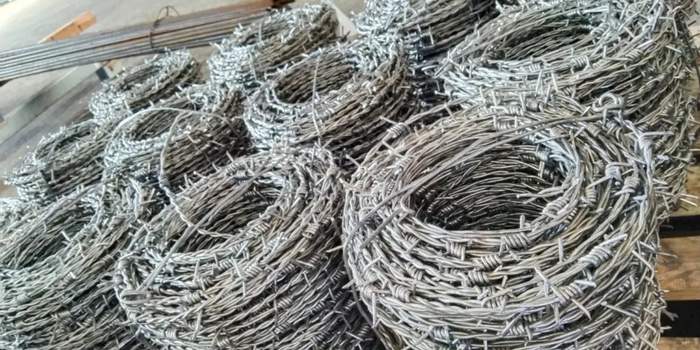
What is Barbed Wire Made of?
Barbed wire is made of strong steel cable. Commonly, two steel wires are twisting together to form a strong barb wire. Then sharp barbs are wrapped around it. To prevent these wires from rust and make them durable, you can use several coating materials.
Galvanized Barbed Wire: You can coat barbed wires with zinc to protect it from rust and corrosion. It is an ideal choice for wires that you need to install in wet areas. You can use zinc coated bob wires for farms and basic boundary fences. But galvanized bob cables can get damaged easily.
PVC Coated Barbed Wire: PVC barbed wire is made from steel wire. You will find these wires covered with a layer of plastic for extra protection. It also prevents them from weather and chemicals. PVC-coated barbed cables look better and need less maintenance. You can install them where rust is the main problem.
Zinc Aluminium Alloy Coated Wire: Engineers also use special coatings to manufacture barbed wire. Basically, they use a combination of zinc and aluminium to make these fence wires extra durable and rust resistant than galvanized barbed wires. You should prefer this type of barb wire for your industrial zones or coastal areas.
Stainless Steel Barbed Wire: Barbed wires are made of naturally rust-resistant steel called stainless steel barbed wires. These wires are used to handle touch conditions. In fact, you can use them to create premium and high-security fences.
Note: Barbed wire was invented 153 years ago in 1873. The reason behind barbed wires’ late invention of barbed wire is interesting. Basically, strong and cheap steel was not available and was expensive to produce before the 19th century. At that time, other materials like iron, copper or cast iron were not suitable and weak options to design fences. Barbed wire became practical when new steel-making methods (like the Bessemer process) were invented.
Types of Barbed Wire
These are some standard types of barbed wire as follows.
Concertina Barbed Wire
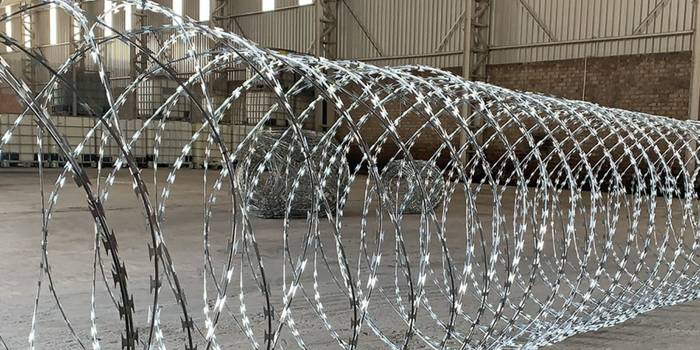
Concertina barbed wire is a type of barbed wire made from a single strand of wire sharp attached barbs. It is formed into large coil shapes that you will find like a concertina. You need to use clips to connect these coils together. Further, you can extend and construct them.
You can use concertina barbed wires to protect places like military areas, factories, railways, airports, prisons, farms and highways. The plus point is that you can install them in different styles. For example: you have the option to place them on top of fences, rooftops, walls or on the ground for maximum security.
Electric Barbed Wire
Electric barbed wire fencing combines barbed wire with an electric current. When someone or an animal touches the wire, they will receive a mild electric shock. This way, you can stop them from crossing the fence. You can mainly use it to increase security and protect restricted areas.
This type of wire is commonly used around high-security buildings and private properties. However, you need to install them with extra care to confirm safety and proper use.
High Tensile Barbed Wire
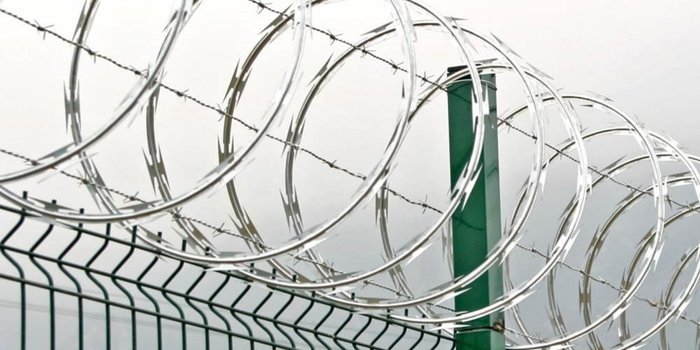
These barb wires are designed with strong steel, so they can handle high tension without breakage or stretching. Hence, you will find these wires more durable than regular barbed cables. High tensile barbed wires can stay tight over long distances.
This makes it a good choice for large areas where you require a strong and durable fencing system. It is commonly used on ranches and in places where animals may push against the fence. The only exception is, it can be hard for you to install them because of its strength.

Barbed Wire Strands, Twists & Barbs
Barbed wire can also be classified based on the number of strands (number of twisted wires), how they are twisted together and the shape of the sharp points on wire. Below we explain all these variations.
Strands of Barbed Wire
Single twist barbed wire (Single Strands): This is a simple and lightweight structure of barbed wires. These are made with one main wire (strand wire) and barbs attached to it. You can use single strands bob wires for light-duty fencing.
Double twist barbed wire (Double Strands): Double strands barbed wires are a more common and stronger structure made with two main wires (line wires) twisted together with barbs. You should use them when you need a strong and more secure boundary.
Types of Barbed Wire Twist
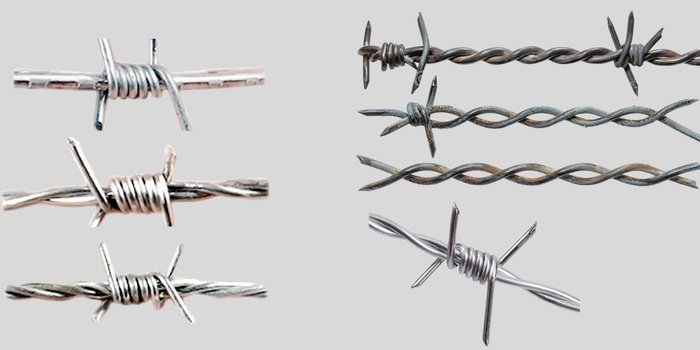
Reverse Twist: If we talk about reverse twist, you will see line wires are twisted in opposite directions. Further, the barbs are attached on the outside of the two line wires. It provides extra strength and makes the wire more stable.
Conventional Twist: In this type, the line wires are twisted in the same direction. It is also known as the traditional twist. The barbs are commonly fixed between the two line wires (two strands).
Barb Structure of Barbed Wire
Double Barb: Double barb wire has four sharp points. It is made by twisting two barb wires onto the main wire, which makes it sharper and stronger. It is also known as 4-point barbed wire.
Single Barbs: When you notice that each barb has two sharp points, it is known as the single barb structure of barbed wire. It is also called 2-point barbed wire. You can use them for light fencing where you need less security.
How Does Barbed Wire Work?
The sharp metal points (barbs) have a major role in the overall security and protections you get with barbed wires. The twisted steel stands with these barbs create a physical and psychological barrier as well. So when a person or animal tries to cross it, then sharp points cause pain or discomfort.
As a result, the unauthorized person cannot move forward. Apart from that, the erased wire works as a visual warning. For example: it shows you the area is restricted and not safe to enter. Because of these properties, barbed wire is widely used to protect property and high security areas.
What is Barbed Wire Used For?
Following are popular and common barbed wire uses.
Barbed Wire Fence
What is barbed wire fencing? A barbed wire fence is a security barrier designed with twisted steel strands and sharp points. They are widely used to create strong and low cost boundaries around land. With these fences, you can control animals, protect crops, work sites and mark property lines. They are easy to install and require less maintenance.
How tall should a barbed wire fence be? A standard barbed wire fence is 51 to 54 inches (around 4 to 4.5 feet) tall. But if you need better security in high-risk areas, you should keep fence height around 5 to 6 feet.

Agriculture and Ranching
You can use barbed wires in agriculture and ranching to control livestock and keep animals within a defined area. With their installation, you can also prevent animals from escaping and protect crops from wildlife. If you are a farmer, you should use these cables to mark boundaries around your land.
Military and Defence
Barbed wires have an exceptional historical role in military and defence areas to create strong security barriers. This structure stops or slows down intruders and protects risky zones. Mostly, you will see them around bases, borders plus sensitive locations. You can make them extra secure when you combine barbed wires with razor wires, machine guns, trenches and artillery.
Related: Why was Barbed Wire such a revolution when it comes to defensive works?
Wildlife Conservation
You can install barb wires to protect natural areas and manage animal movement. It keeps wild animals away from human settlements and farmland, which reduces conflicts. In fact, you can use it to secure endangered species and control access to their habitats. This way, you can maintain a safe balance between humans and wildlife.
Property Protection and Security
You will commonly notice barbed wire around schools, homes, business properties and factories. It is because bob wires provide maximum security at a lower budget. You can easily create a strong physical barrier to block unauthorized people’s access to restricted areas. You will see it on walls and around private or industrial sites. It is a simple and effective way to increase safety.
Construction Areas & Industrial Sites
Barbed wire is used in construction areas and industrial sites to improve safety and security. It restricts unauthorized access and keeps people away from dangerous or restricted zones. You can see it around factories and warehouses. It is an easy and cost-effective way for you to protect valuable materials and equipment.
Fence Panel Made of Barbed Wire
Fence panels made of barbed wire are pre-built fencing sections. They use barbed wire to create a strong protective barrier. The basic purpose of these panels is to make installation fast and easy for you, as compared to installation of loose wire on-site.
These temporary fence panels are commonly used to secure areas like farms, industrial construction sites, events, private properties and storage facilities. These panels provide strong security and clear boundary marking. Therefore, they are a practical choice for you when you need a quick setup and protection.
Barbed Wire Installation
Choose the Right Wire: You need to select the type of barbed wire based on your need. Common options include 12.5 gauge or 15 gauge wire, 2-point or 4-point barbs. If you need better strength and rust protection, then use high tensile and galvanized class 3 wires.
Prepare Fence Line: Now clear the fence area and remove stones or any obstacles. So that, you can prevent the wire from damage during installation.
Fix Wire to First Post: It’s time to tie the barbed wire tightly to the corner post. You must make sure it is secure before you start unrolling the wire.
Roll Out the Wire: You need to unroll the wire along the fence line carefully. We suggest you use a reel holder, tractor or manual method. Never forget to wear gloves because the wire is sharp.
Now Stretch Wire: You should pull the wire tightly with the use of a wire grip tool and a pulling machine (like a tractor, truck or skidding device). Your main goal must be to make it tight, but not over stretched.
Secure the Wire on Posts: Attach the barbed wire to line posts and use staples or clips for this purpose. For wooden posts, you can use staples but prefer clips for metal posts.
Add Clips and Supports: You now need to install T-post clips or supports every 40-50 feet to keep the fence stable and properly aligned.
Tie and Finish the Ends: It’s important to leave extra wire at the end for strong wrapping. Then tie it securely around the final post. You must trim any excess wires carefully.
Final Inspection: You should always check the entire fence to make sure it is tight and properly fixed. If you notice any leftover wire pieces from the ground, you must remove them right away.
How to install barbed wire on top of fence? To install bob wires on tops of fences such as chain link fences, you need to fix brackets or clips on fence posts. After that, you can stretch the barbed wire tightly along the top and secure it with staples or clips.
How to install barbed wire fence with T posts? You should drive T-posts into the ground at equal distance. After this step, you can expand the wire between them and attach with the help of T-post clips.
How to tie barbed wire to a post? To tie barb wires to a fence post, you can wrap the wire around the post 3 to 5 times. Then you need to twist it tightly around itself, so you can lock it in place.
How to cut barbed wire? For this purpose, you need to use strong wire cutters or fencing pliers.
How to tighten barbed wire? You can use proper tools such as a wire stretcher or come-along to safely pull the wire tight. First, you should clear the fence line and then apply pressure until the wire is firm but not over tightened. Finally, you can secure it to the posts with staples or clips so it stays in place.
Why is Barbed Wire Important?
Barbed wire is important and beneficial because it offers a strong, affordable, durable and low maintenance solution for livestock control and property protection. It acts as an effective barrier and can stop large animals to enter in agricultural land.
It is a budget friendly fencing option as compared to alternatives like brick walls or metal fences. You need minimal tools and time to install these wires, which makes it a practical choice. It can handle different weather conditions and physical stress.
Barbed Wire vs Razor Wire
Barbed wire has sharp points and is commonly used for farms or basic security. These wires are lightweight, easy to install, affordable and less defensive than razor wires.
In contrast, razor wire has very sharp blade-like edges that can cause more serious injury. That’s why these wires provide strong and dangerous barriers for high security areas. Further, razor wires are expensive and require professional installation.
Practical example: If you want to know the comparison of barbed wire and razor wire security in real-life survival, you can read this Reddit post on zombie defense strategies.
Final Thoughts
Barbed wire fencing is an ideal solution for security, defense, boundary control and long-term protection across agricultural and industrial applications. Before you buy barbed wire, we advise to make sure the wire has a coating layer, an accurate distance of barbs, able to handle tough conditions and meet your local laws & regulations.
Our JACKWIN factory is located in China. We are a professional manufacturer of fences, chain link fencing, construction fencing panels and fences solutions that include barbed wire applications. Talk to our team and get the right fencing solution for your property.
Frequently Asked Questions
Why Was Barbed Wire Invented?
Joseph Glidden created barbed wire because farmers needed a cheap and strong fence on the Great Plains (large open lands in the USA). It was made to keep livestock inside and protect crops in an affordable way.
Is Barbed Wire Dangerous?
Yes, barbed wire can be dangerous for both humans and animals because of its sharp barbs. They can cut your skin & catch clothing. The animals can get stuck, which is very painful for them. It can lead to serious injuries such as deep cuts and possible infections if the wire is old or rusty.
How Much Does Barbed Wire Fencing Cost?
Barbed wire fencing can cost you approx. 3 to 6 US Dollars per linear foot when installed. But the total cost for a project is different. The overall expense can be around $2000 to $2200 per acre. Remember, the quality of wires and labor expenses can increase or decrease the amount.
How Long Does Barbed Wire Last?
Galvanized barbed wire can last 15 to 50 years. Well, the average lifespan of barbed wire is 20 to 30 years when you properly maintain them. Its durability depends on factors such as the thickness of the zinc coating, wire strength, weather conditions & maintenance.
Is Barbed Wire Fencing Legal?
Barbed wire fencing is allowed in many agricultural and high-security commercial areas. But it is restricted or not permitted in residential areas because of safety concerns & legal responsibility.
What is the Standard Length of Barbed Wire Rolls?
Standard barbed wire rolls are mostly 1320 feet (400 meters) long. You will find small rolls 100 meters to 1000 feet long. These rolls weigh between 68 and 80 lbs. But weight can change based on the wire thickness and barb type (2-point or 4-point).
Does WWE Use Real Barbed Wire?
Yes, WWE has used real barbed wire in some matches, but it is generally modified for safety or replaced with rubber versions. Real sharp barbed wire is mostly used in special hardcore wrestling matches.


