


A construction worker in New York City fell from a 15 foot height. He got injured because he was not wearing a safety harness. That’s why rescue was difficult and took extra effort. This situation shows the importance of a safety harness.
So today, you will learn everything about a safety harness. We have explained what a safety harness is, its components, types and how you can wear it.
What is Safety Harness?
A safety harness is a type of personal protective equipment designed to protect you from falling when you work at heights. It is a main device that is used in the fall arrest system.
You need to wear a harness on your body to reduce the chances of injuries in case of fall from roofs or tall buildings. Generally, they are made and tested according to EN 361 and EN 364 standards.
How do safety harnesses work? The safety harness is made from wire cable, rope or strong webbing. It is attached securely to a fixed point, directly or with a locking device. Some harnesses use a shock absorbing lanyard to reduce force and serious injury when a fall stops. If you slip or fall, the rope catches you right away. Further, it spreads force across your body.
Safety Harness Components
| Safety Harness Parts | Functions |
| Straps | You wear these around your legs, shoulders, and chest to hold your body |
| D Ring (strong metal rings) | Attach the harness to the lanyards or lifelines and present at the back, front, or sides of the harness |
| Buckles | Adjust the harness and make it tight & secure, so the harness fits you safely |
| Lanyard | This is a short rope or strap that you can use to connect your harness to a safe anchor point |
| Visual Indicators | They change or show signs to tell you the harness needs inspection or replacement |
| Padding | It give extra comfort from padding on your shoulders, legs & waist to reduce pressure when you wear the harness |
| Labels and Markings | You can read these labels to know the size/model or safety details |
12 Safety Harness Types To Use For Your Project
Full Body Harness
A full body harness covers your full body, including shoulders, chest as well as legs to give you full support. It has two shoulder straps & leg straps. Hence, this device spreads the force across your body to reduce injury.
You can use it when you work at heights such as roofs or construction sites. It connects to a lifeline to keep you safe in case of fall. Full body harness is also known as full body suspension harness, fall protection or arrest harness.

Work Positioning Harness
You should use a work positioning harness when you need to stay in one place to perform tasks on height. It keeps your hands free for tasks like fixing or building.
Mostly, it connects to a support line on the sides of the harness. It holds you at a specific position but allows enough movement required for work.\

Suspension Harness
A suspension harness is designed for work where you need to hang or stay suspended for a long time. These jobs include cleaning windows, rope access work, painting or rescue operations.
You will find extra padding and support with this harness. Therefore, it makes your legs and back more comfortable during long use.
Rescue Harness
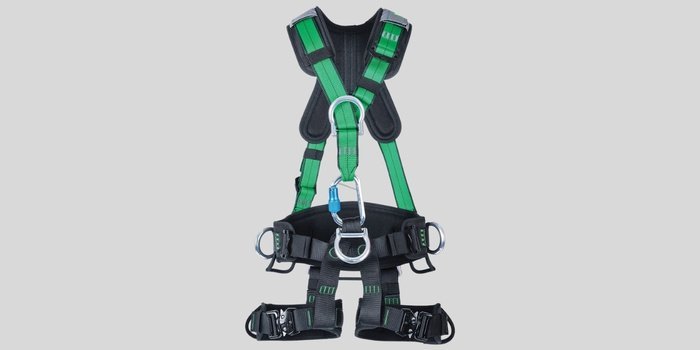
A rescue harness is a strong and full body harness that is made for emergencies. You can use it to lift, lower or support a person during rescue or high angle operations.
Unlike regular harnesses, it has special features for easy rescue and extra padding for comfort during long suspensions or in hazardous environments.

Climbing Harness
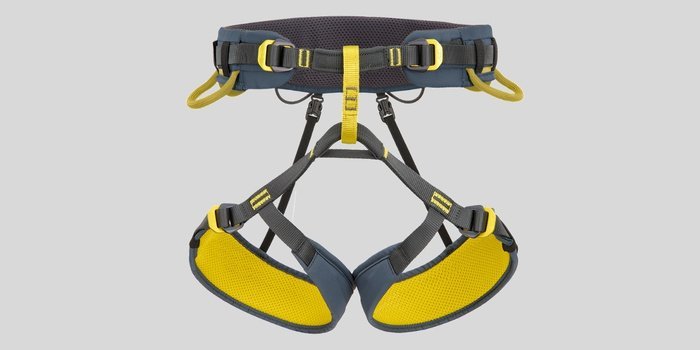
If we talk about climbing harnesses, they are made for recreational and adventure activities. You can wear it around your waist and legs. This harness connects to ropes to keep you safe if you slip.
It holds your weight and lets you move freely. However, it is not recommended to use climbing harnesses for industrial fall safety.
Fall Arrest Harnesses
These are the most common types of harnesses and are made to stop fall or slip incidents. Generally, they have a D ring on the back and one on the chest. When you use it with a shock absorbing lanyard or retractable lifeline, it spreads the fall force across your body

1 Point and 2 Point Harnesses
A 1 point harness has one D ring or hook to connect a rope or lifeline. It is simple but mostly used for light work at height. You can also use this device when you have danger of slipping surfaces.
However, a 2 point harness has two attachment points. You can connect both sides to stay more stable during work. It gives better support and safety as compared to a 1-point harness.
Rope Access Harnesses
A rope access safety harness is one of the most commonly used safety tools. You need this harness to complete tasks on ropes at height. Moreover, you can use it for work that needs vertical movement, such as climbing or inspections.
You will find side D rings, strong leg straps, as well as several attachment points with this device. So that, you can move safely and stay secure on ropes.

Multi Purpose Harnesses
As its name clearly indicates, you can use this harness to do multiple risky tasks. For example: you can use them at heights including tree care, tower climbing, solar or wind energy installations.
They offer you features of adjustable shoulder straps with quick release buckles, so you can fit them for different sizes. Not only this, some models also contain leg straps for extra safety. They are the perfect option for those workers who need to perform a variety of tasks.
Chest Harnesses
Suppose you have to work at a tall place where the risk of fall is low and you need minimal protection. For this situation, a chest harness is the most recommended safety device.
It fits around your chest and shoulders to keep your upper body secure. But remember, you will not get the same level of protection with this harness as provided by a full body harness.

Construction Safety Harnesses
Construction safety harnesses are made for workers on building sites. You wear them around your body parts like shoulders, chest & legs.
They mostly connect to ropes, lifelines, or anchor points to keep you safe. These harnesses prevent falls and protect you when you perform duties on tall buildings.

Tower Climbing Harnesses
Tower climbing harnesses are specifically made for climbing tall towers safely. You should wear them around your body like a regular harness.
They have strong attachment points for ropes or lifelines. These harnesses keep you secure when you do tasks like climbing or work at great heights.
Safety Harness Classifications
These are four major classes or categories of safety harnesses used for fall protection.
| Harness Class | Type of Harness | Uses |
| Class 1 | Body Belts (single or double D ring) | Used to restrain a person in a hazardous position, prevent a fall, and stop it within 3 feet (90 cm) (OSHA) |
| Class 2 | Chest Harnesses | Best for limited fall hazards (no vertical free fall) or used to retrieve people from tanks/bins |
| Class 3 | Full Body Harnesses | It is designed to avoid severe free falls |
| Class 4 | Suspension Belts | Give independent support for suspending a worker such as raising/lowering harnesses or boatswain’s chairs |
Harness Connection Points
Harness connection points are exact attachment spots on a safety harness. You can use these points to attach ropes, lanyards or lifelines with harness connectors. They keep you secure and prevent falls. You have to use the right connection point for safety because it controls your body movement if you slip or fall.
| Connection Points | Meaning & Function |
| Fall Arrest (Dorsal D Ring) | It located between your shoulder blades on your back and spread pressure across your body |
| Work Positioning (Waist D-Rings) | Two D-rings on your lower waist and keep you stable. This fall restraint point prevents falls instead of stop them. |
| Travel Restraint (Lower Back D-Ring) | This D ring at waist level on your lower back to protect you if you move around hazards like holes or slippery areas |
| Descent and Ascent | It can be a single D ring between waist and chest or a pair at the waist. This connection supports your weight during climbing up or down. |
| Evacuation (Shoulder or Chest D-Rings) | Two D rings on shoulders or chest and used to safely remove an injured person. You can also connect it to a spreader bar to distribute weight. |
| Ladder Climbing | Mostly one or two D-rings at chest level which connects to the ladder to keep you close and prevent backward falls |
How To Use Safety Harness?
Step 1: First of all, you should shake the harness to untwist all the straps. Then inspect all the components carefully. For example: you have to make sure the D ring looks like a proper “D” and is not deformed. Also inspect the webbing and look for cuts or loose stitching throughout the harness. Further, you should assess leg straps, back straps and all connection points.
Step 2: Now, you can put on the harness over your shoulders. You should always start from the shoulders because it makes sure the straps are not twisted. The buckle must be at your midline & around chest height plus confirm it is not too high or too low.
Step 3: Next, you need to pull each leg strap through its buckle. You should adjust it in a way that it is snug but not too tight or too loose. Also leave a slight room for your comfort.
Step 4: It’s important to make sure the D ring is positioned between your shoulder blades on your back. For this purpose, you can have a co-worker double-check your straps and D-ring.
How To Use Roof Safety Harness?
How to use safety harness on roof? When you are working on a roof, it’s important to follow OSHA safety harness regulations and properly secure yourself. Follow these steps to set up the roof anchor and safety harness.
Place roof anchor: You need to find the rafter under the plywood to set up a strong anchor point. Further, you should use nails such as duplex or 16 penny to secure it. Always avoid the placement of nails directly above each other and make sure the anchor is properly secured on both ends.
Put on the safety harness: To use the safety harness, you can simply follow the steps which we explained in the above section.
Attach the lanyard and rope: Once you have put on your safety harness propel, then you can connect the lanyard to the D-ring on your back. You should confirm that the lock mechanism is fully secured. After that, you have to adjust the length of rope based on your need to move safely and stay tied off. Well, the lanyard has shock absorbing features to slow your fall and reduce impact. Once everything is secured, you can work on the roof safely.
At What Height is a Safety Harness Required?
In most construction work, OSHA requires you to use fall protection at 6 feet (2 meters) or higher. However, the exact height can be changed based on the type of work you need to perform.
Steel Erection: Use a harness when you work on 15+ feet (4.5 meters).
General Industry: Fall protection is needed at 4 feet (1.2 meters) or more.
Construction Work: Wear a harness at 6 feet (2 meters) or higher.
Scaffolding: Safety harnesses are required above 10 feet (3 meters).
Safety Harness Uses
You can use this personal proactive tool for various applications to avoid fall acidents & fatal injuries. They keep you safe in the following work situations.
- Tower climbing: Keep you secure when climbing communication or utility towers.
- Window cleaning and painting: Use these harnesses when working on high windows or walls.
- Rescue operations: Most common application of harness is for emergency tasks.
- Work positioning (tree care/solar panels): Used to hold workers safely in place at height.
- Industrial & maintenance safety: Harness provides fall protection in factories or workshops also.
- Roofing work: You can use them to stay safe when you need to install or repair roofs.
- Construction sites: Ideal to protect workers from fall hazards on building sites.
- Wind turbine maintenance: Secures technicians to do turbine related work.
- High angle work: They support you during steep or vertical duties.
- Utility pole maintenance: You should use a safety harness to keep yourself secure when you repair or install poles.
Safety Harness Inspection
- You can use the manufacturer’s inspection documents and checklist for guidance.
- Firstly, you will check the harness’s lifespan. Then, you need to locate the manufacturing tag (on the waist belt or leg loop) to find the date of manufacture.
- In case you observe that the harness is older than 10 years, you should remove it from service.
- For physical inspection, you can hang the harness and inspect it top to bottom.
- Also check the webbing for cuts or chemical damage plus move adjustment buckles to see hidden areas.
- You must assess metal attachment points for corrosion, sharp edges, marks, cracks or deformation.
- As we discussed, safety harnesses have indicators which you should inspect too. They mostly activate when the harness experiences a force of 4 kN (900 lbs).
- PPE (harness) must be inspected by a competent person regularly and a full inspection is best at least once every 12 months.
Safety Harness Size Chart
This table will show you height, chest size and recommended harness size for those measurements. So, you can choose a safety harness according to height and your body size.
| Height | Chest 56-60 | Chest 50-54 | Chest 46-48 | Chest 42-44 | Chest 38-40 | Chest 34 to 36 |
| 5’4″ – 5’7″ | X/XX | L | M | S | S | S |
| 5’8″ to 5’11” | XX/XXX | X | L | M | S | S |
| 6’0″- 6’3″ | XX/XXX | X | L | M | M | M |
| 6’3″ + | XX/XXX | X | X | L | L | L |
Letters indicate harness sizes: S = small, M = medium, L = large, X = extra large, XX/XXX = extra sizes
Safety Harness Standards
OSHA 1926.502 & 1910.140 (USA): Set specifies requirements for personal fall arrest systems such as safety harnesses for construction.
ANSI/ASSE Z359.1 & Z359.11 (USA): Covers safety requirements, testing method plus performance for full body harnesses.
EN 361 (Europe): European standard regulates full body harnesses used in fall arrest.
Benefits of Wearing A Safety Harness
If you wear a safety harness to complete your risky operations, you will get the following advantages.
- Maximum fall protection
- Reduce injury chances
- Harnesses offer better stability
- Provide hands-free work
- Increase workers confidence
- Meet safety compliance
- Improve work efficiency
Safety Belt vs Safety Harness
A safety belt is used to protect workers on height but it fits only around your waist. You can use it for light work or positioning tasks., but not for fall arrest. Keep in mind, safety belts cannot safely stop a fall. Further, it focuses the force of a fall on your waist and stomach, which can cause serious injury.
In contrast, a safety harness covers your chest, legs & shoulders. It gives full body support and is used for overall fall protection. It spreads the force across your whole body, which reduces the chances of harm.
How To Select the Best Fall Protection Harness?
You should consider these factors to choose a perfect safety harness for your maximum fall protection.
- The type of work you do at height mostly decides the harness you need. Hence, you must always match the harness to your task.
- It’s very obvious that every person needs a different harness size due to their unique body type. So, you should choose a harness that fits your body well and allows easy movement.
- You should select a harness with the right D-rings for your work requirements.
- Also look for adjustable straps and features which match your job needs.
- If you work in hot areas such as welding, you need a harness made with heat resistant material. But if your work changes, you may need more than one harness or a multi use option.
- Standard harnesses generally support up to 310 pounds (including tools). If you need more, you can choose a harness made for higher weight capacity.
FAQs
What is the Length of Lanyard in Safety Harness?
A fall arrest lanyard is 1.8 to 2 meters (around 6 feet) long. However, they are also available in lengths of 3 to 6 feet. Well, the 1.5 to 2 m long lanyard is enough for easy movement.
How Much Does a Safety Harness Cost?
A standard safety harness which is used in most construction or industrial work mostly costs you around $5 to $15. But this price range can increase if a harness has additional safety features.
Can One Harness Be Used For All Types of Work At Height?
No, it’s not a good practice to use one safety harness for all types of work at height. Each type is made for specific risks and tasks. If you use the wrong harness, you may not stay stable or safe.
Do Safety Harnesses Expire?
What is the lifespan of a safety harness? Mostly, safety harnesses don’t have a fixed expiration date, but have a limited lifespan of around 5 to 10 years. Many manufacturers recommend that you should replace the harness every 5 years.
What is the Best Safety Harness For Hunting?
The best safety harness for hunting is one that keeps you safe from falls and makes you feel comfortable for long hours in a tree stand. Common options include the Hunter Safety System and Hawk Elevate Pro.
Conclusion
Safety at height always needs the right equipment and proper use. Therefore, you should choose a well fitted safety harness and wear it correctly to protect you from serious injuries.
If you are looking for top-quality safety harness manufacturers and suppliers, JACKWIN is your trusted choice. We provide all types of safety harnesses at a factory price. Contact us today to get your quick quote.


